Clinical trial vials
1344×768 · AVIF · CC BY 4.0
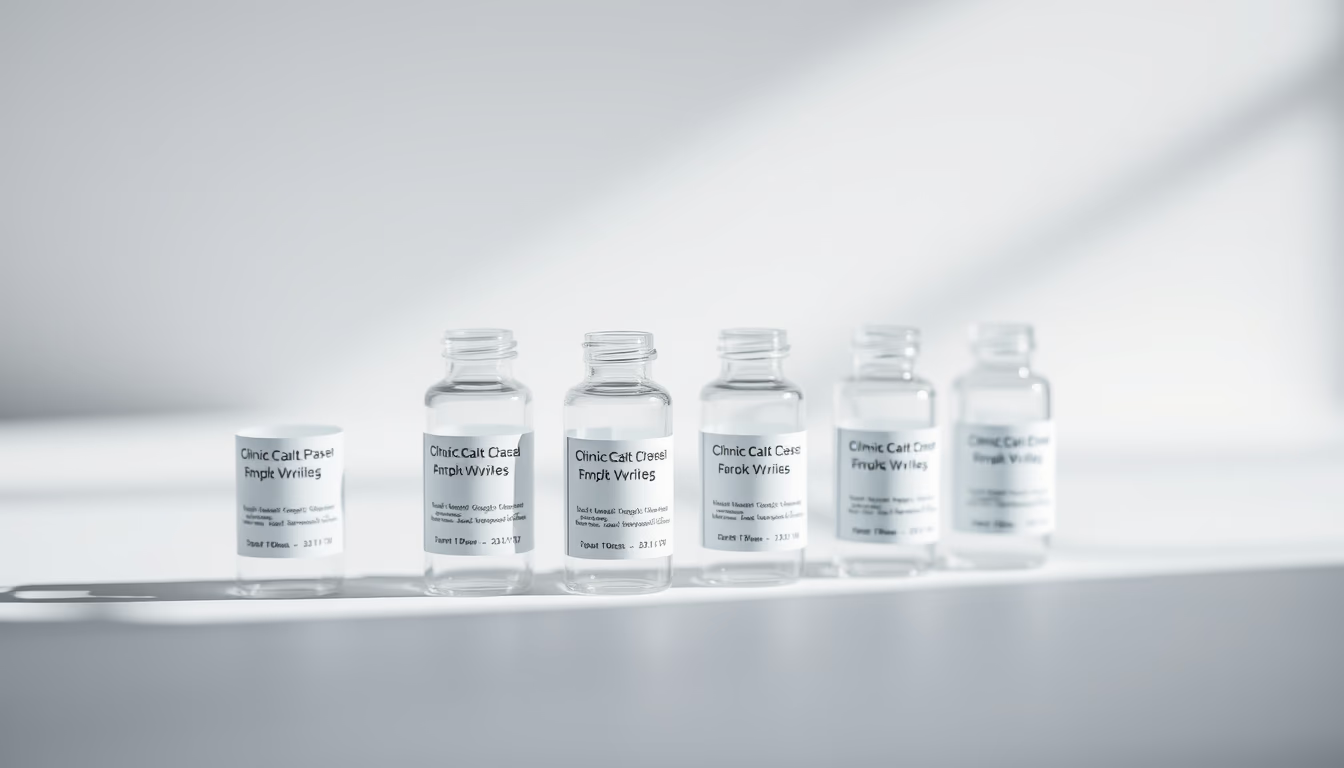
Clinical trial vials store and distribute experimental drugs in controlled research settings.
About this subject
Clinical trial vials are standardized containers used to store, transport, and administer experimental pharmaceutical substances in clinical studies. They are manufactured under stringent quality control conditions, typically using borosilicate glass type I, which offers chemical and thermal resistance, ensuring compound stability. Each vial is labeled with unique codes and information on dosage, batch, and expiry date, following regulatory guidelines from agencies such as ANVISA, FDA, and EMA.
Vial integrity is essential to prevent contamination and ensure participant safety. During phases I, II, III, and IV of trials, vials are handled in controlled environments like cleanrooms and may require specific storage temperatures, often between 2°C and 8°C, to preserve efficacy. Sterilization is achieved through autoclaving or gamma radiation, depending on drug compatibility.
Beyond their practical role, clinical trial vials reflect global research standards. The minimalist design adopted by many laboratories facilitates automated filling and visual inspection processes. Traceability is ensured by serial numbers and two-dimensional codes (QR or Data Matrix), enabling life-cycle monitoring of each unit. This control prevents administration errors and enables audit trails throughout the study.
The evolution of vials has accompanied advances in biotechnology, introducing safer rubber stoppers and tamper-evident aluminum seals. Studies indicate that material choice can influence protein adsorption, making it critical for biologic drugs. Thus, clinical trial vials are fundamental components for result validity and patient safety.
Frequently Asked Questions
What is the standard material for clinical trial vials?
The standard material is borosilicate glass type I, known for its chemical and thermal resistance, which is essential for maintaining the stability of experimental drugs.
How are clinical trial vials tracked?
Each vial receives a unique code, such as a serial number and a two-dimensional code (QR or Data Matrix), allowing monitoring from production to patient administration.
Why is storage temperature controlled in clinical trials?
Many experimental drugs are thermosensitive. Refrigeration between 2°C and 8°C preserves their efficacy and safety, preventing chemical degradation.
Direct URL
https://pub-c7d6a6ea828543ac903a74a341ccb2e1.r2.dev/imagens/clinical-trial-vials-minimalist-composition-p3.avifHow to credit
Include a visible link back to UtilizAí. Copy one of the snippets below:
<a href="https://xn--utiliza-eza.com/en/midia/imagens/clinical-trial-vials-minimalist-composition-p3">Clinical trial vials</a> by <a href="https://xn--utiliza-eza.com">UtilizAí</a>, licensed under <a href="https://creativecommons.org/licenses/by/4.0/">CC BY 4.0</a>.
[Clinical trial vials](https://xn--utiliza-eza.com/en/midia/imagens/clinical-trial-vials-minimalist-composition-p3) by [UtilizAí](https://xn--utiliza-eza.com), CC BY 4.0
License: CC-BY-4.0