Clinical trial vials
1344×768 · AVIF · CC BY 4.0
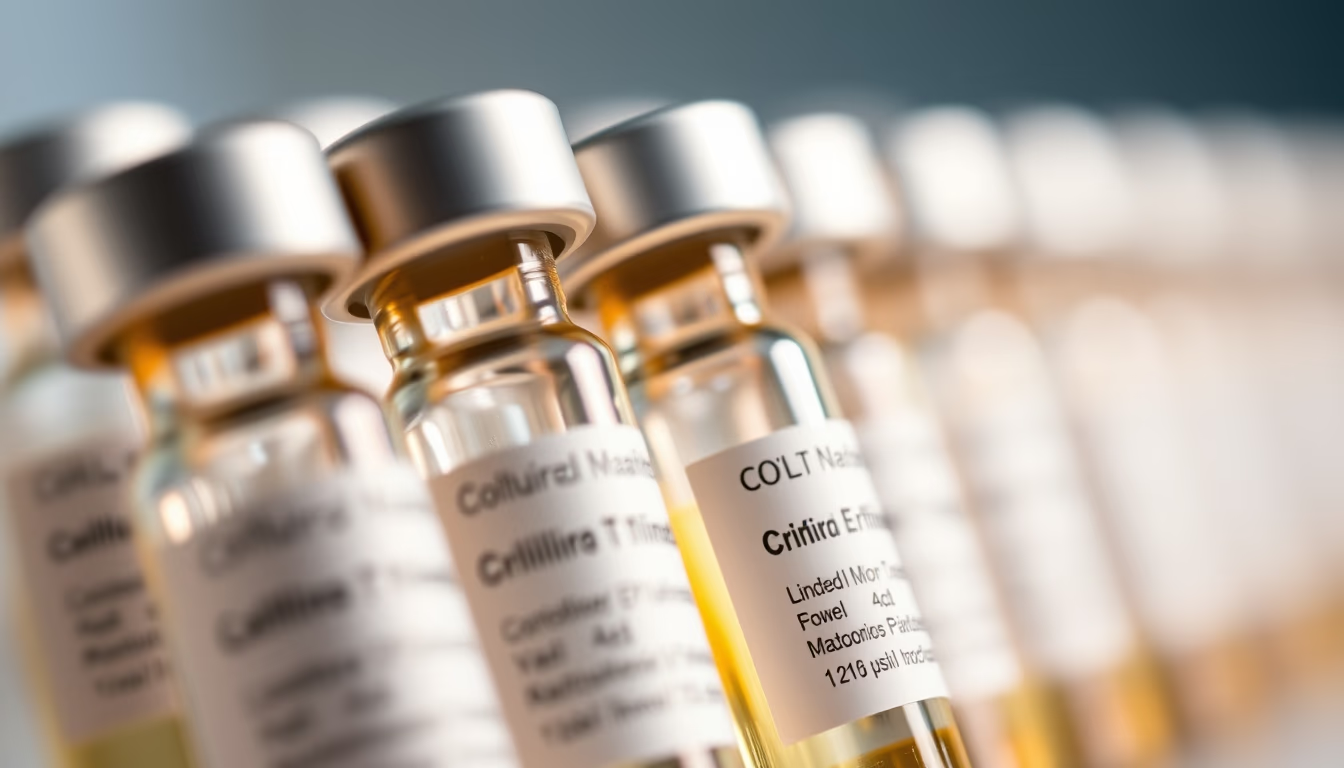
Glass vials used in clinical trials hold samples of experimental drugs, being essential for the development of new therapies.
About this subject
Clinical trials are scientific studies that evaluate the safety and efficacy of new drugs in humans. They are divided into phases, from Phase I (small group of healthy volunteers) to Phase III (large patient populations). The glass vials, often amber to protect against ultraviolet light, store experimental formulations. Each vial is labeled with unique codes, lot numbers, and expiration dates, following strict ANVISA and FDA regulations.
Manufacturing these vials involves Type I glass, a material with high chemical and thermal resistance that does not react with stored compounds. They are sterilized by autoclaving or gamma radiation before filling, in controlled cleanroom environments. Additionally, the vials have security seals, such as tamper-evident closures, to ensure sample integrity during transport and storage.
Historically, the use of glass vials in medical research dates back to the 19th century, but standardization for modern clinical trials was established after the thalidomide disaster in the 1960s. Since then, international regulations require full traceability of experimental drugs. Each vial is tracked by barcode or RFID systems, making it possible to identify even the patient who received that specific dose.
Interestingly, clinical trial vials are often discarded after use, as reuse could contaminate future samples. Disposal follows strict environmental protocols to avoid ecological impact. The glass is crushed and recycled, while labels and seals are removed to ensure research data confidentiality.
Frequently Asked Questions
Why are clinical trial vials usually made of amber glass?
Amber glass protects the contents from ultraviolet and visible light, which can degrade photosensitive compounds. This is crucial to maintain the stability of experimental drugs throughout the study.
How is traceability of vials ensured in a clinical trial?
Each vial receives a unique code, usually a barcode or RFID, linked to the batch, expiration date, and patient. Computerized systems record all movements, from production to administration.
What happens to the vials after a clinical trial ends?
Vials are safely discarded. The glass is recycled after label and seal removal, following environmental protocols. Confidential data is destroyed to preserve participant privacy.
Direct URL
https://pub-c7d6a6ea828543ac903a74a341ccb2e1.r2.dev/imagens/clinical-trial-vials-macro-closeup-p2.avifHow to credit
Include a visible link back to UtilizAí. Copy one of the snippets below:
<a href="https://xn--utiliza-eza.com/en/midia/imagens/clinical-trial-vials-macro-closeup-p2">Clinical trial vials</a> by <a href="https://xn--utiliza-eza.com">UtilizAí</a>, licensed under <a href="https://creativecommons.org/licenses/by/4.0/">CC BY 4.0</a>.
[Clinical trial vials](https://xn--utiliza-eza.com/en/midia/imagens/clinical-trial-vials-macro-closeup-p2) by [UtilizAí](https://xn--utiliza-eza.com), CC BY 4.0
License: CC-BY-4.0