Clarinet keys closeup
1344×768 · AVIF · CC BY 4.0
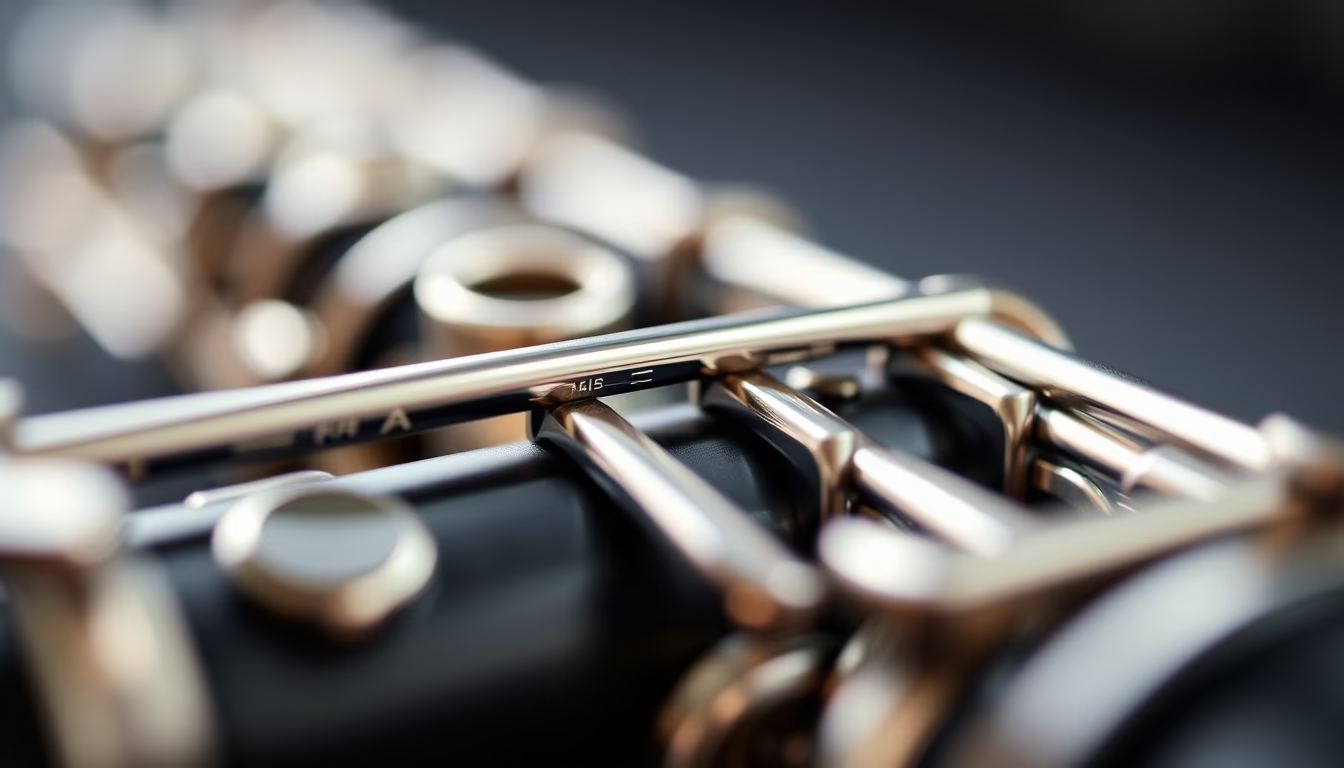
Clarinet key mechanism: details of springs, pads, and rods that enable the musician to control intonation and articulation.
About this subject
The clarinet's key system is a complex mechanism that allows the player to cover and uncover the instrument's tone holes with precision. Keys are levers that, when pressed, activate pads made of leather or felt to seal the holes. This system was standardized in the 19th century with the development of the Boehm system, which uses movable rings and silver or nickel keys to facilitate fast fingering and chromatic passages. Regional variations exist, such as the German (Oehler) system, which maintains a darker timbre and is preferred in Central European orchestras, and the Boehm system, dominant in the United States, United Kingdom, and Brazil.
Key maintenance is crucial for instrument function. Pads must be replaced periodically, as wear causes air leaks that compromise intonation. Springs made of stainless steel or phosphor bronze provide the tension needed for keys to return to rest position. Specialist technicians adjust key height and rod alignment to ensure each note speaks clearly. Factors like humidity and temperature affect the clarinet's wood (usually grenadilla), requiring seasonal adjustments to the mechanism.
Interestingly, the ergonomic design of keys varies among manufacturers. Professional models offer additional keys, such as the register key (half-hole) and the trill keys, expanding the instrument's range. Customization includes using resin or ebonite bodies instead of wood to withstand climate changes. Yet the essence of the mechanism remains: transforming the player's breath into music through precision engineering. Studying key mechanics is a fundamental part of clarinet learning, as finger technique depends on knowledge of each lever and its function.
Frequently Asked Questions
Why are clarinet keys made of metal?
Keys are typically made of nickel silver or stainless steel because they are corrosion-resistant and lightweight, allowing quick movement without excessive wear. Metal also enables precise adjustment of height and alignment.
How do I know if my clarinet keys need maintenance?
Common signs include notes that do not speak clearly, squeaks, or a feeling that air is escaping. If keys are loose and rattle, or pads appear dried out, it is time to see a technician.
What is the difference between the Boehm system and the Oehler system on clarinet?
The Boehm system has movable rings and silver keys that facilitate uniform fingering and fast passages, and is more common globally. The Oehler system has fewer rings and a simpler mechanism, resulting in a darker timbre and greater resistance, preferred in German and Austrian orchestras.
Direct URL
https://pub-c7d6a6ea828543ac903a74a341ccb2e1.r2.dev/imagens/clarinet-keys-closeup-macro-closeup-p10.avifHow to credit
Include a visible link back to UtilizAí. Copy one of the snippets below:
<a href="https://xn--utiliza-eza.com/en/midia/imagens/clarinet-keys-closeup-macro-closeup-p10">Clarinet keys closeup</a> by <a href="https://xn--utiliza-eza.com">UtilizAí</a>, licensed under <a href="https://creativecommons.org/licenses/by/4.0/">CC BY 4.0</a>.
[Clarinet keys closeup](https://xn--utiliza-eza.com/en/midia/imagens/clarinet-keys-closeup-macro-closeup-p10) by [UtilizAí](https://xn--utiliza-eza.com), CC BY 4.0
License: CC-BY-4.0