Cipher disk cryptography
1344×768 · AVIF · CC BY 4.0

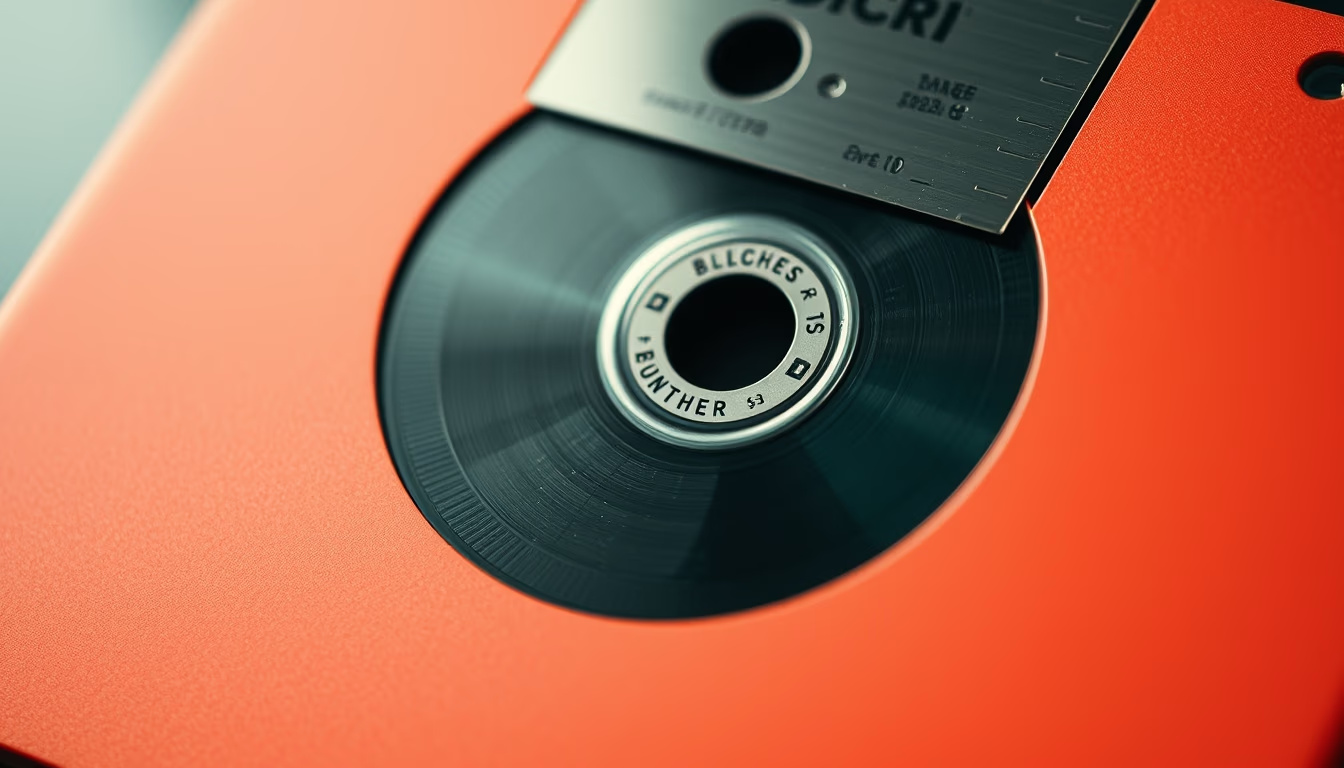
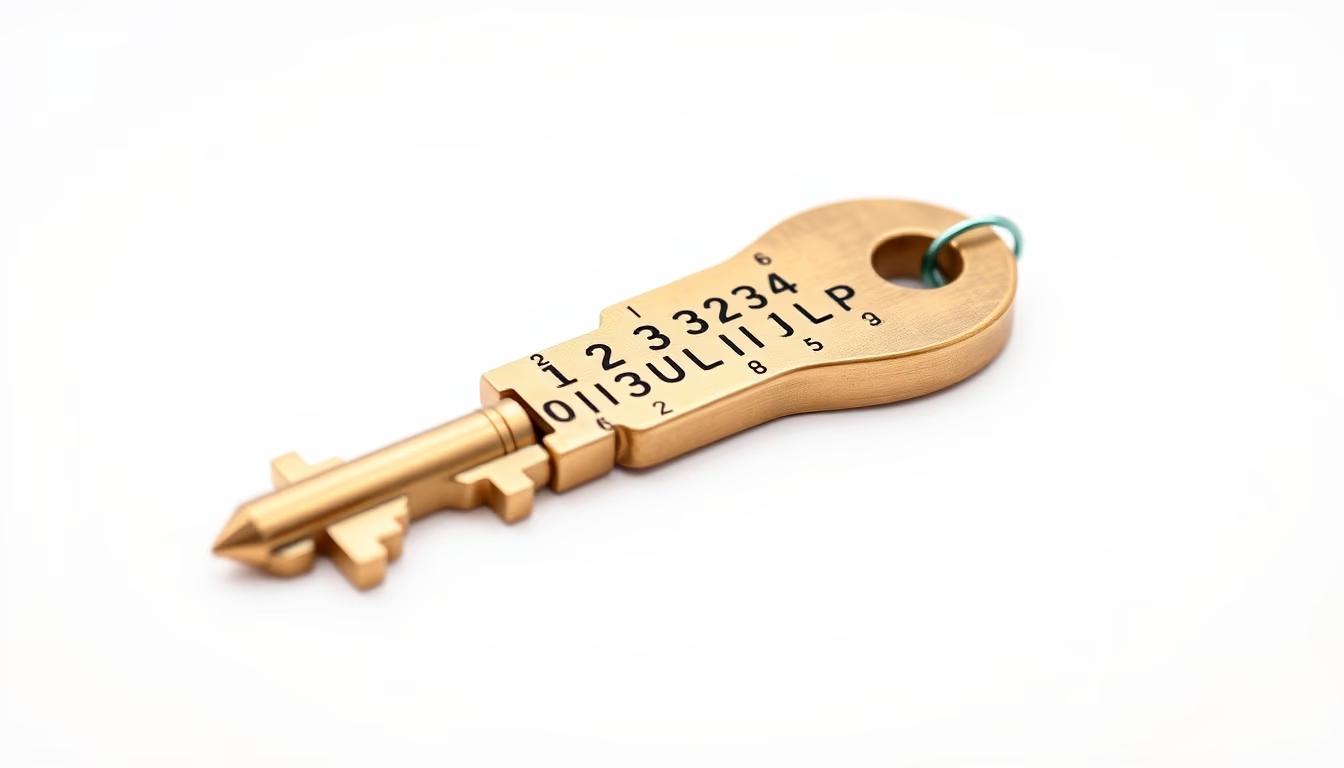
The cipher disk is a rotating encryption device that encoded messages, vital for secure telegraphic communications.
About this subject
The cipher disk, also known as the Alberti cipher disk, is one of the earliest polyalphabetic encryption devices, invented in 1466 by the Italian humanist Leon Battista Alberti. Although conceived before the telegraph, its concentric rotation principle was widely adopted in manual cipher systems during the 18th and 19th centuries, when telegraphic communications required secrecy. The device consists of two concentric disks: a fixed outer disk (with letters in alphabetical order) and a rotating inner disk (with the same letters in a scrambled order). By rotating the inner disk, the operator would substitute each letter of the original message with its counterpart on the inner disk, producing ciphertext that could only be deciphered by someone knowing the initial offset. This method allowed multiple ciphers by changing the disk position after each letter or each message, enhancing security.
The cipher disk's relevance to telegraphy is historical: before electric machines, telegraph operators used disks to encode diplomatic and military messages. For instance, during the American Civil War (1861, 1865), both sides employed disk-based ciphers to intercept enemy orders. Although the disk was simple, its security depended on frequent key changes and secrecy of the initial alignment. As cryptography advanced, the disk gave way to more complex systems like the Enigma machine, but it remains a symbol of early cryptography.
Interestingly, the cipher disk also inspired educational toys and decoders in spy novels. In popular culture, it appears in adventure films as a representation of secret codes. For collectors, original 19th-century disks are rare and valued, while replicas are sold in science museums. Despite its simplicity, Alberti's cipher disk established the foundations of polyalphabetic substitution, a concept still central in modern encryption algorithms.
Frequently Asked Questions
How does a cipher disk work?
A cipher disk consists of two concentric disks with letters. The operator rotates the inner disk to align a key letter, then substitutes each letter of the original message with the corresponding letter on the inner disk, producing ciphertext. Decoding requires the same alignment.
Who invented the cipher disk?
The cipher disk was invented by the Italian polymath Leon Battista Alberti in 1466, considered the father of Western cryptography. His device was the first to use polyalphabetic substitution.
Was the cipher disk used in telegraphy?
Yes, especially during the 19th and early 20th centuries. Telegraph operators used cipher disks to encode diplomatic and military messages, such as during the American Civil War, ensuring secrecy in transmissions.
Direct URL
https://pub-c7d6a6ea828543ac903a74a341ccb2e1.r2.dev/imagens/cipher-disk-cryptography-minimalist-composition-fresh10.avifHow to credit
Include a visible link back to UtilizAí. Copy one of the snippets below:
<a href="https://xn--utiliza-eza.com/en/midia/imagens/cipher-disk-cryptography-minimalist-composition-fresh10">Cipher disk cryptography</a> by <a href="https://xn--utiliza-eza.com">UtilizAí</a>, licensed under <a href="https://creativecommons.org/licenses/by/4.0/">CC BY 4.0</a>.
[Cipher disk cryptography](https://xn--utiliza-eza.com/en/midia/imagens/cipher-disk-cryptography-minimalist-composition-fresh10) by [UtilizAí](https://xn--utiliza-eza.com), CC BY 4.0
License: CC-BY-4.0