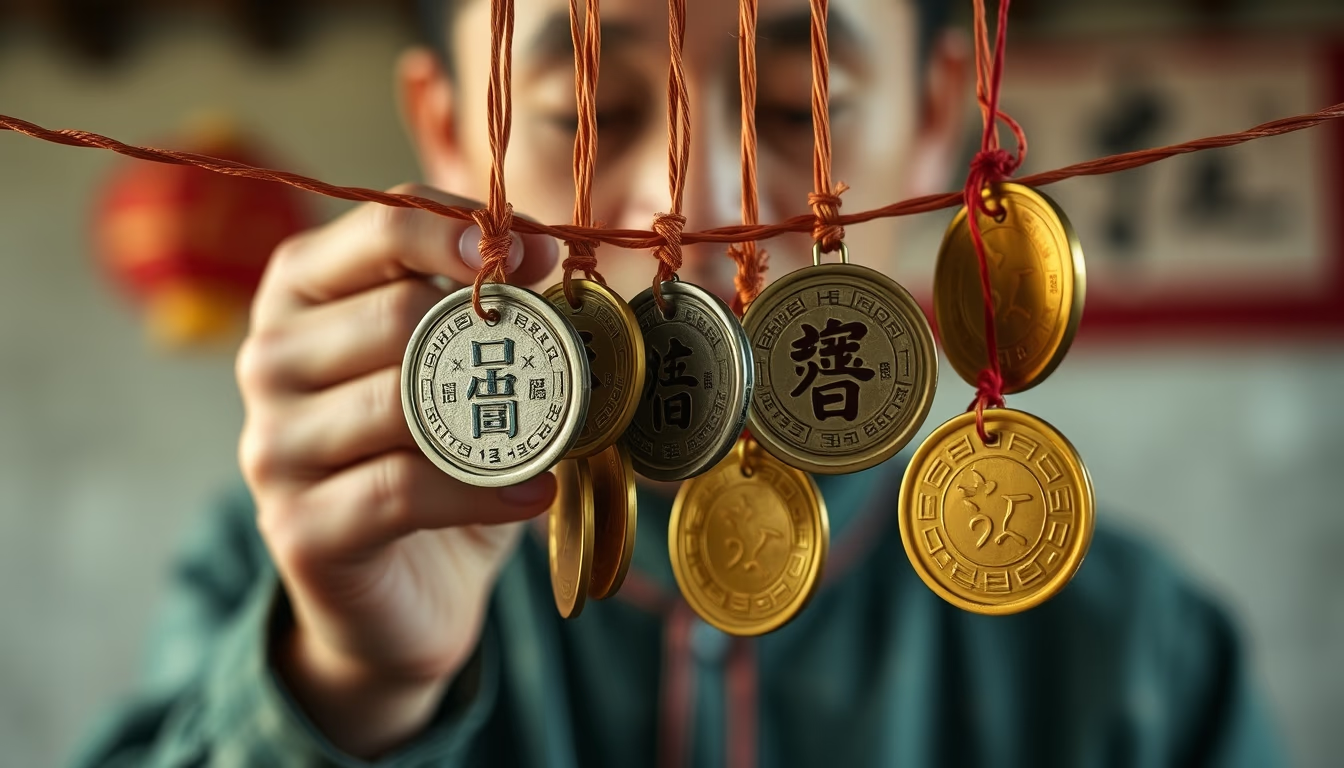
Chinese cash coins string
1344×768 · AVIF · CC BY 4.0
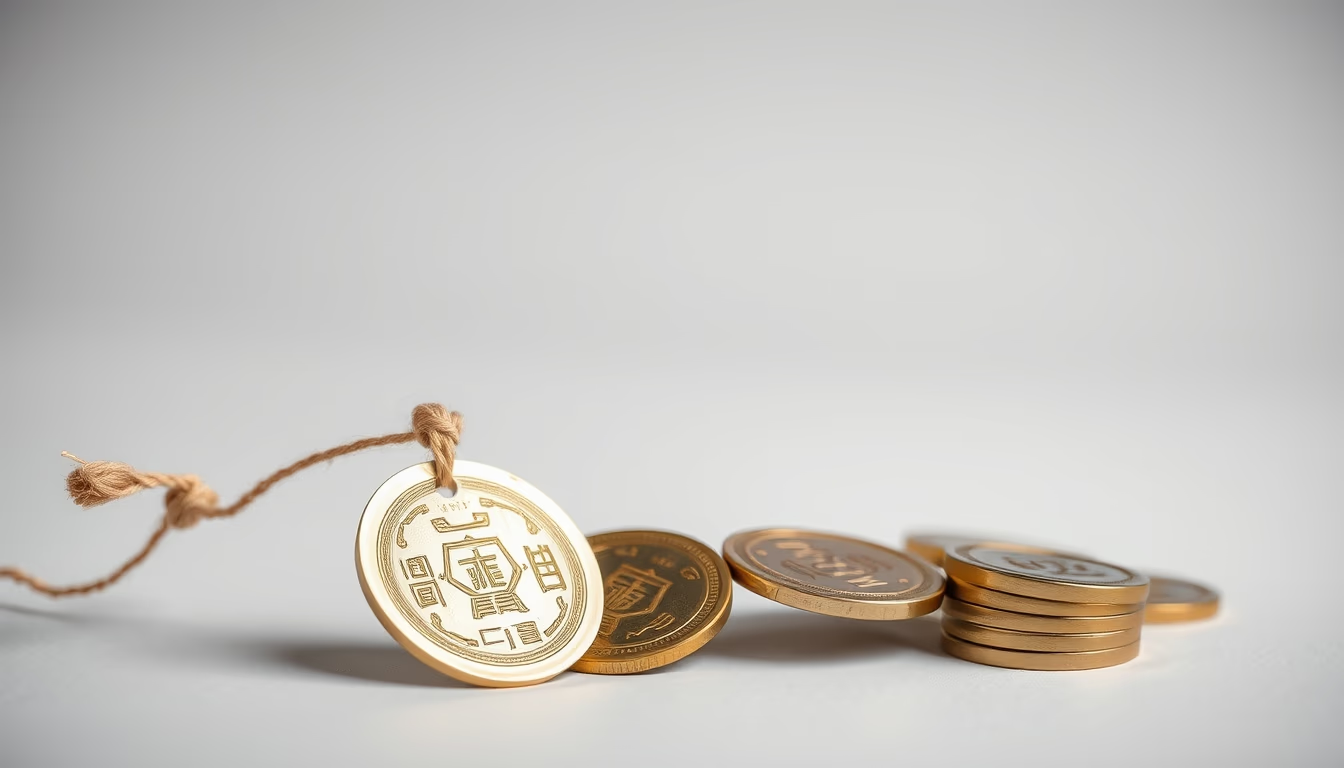
A string of ancient Chinese cash coins in a studio still life, representing centuries of monetary history and East Asian cultural symbolism.
About this subject
Chinese cash coins, known as fang kong qian ("square-hole money"), served as the primary currency in China for over two millennia, from the Warring States period (4th century BC) until the early Republic (20th century). Typically cast in copper or bronze alloys, their distinctive shape, round with a square central hole, embodied Chinese cosmology: the circle represented heaven (tian) and the square, earth (di). The hole allowed coins to be threaded onto cords, forming strings of 100 or 1,000 units, facilitating transport and counting.
The value of cash coins was nominal, but their weight and metal content varied by dynasty. During the Tang dynasty (618, 907), the Kai Yuan Tong Bao became the standard, with inscriptions indicating the reign period. Under the Qing dynasty (1644, 1912), coins such as the Kangxi Tong Bao and Qianlong Tong Bao were produced in enormous quantities, with mints in each province. Each coin bore the reign title and, on the reverse, the mint mark in Manchu or Chinese.
Beyond commerce, cash coins held strong cultural and spiritual significance. They were often buried with the dead to ensure prosperity in the afterlife, or used in amulets (Ya Sheng Qian) to ward off evil spirits. Strings of cash coins were common in wedding ceremonies as symbols of wealth and fertility. Today, they are widely collected by numismatists; their value depends on rarity, dynasty, condition, and special features such as reverse stars or characters.
A typical string of Qing dynasty cash coins, like the one depicted in the image, may include coins from different reigns and mints. The cord binding them, usually made of twisted cotton or silk, follows traditional methods. The studio still life highlights the texture of aged metal and green patina (copper oxide), a result of centuries of oxidation, prized by collectors as a sign of historical authenticity.
Frequently Asked Questions
How can I identify the dynasty of a cash coin?
The dynasty is indicated by the inscriptions on the coin's face. Usually, the reign title (e.g., Kangxi, Qianlong) appears in Chinese characters around the hole. The reverse may feature mint marks in Manchu (during the Qing dynasty) or additional characters.
What is the value of a string of old cash coins?
Value varies greatly depending on rarity, dynasty, condition, and quantity. Common Qing dynasty strings may cost tens of dollars; rare pieces or those from earlier dynasties can be worth thousands. The patina and integrity of the cord also affect value.
Are cash coins still used as currency today?
No. Cash coins ceased to be official currency in the early Republic era (1910s). Today they are collector's items, used in decoration, jewelry, or traditional rituals (such as in temples or Chinese New Year ceremonies).
Direct URL
https://pub-c7d6a6ea828543ac903a74a341ccb2e1.r2.dev/imagens/chinese-cash-coins-string-studio-still-life-fresh12.avifHow to credit
Include a visible link back to UtilizAí. Copy one of the snippets below:
<a href="https://xn--utiliza-eza.com/en/midia/imagens/chinese-cash-coins-string-studio-still-life-fresh12">Chinese cash coins string</a> by <a href="https://xn--utiliza-eza.com">UtilizAí</a>, licensed under <a href="https://creativecommons.org/licenses/by/4.0/">CC BY 4.0</a>.
[Chinese cash coins string](https://xn--utiliza-eza.com/en/midia/imagens/chinese-cash-coins-string-studio-still-life-fresh12) by [UtilizAí](https://xn--utiliza-eza.com), CC BY 4.0
License: CC-BY-4.0