Chinese cash coins string
1344×768 · AVIF · CC BY 4.0
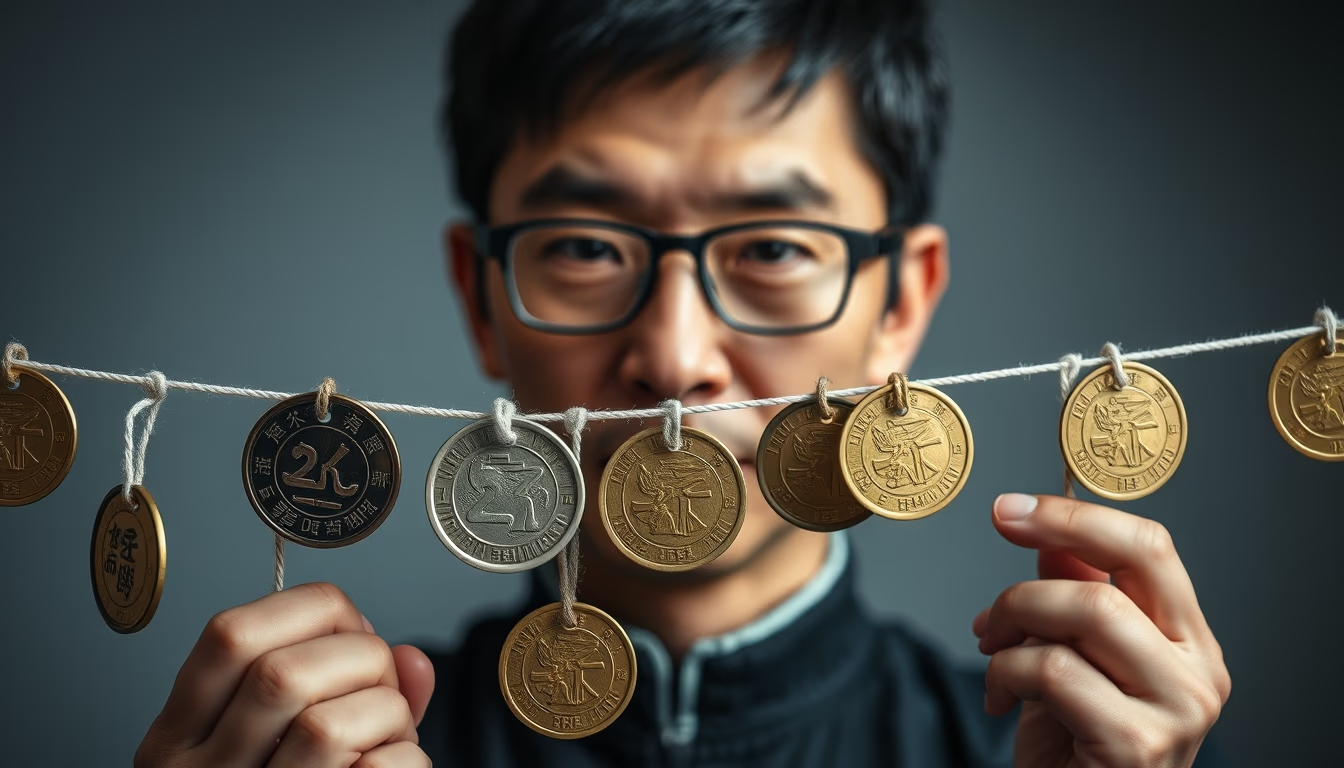
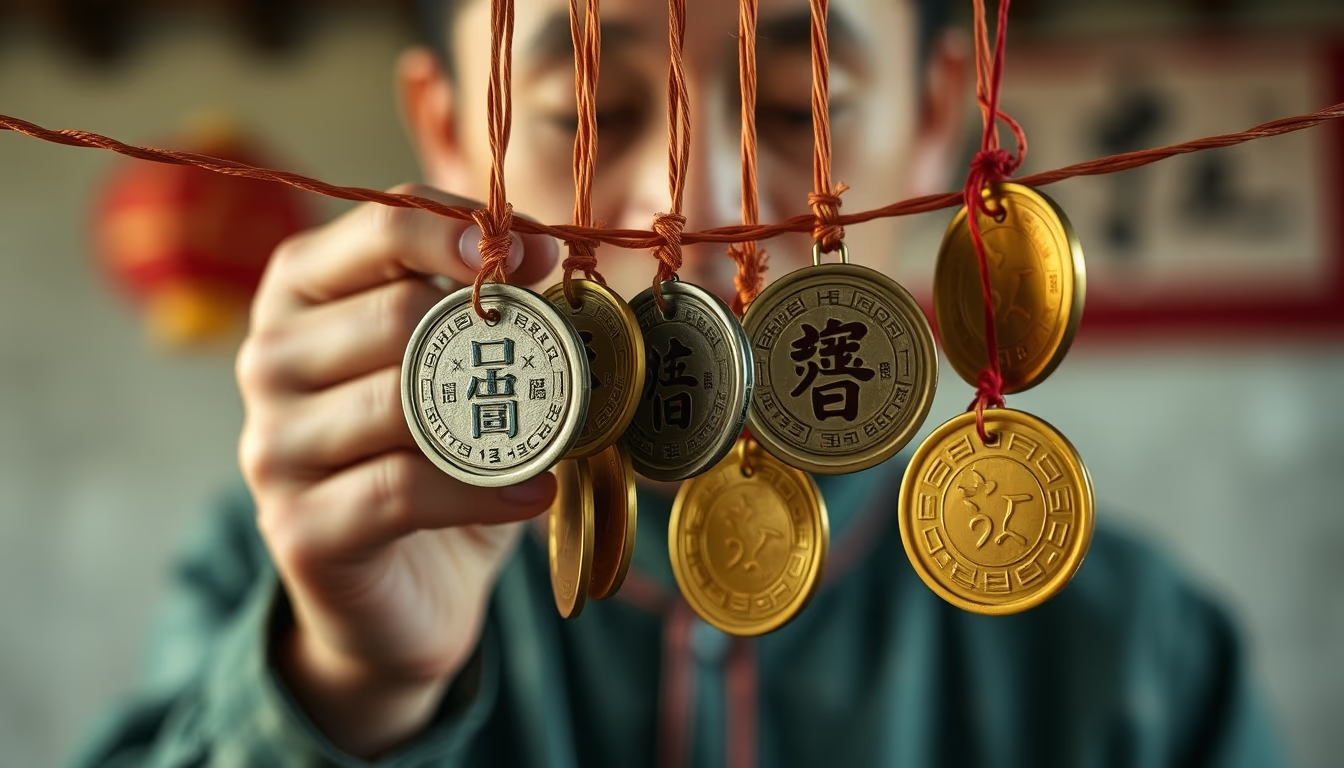
A string of Chinese cash coins, known as 'cash coins string', is a historical numismatic artifact representing the economy and culture of imperial China.
About this subject
Chinese cash coins, also called wén, are round coins made of copper or brass with a square hole in the center. This design, originating in the Qin Dynasty (221-206 BC), allowed them to be strung on a cord for easy transport and counting. A typical string contained 1000 coins, forming a unit of value called guàn or diào. For centuries, these strings were the backbone of local and international trade, used in daily transactions, tax payments, and even as religious offerings.
Beyond monetary use, cash coin strings gained strong cultural symbolism. In Feng Shui, they are considered talismans of prosperity and protection, often hung on doors or tied with red ribbons. At weddings and festivals, strings of coins are given as gifts to attract good luck and wealth. The number of coins also carries meaning: three coins represent harmony between heaven, earth, and humanity, while eight coins symbolize abundance.
Historically, cash coin production was centralized by the imperial mint, but also occurred in provinces and private mints. Each dynasty cast coins with specific inscriptions, such as the emperor's name or reign title, making each string a chronological record of Chinese history. With the end of the Chinese Empire in 1912, cash coins were gradually replaced by modern coinage, but original strings are still prized by collectors and historians.
Today, an authentic string of cash coins can be worth tens to hundreds of dollars, depending on the rarity of the coins and preservation of the cord. Many examples are modern replicas used in decoration or crafts, but originals offer a tangible glimpse into pre-industrial Chinese economy. Studying these strings reveals everything from weight and measurement systems to the trade routes of the Silk Road.
Frequently Asked Questions
What were strings of Chinese cash coins used for?
They were used as a medium of exchange in daily trade, tax payments, and ceremonial gifts. They also had decorative and religious functions as Feng Shui talismans for prosperity.
How were cash coins made?
They were cast in sand or metal molds, typically from copper or brass. The square hole was created by a central pin in the mold, allowing coins to be strung on a cord.
What is the historical value of these strings?
Each string reflects the dynasty and reign period of the coins, serving as a chronological record. They are important for understanding the economy, trade, and material culture of imperial China.
Direct URL
https://pub-c7d6a6ea828543ac903a74a341ccb2e1.r2.dev/imagens/chinese-cash-coins-string-studio-editorial-portrait-fresh0.avifHow to credit
Include a visible link back to UtilizAí. Copy one of the snippets below:
<a href="https://xn--utiliza-eza.com/en/midia/imagens/chinese-cash-coins-string-studio-editorial-portrait-fresh0">Chinese cash coins string</a> by <a href="https://xn--utiliza-eza.com">UtilizAí</a>, licensed under <a href="https://creativecommons.org/licenses/by/4.0/">CC BY 4.0</a>.
[Chinese cash coins string](https://xn--utiliza-eza.com/en/midia/imagens/chinese-cash-coins-string-studio-editorial-portrait-fresh0) by [UtilizAí](https://xn--utiliza-eza.com), CC BY 4.0
License: CC-BY-4.0