Chinese cash coins string
1344×768 · AVIF · CC BY 4.0
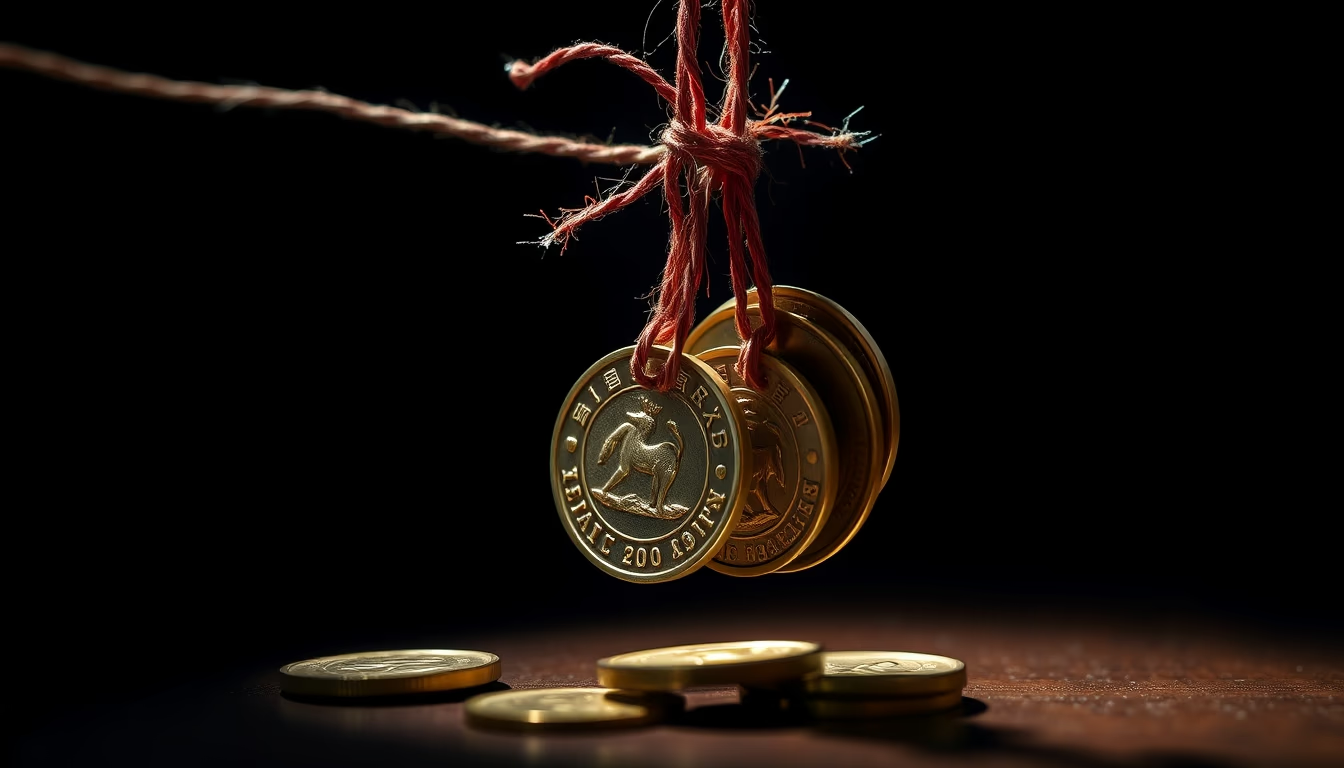
Chinese cash coins strings are bundles of round coins with square holes, used as currency in imperial China for centuries.
About this subject
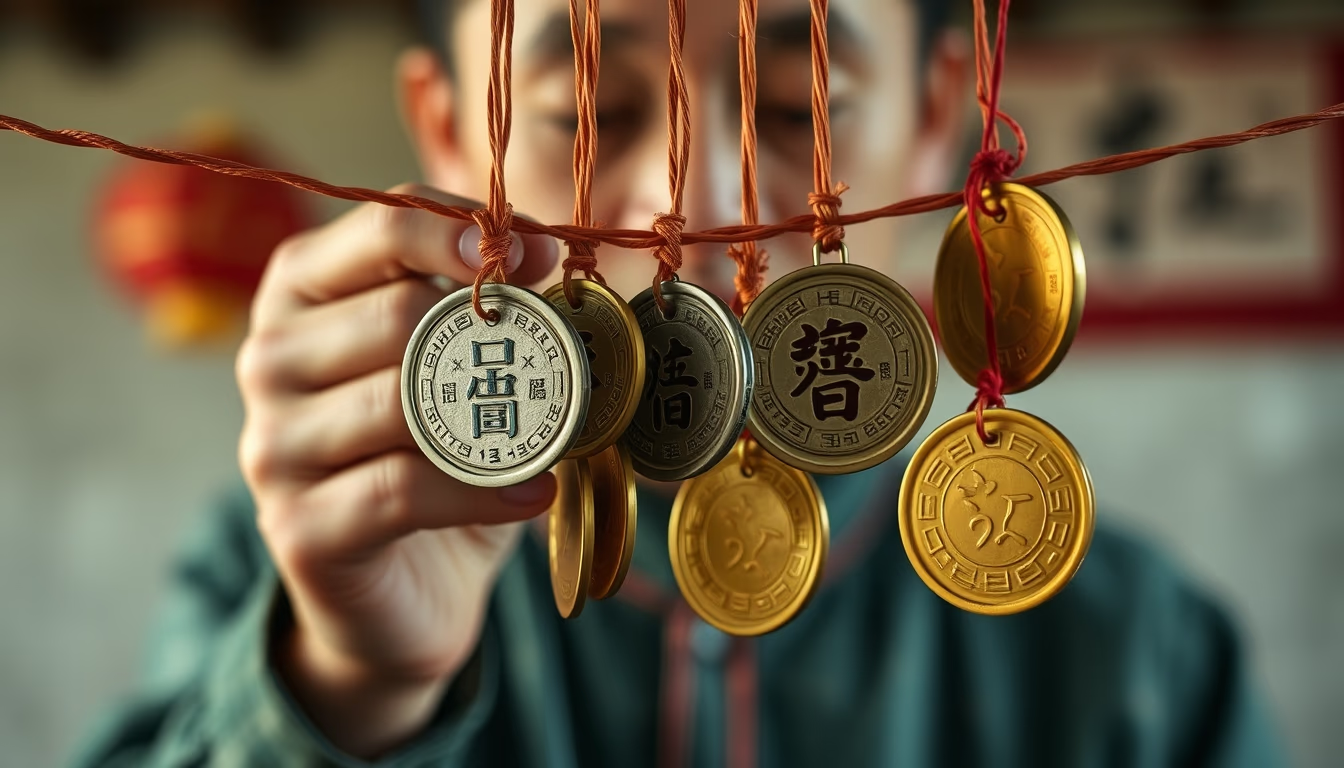
Chinese cash coins strings, known as "cash coins strings," represent one of the longest-lasting monetary systems in history. The individual coins, called wén (文), were cast in bronze or brass with a round shape and a square hole in the center. This design allowed them to be threaded onto strings, forming bundles that facilitated handling and counting. The square hole symbolized the earth, while the circle represented heaven, reflecting ancient Chinese cosmology.
The use of these coins dates back to the Qin dynasty (221, 206 BC), but it was during the Tang dynasty (618, 907 AD) that the system became standardized. Coins circulated in strings of 100, 500, or 1,000 units, tied with a special knot to prevent fraud. The value was based on weight and metal, and the entire string could be exchanged for higher-value goods. By the Song dynasty (960, 1279), production reached industrial scales, with state mints casting billions of coins annually.
Beyond economic function, cash coin strings held significant cultural and religious importance. They were often buried with the dead to ensure wealth in the afterlife and used in feng shui talismans to attract prosperity. The practice of giving coin strings as gifts at weddings and Chinese New Year persisted into the 20th century. Today, they are highly sought after by numismatic collectors, especially original strings with green patina indicating centuries of use.
Frequently Asked Questions
What were Chinese cash coin strings used for?
They served as a unit of value and medium of exchange. A string containing hundreds of coins facilitated larger transactions. They also had ceremonial and decorative roles in rituals and festivals.
What is the origin of the round shape with a square hole?
The shape combines the circle (heaven) and square (earth), concepts from Chinese cosmology. Additionally, the hole allowed coins to be threaded onto strings for easier transport and counting.
How were cash coin strings produced?
They were cast in sand or ceramic molds. Coins emerged connected by metal channels, which were then broken off. After filing, the coins were threaded onto hemp or silk strings to form standardized bundles.
Direct URL
https://pub-c7d6a6ea828543ac903a74a341ccb2e1.r2.dev/imagens/chinese-cash-coins-string-rembrandt-lighting-dramatic-shadows-fresh17.avifHow to credit
Include a visible link back to UtilizAí. Copy one of the snippets below:
<a href="https://xn--utiliza-eza.com/en/midia/imagens/chinese-cash-coins-string-rembrandt-lighting-dramatic-shadows-fresh17">Chinese cash coins string</a> by <a href="https://xn--utiliza-eza.com">UtilizAí</a>, licensed under <a href="https://creativecommons.org/licenses/by/4.0/">CC BY 4.0</a>.
[Chinese cash coins string](https://xn--utiliza-eza.com/en/midia/imagens/chinese-cash-coins-string-rembrandt-lighting-dramatic-shadows-fresh17) by [UtilizAí](https://xn--utiliza-eza.com), CC BY 4.0
License: CC-BY-4.0