Chinese cash coins string
1344×768 · AVIF · CC BY 4.0
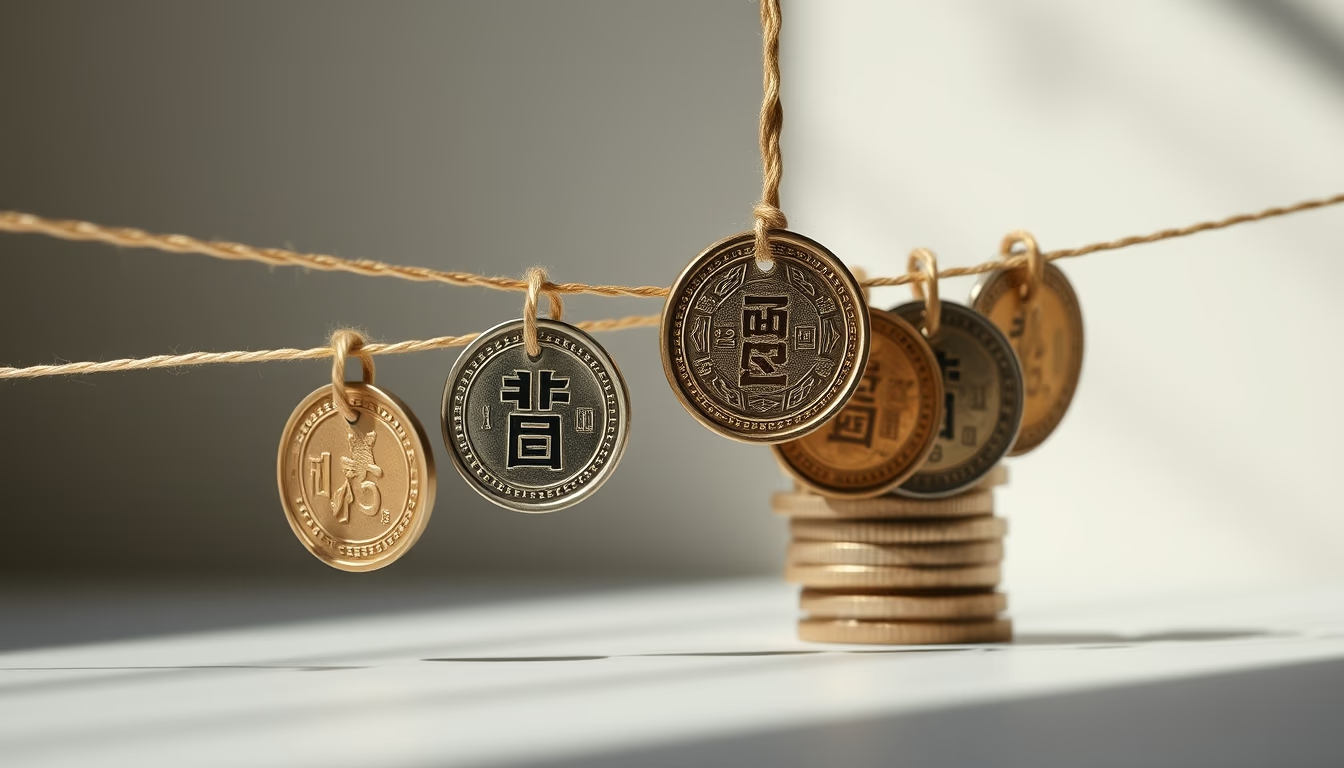
Ancient Chinese cash coins with square holes, strung together for convenience, used as currency for over two millennia.
About this subject
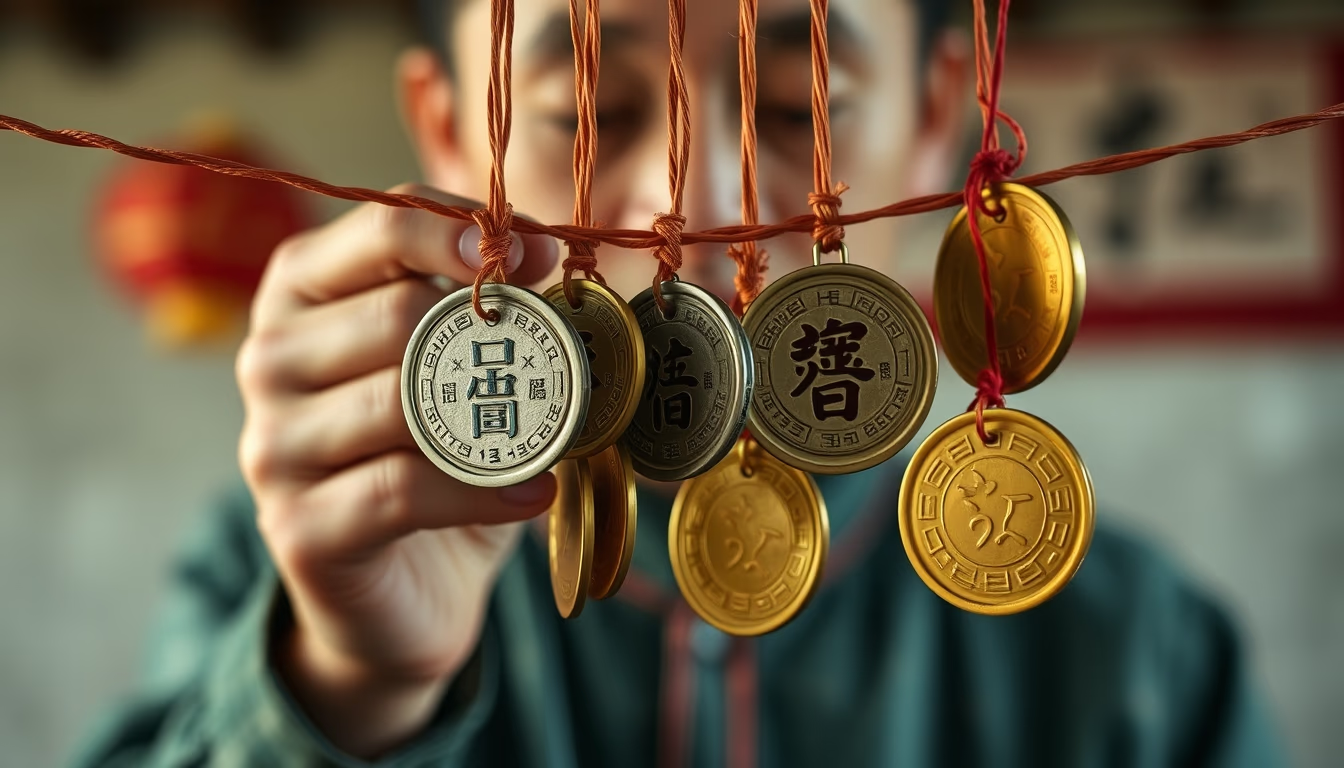
Chinese cash coins, known as “qián”, circulated for over two millennia, from the Qin dynasty (221, 206 BCE) to the early 20th century. Typically made of bronze or brass, they featured a round shape with a square hole in the center, a cosmological symbol representing the union of heaven (round) and earth (square). To facilitate transport and counting, the coins were strung together on cords, forming the iconic “cash strings.” A standard string held 100 coins, though practical variations existed. The use of stringed coins was so widespread that it influenced art and folk culture, appearing as a common motif in embroidery and paintings to invoke prosperity.
Beyond currency, these coins played roles in Feng Shui rituals and I Ching divination. A string of cash coins was believed to attract wealth and ward off negative energy, often hung on doors or placed under mats. During imperial times, the government controlled minting, but commercial demand led to local production and counterfeiting, causing periodic inflation. Still, the cash system endured due to its simplicity and widespread acceptance, gradually replaced by modern coinage only in the late imperial era.
Today, strings of cash coins are collectibles and cultural icons. They represent the ingenuity of a monetary system that blended practicality and symbolism, and their image is used in logos, decorations, and jewelry. The minimalist aesthetic of a coin string, with its aged green and black hues, evokes millennia-old traditions and cultural continuity.
Frequently Asked Questions
Why do Chinese cash coins have a square hole in the center?
The square hole symbolizes the earth, while the round shape represents heaven, reflecting Chinese cosmology. The hole also allowed coins to be strung on cords for easy carrying and counting.
What does a string of Chinese cash coins symbolize in popular culture?
A string of cash coins is a symbol of prosperity and good luck in Feng Shui and Chinese traditions. It is often hung on doors or displayed in homes to attract wealth and ward off negative energy.
How were cash coins used as money in the past?
Cash coins were the primary currency in imperial China. They were strung on cords to form value units, typically 100 coins per string, and used for daily purchases, tax payments, and salaries.
Direct URL
https://pub-c7d6a6ea828543ac903a74a341ccb2e1.r2.dev/imagens/chinese-cash-coins-string-minimalist-composition-fresh3.avifHow to credit
Include a visible link back to UtilizAí. Copy one of the snippets below:
<a href="https://xn--utiliza-eza.com/en/midia/imagens/chinese-cash-coins-string-minimalist-composition-fresh3">Chinese cash coins string</a> by <a href="https://xn--utiliza-eza.com">UtilizAí</a>, licensed under <a href="https://creativecommons.org/licenses/by/4.0/">CC BY 4.0</a>.
[Chinese cash coins string](https://xn--utiliza-eza.com/en/midia/imagens/chinese-cash-coins-string-minimalist-composition-fresh3) by [UtilizAí](https://xn--utiliza-eza.com), CC BY 4.0
License: CC-BY-4.0