Chinese cash coins string
1344×768 · AVIF · CC BY 4.0
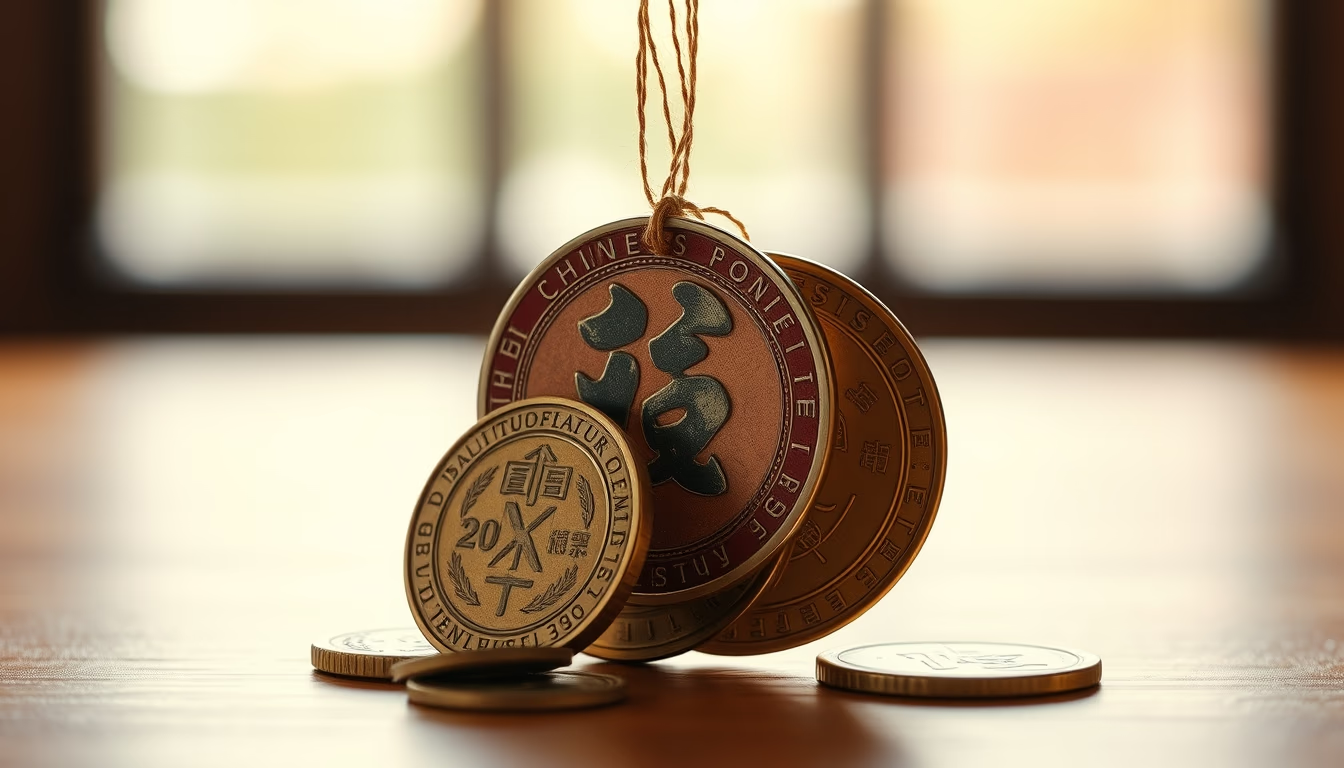
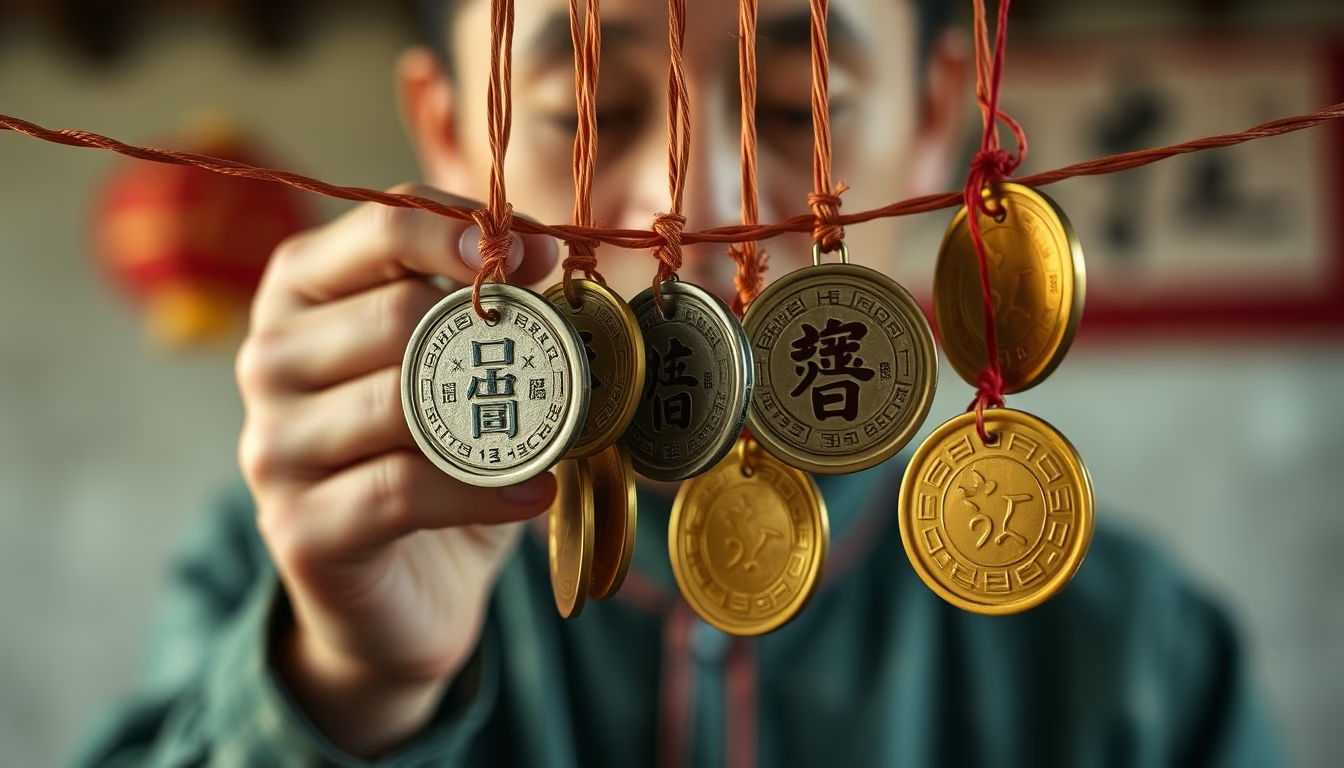
Chinese cash coins, minted for millennia, were traditionally strung on cords for circulation and tax payments.
About this subject
Chinese cash coins, known as 'wen' or 'qian', formed the backbone of Chinese currency for over two millennia, from the Qin dynasty (221, 206 BCE) until the early 20th century. Made of bronze or brass, they feature a central square hole, symbolizing the round heaven and square earth in Chinese cosmology. This hole allowed coins to be strung on cords, forming strings of 100, 500, or 1,000 pieces, facilitating transport and trade. During the Tang dynasty (618, 907), the Kaiyuan Tongbao coin became the standard, and the practice of stringing cash coins was so widespread that the English term 'cash' is derived from the Tamil word 'kāsu', though the practice was adopted across East Asia.
Stringed cash coins, called 'guan' or 'chuan', were bound with hemp or silk cords. Merchants used pre-measured strings in daily transactions, cutting or adding coins as needed. This system persisted until the fall of the Qing Empire in 1912. Interestingly, cash strings also had a ritual function: they were buried with the dead to ensure wealth in the afterlife or used in New Year ceremonies as symbols of prosperity.
Beyond monetary use, cash strings served as a medium of exchange in Mongolia and Tibet, and their production influenced the copper and silver economy. Today, these strings are prized by numismatists and historians, who study the calligraphy, imperial reliefs, and casting marks to date and authenticate pieces.
Frequently Asked Questions
Why do Chinese cash coins have a square hole in the center?
The square hole represents the earth, while the round shape symbolizes heaven, reflecting Chinese cosmology. The hole also allowed coins to be strung on cords for transport and storage.
How many coins were typically in a cash string?
Cash strings usually contained 100, 500, or 1,000 coins. The value was standardized to facilitate trade and tax payments.
Are cash coins still used today?
They are no longer legal tender but are widely collected. They are also used in cultural practices such as New Year decorations, prosperity charms, and funeral ceremonies in some Chinese communities.
Direct URL
https://pub-c7d6a6ea828543ac903a74a341ccb2e1.r2.dev/imagens/chinese-cash-coins-string-fine-art-photography-fresh4.avifHow to credit
Include a visible link back to UtilizAí. Copy one of the snippets below:
<a href="https://xn--utiliza-eza.com/en/midia/imagens/chinese-cash-coins-string-fine-art-photography-fresh4">Chinese cash coins string</a> by <a href="https://xn--utiliza-eza.com">UtilizAí</a>, licensed under <a href="https://creativecommons.org/licenses/by/4.0/">CC BY 4.0</a>.
[Chinese cash coins string](https://xn--utiliza-eza.com/en/midia/imagens/chinese-cash-coins-string-fine-art-photography-fresh4) by [UtilizAí](https://xn--utiliza-eza.com), CC BY 4.0
License: CC-BY-4.0