Champagne cellar reims
1344×768 · AVIF · CC BY 4.0
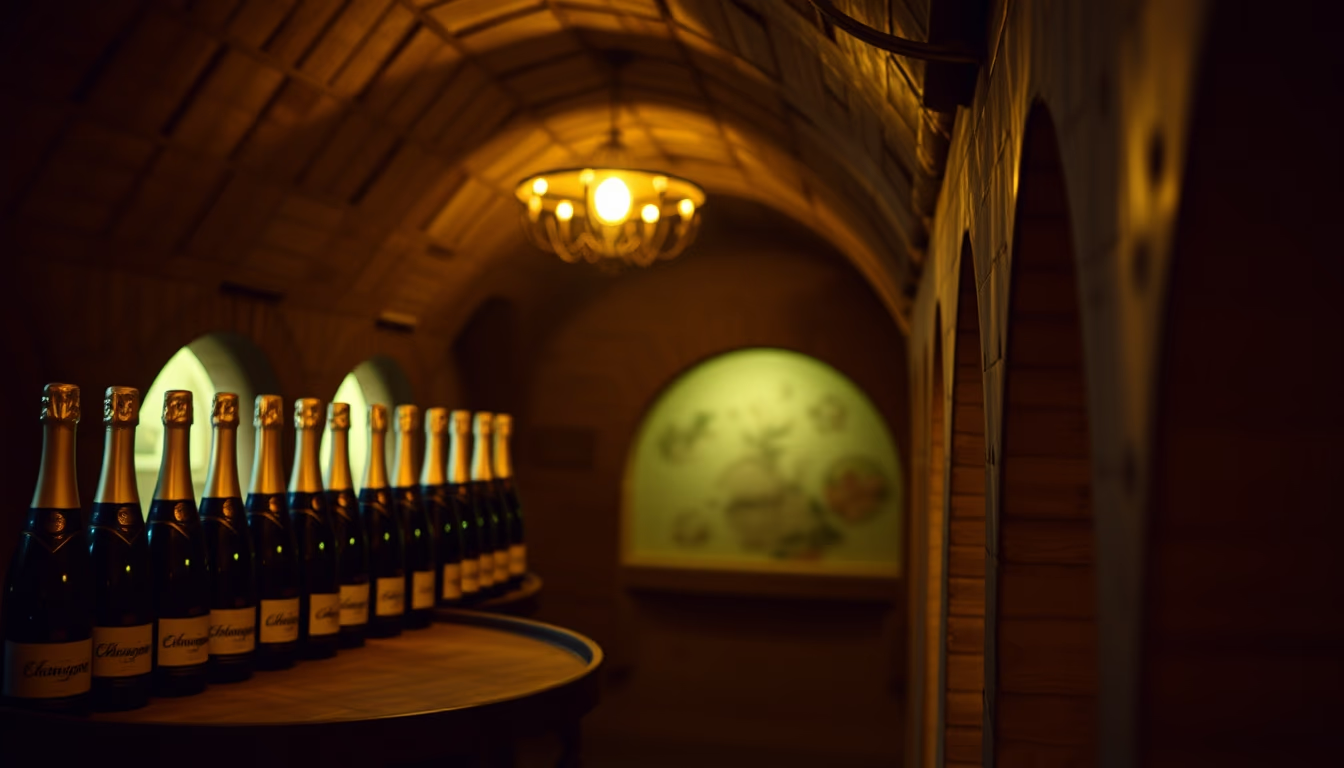
The champagne cellars in Reims are underground galleries carved in chalk, with centuries of history and UNESCO heritage.
About this subject
Reims, in the heart of the Champagne region, houses some of the world's most famous champagne cellars. Carved from ancient Roman chalk quarries, these underground galleries stretch for kilometers beneath the city, forming a labyrinth that stores millions of bottles during the aging process. The porous chalk, a natural thermoregulator, maintains constant temperature and humidity throughout the year, ideal conditions for the second fermentation in the bottle. This unique environment gives champagne its finesse and complexity.
Major houses like Moët & Chandon, Veuve Clicquot, and Taittinger have historic cellars open for tours. The oldest galleries date back to the Gallo-Roman era, when limestone was extracted to build the city. During World War I, some cellars served as shelters for the population. In 2015, the Champagne hillsides, houses, and cellars were recognized as a UNESCO World Heritage site, highlighting the cultural and geological importance of this underground system.
Champagne production follows a rigorous traditional method. After the first fermentation, the base wine is bottled with sugar and yeast to trigger sparkle. Bottles are stacked in pupitres (riddling racks) and manually rotated (remuage) so sediments collect in the neck. This process, which can last months, requires the darkness and constant coolness of the cellars. Each house keeps secrets in its cellars, such as the famous reserve cuvée and special vintages.
Visiting a cellar in Reims is diving into a centuries-old tradition. Tourists walk through narrow corridors lit by yellowish lights, where bottles rest in silence. The guide explains everything from the site's history to technical production details. At the end, tasting a glass of champagne completes the experience, connecting flavor to the terroir's history. The lo-fi aesthetic of a disposable camera evokes exactly this timeless and nostalgic character of the cellars.
Frequently Asked Questions
What is the average depth of champagne cellars in Reims?
The cellars vary from 10 to 38 meters deep, depending on topography and age of excavations. This depth ensures a stable temperature between 10°C and 12°C.
Why is chalk (limestone) important for champagne?
Chalk provides natural drainage, reflects sunlight, and maintains constant humidity. Its mineral composition also contributes to the characteristic acidity and minerality of grapes grown in the region.
Can I visit the Moët & Chandon cellars in Reims?
Yes, Maison Moët & Chandon offers guided tours of its historic cellars, including 18th-century galleries. Advance booking is recommended, especially during peak season.
Direct URL
https://pub-c7d6a6ea828543ac903a74a341ccb2e1.r2.dev/imagens/champagne-cellar-reims-lo-fi-disposable-camera-fresh1.avifHow to credit
Include a visible link back to UtilizAí. Copy one of the snippets below:
<a href="https://xn--utiliza-eza.com/en/midia/imagens/champagne-cellar-reims-lo-fi-disposable-camera-fresh1">Champagne cellar reims</a> by <a href="https://xn--utiliza-eza.com">UtilizAí</a>, licensed under <a href="https://creativecommons.org/licenses/by/4.0/">CC BY 4.0</a>.
[Champagne cellar reims](https://xn--utiliza-eza.com/en/midia/imagens/champagne-cellar-reims-lo-fi-disposable-camera-fresh1) by [UtilizAí](https://xn--utiliza-eza.com), CC BY 4.0
License: CC-BY-4.0