Champagne bubbles closeup
1344×768 · AVIF · CC BY 4.0
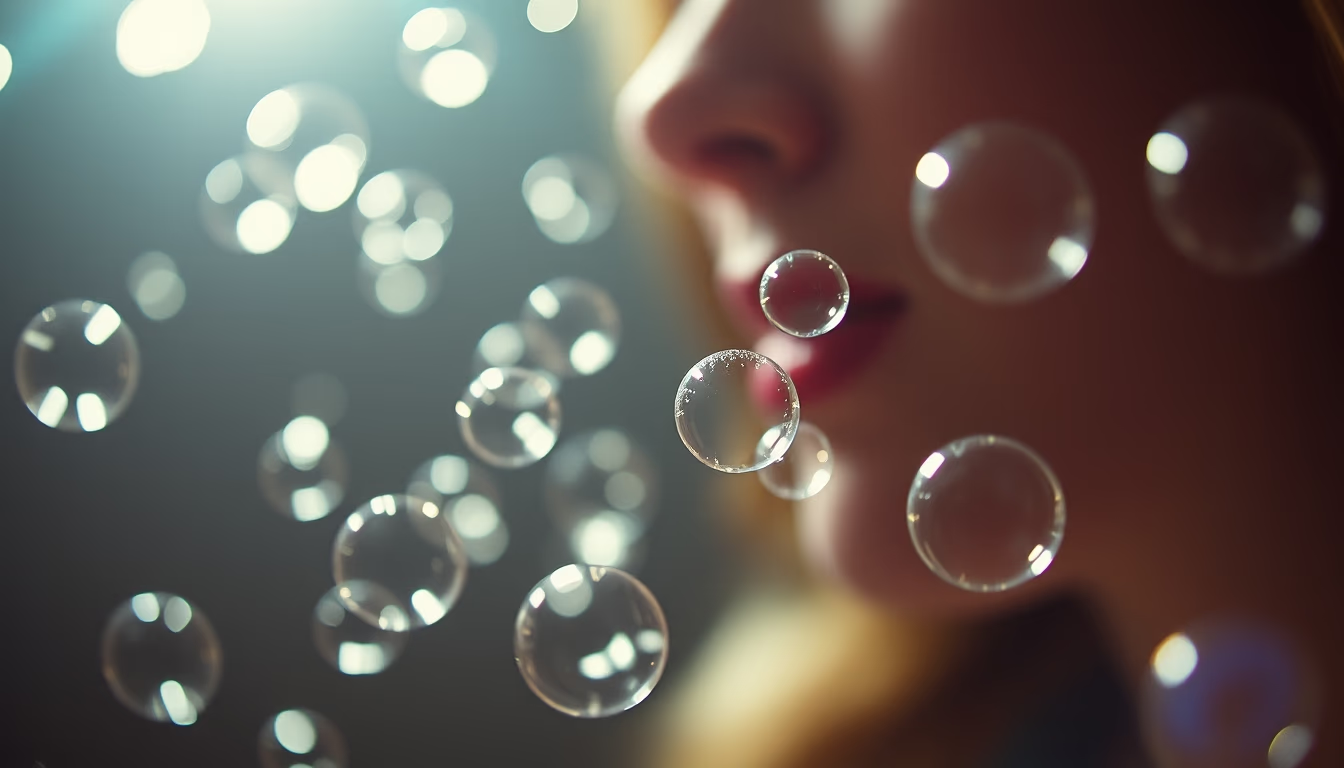
Champagne bubbles reveal a fascinating physical phenomenon, resulting from the second fermentation that turns grapes into one of the world's most celebrated wines.
About this subject
Champagne is a sparkling wine produced exclusively in the Champagne region of France, following the traditional method (méthode champenoise). After primary fermentation, a second fermentation occurs in the bottle with added sugar and yeast, generating dissolved carbon dioxide. When the bottle is opened, the pressure difference releases the gas, forming the characteristic bubbles.
Bubbles do not appear randomly: they form at nucleation points, such as microscopic imperfections on the glass or cellulose fibers from the linen used to polish the glass. Each bubble rises in orderly streams because gas concentrates in specific spots. Studies show that the ideal serving temperature (between 8 and 10 °C) and glass shape influence bubble quantity and size. The flute glass, tall and narrow, preserves bubbles longer than the coupe glass, which dissipates them quickly.
Culturally, champagne is synonymous with celebration, from New Year's Eve to weddings and ship launches. The traditional 'pop' of the cork and the gush of foam are expected, but careful pouring minimizes gas loss. Each bottle contains about 49 million bubbles, and internal pressure is around 6 atmospheres. Flavor is also influenced by bubbles, which release aromas and create an effervescent sensation on the palate.
Interestingly, the science of champagne bubbles was studied by physicist Gérard Liger-Belair, who used high-speed cameras to document their behavior. His research revealed that bubbles can reach speeds of up to 10 km/h and that their formation is affected by the wine's viscosity and alcohol content. Thus, observing a glass of champagne is an invitation to appreciate both the art of winemaking and the basic principles of physics.
Frequently Asked Questions
Why do champagne bubbles rise in straight lines?
They rise in lines because they form at specific nucleation points on the glass, such as tiny imperfections. Each bubble follows the same path to the surface, creating a visible stream.
What is the difference between champagne and other sparkling wines?
Champagne is exclusive to the Champagne region of France and follows the traditional method with a second fermentation in the bottle. Other sparkling wines, such as prosecco and cava, are produced in different regions using different methods.
Does the glass affect bubble quality?
Yes. The flute glass is most recommended, as its tall shape concentrates aromas and preserves bubbles longer. The coupe glass, shallow and wide, causes bubbles to disappear quickly.
Direct URL
https://pub-c7d6a6ea828543ac903a74a341ccb2e1.r2.dev/imagens/champagne-bubbles-closeup-lo-fi-disposable-camera-p6.avifHow to credit
Include a visible link back to UtilizAí. Copy one of the snippets below:
<a href="https://xn--utiliza-eza.com/en/midia/imagens/champagne-bubbles-closeup-lo-fi-disposable-camera-p6">Champagne bubbles closeup</a> by <a href="https://xn--utiliza-eza.com">UtilizAí</a>, licensed under <a href="https://creativecommons.org/licenses/by/4.0/">CC BY 4.0</a>.
[Champagne bubbles closeup](https://xn--utiliza-eza.com/en/midia/imagens/champagne-bubbles-closeup-lo-fi-disposable-camera-p6) by [UtilizAí](https://xn--utiliza-eza.com), CC BY 4.0
License: CC-BY-4.0