Champagne bubbles closeup
1344×768 · AVIF · CC BY 4.0
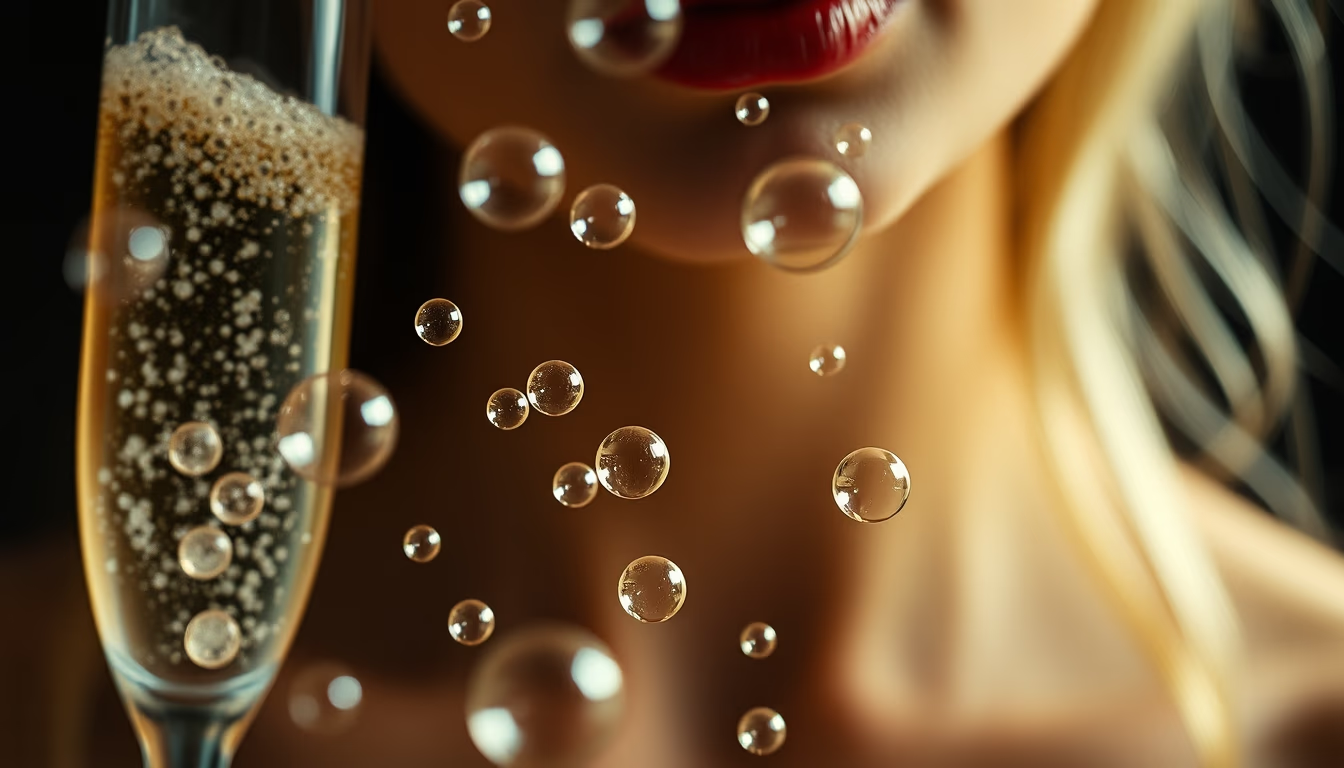
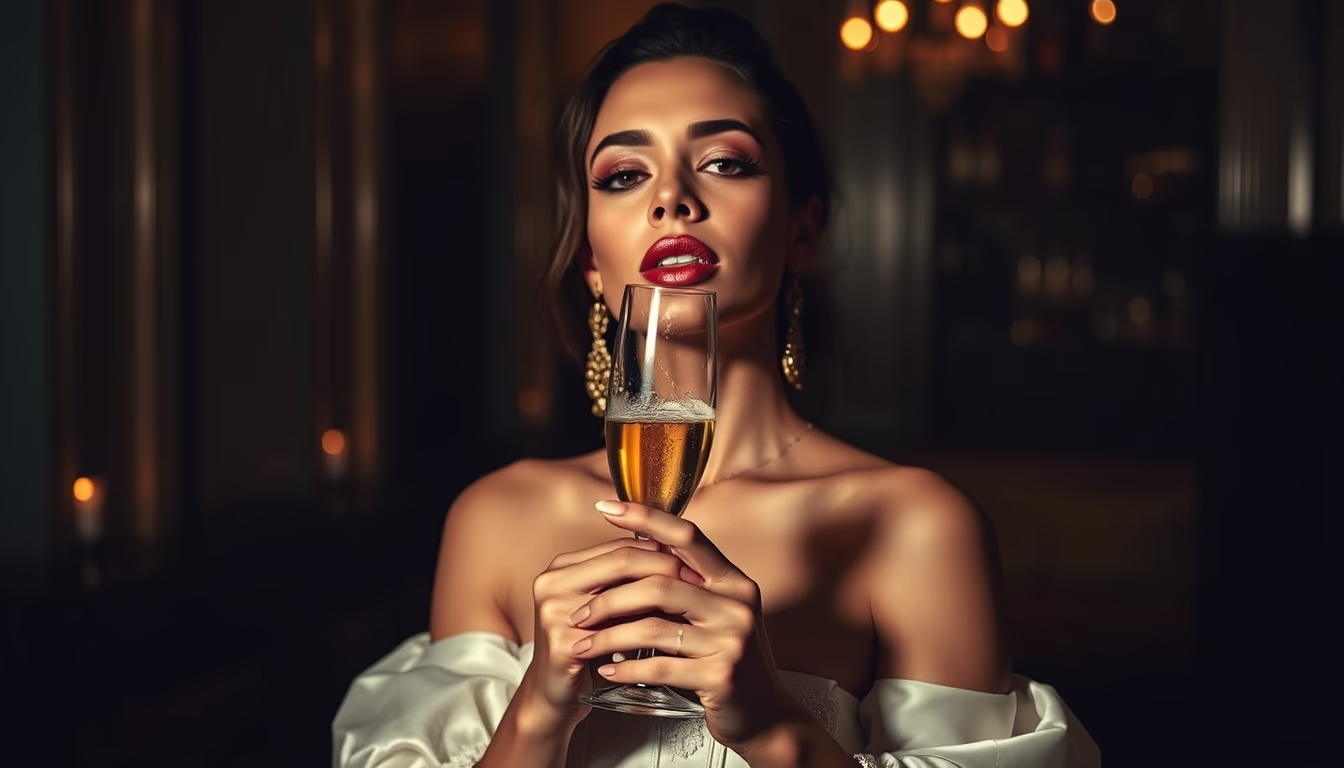
Fine, persistent bubbles dancing in the glass: champagne's effervescence is not just a visual spectacle but the result of a complex secondary fermentation process that defines this iconic wine.
About this subject
Champagne bubbles are the ultimate symbol of celebration and elegance. They arise from a meticulous process known as the méthode champenoise or traditional method. After the first fermentation, the base wine is bottled with a mixture of sugar and yeast (liqueur de tirage). A second fermentation occurs inside the bottle, producing carbon dioxide that, dissolved under pressure, will create the bubbles upon opening. The time spent in contact with the lees (sur lie) can range from 15 months for non-vintage champagnes to several years for special vintages, developing complex aromas of toasted bread, brioche, and nuts.
Bubble nucleation is a fascinating phenomenon. They do not form randomly but at microscopic imperfections on the glass or on cellulose fibers. When a glass is wiped with a rough cloth, more nucleation sites are created, generating a curtain of fine, ascending bubbles. The ideal serving temperature (8-10°C) directly influences formation: too cold, the bubbles are smaller and less numerous; too warm, finesse is lost. High-quality champagnes, such as those from houses like Moët & Chandon, Veuve Clicquot, and Krug, are characterized by delicate and persistent effervescence.
Culturally, champagne is rooted in toasting rituals, from New Year's Eve celebrations to ship launches. The Champagne region in France is the only one legally entitled to bear the name, protected by a controlled appellation of origin (AOC). The predominant grapes are Chardonnay, Pinot Noir, and Pinot Meunier. Fun fact: a bottle of champagne contains about 49 million bubbles; the internal pressure is roughly 6 atmospheres, almost three times that of a car tire. This effervescence also contributes to sensory perception, as carbon dioxide stimulates pain receptors in the mouth, creating a refreshing and slightly tingly sensation.
In contemporary culture, champagne transcends the drink and enters fashion and design, from the ideal glass (flute or white wine glass) to the aesthetics of bottles and labels. Luxury brands often associate their campaigns with the image of bubbles, synonymous with sophistication and ephemerality. For connoisseurs, visual evaluation of the bubbles is one of the first steps in tasting: the mousse (foam) should be persistent, and the bubbles should rise in regular streams. Thus, a simple image of champagne bubbles condenses science, tradition, and desire.
Frequently Asked Questions
Why do champagne bubbles rise in straight lines?
This occurs due to nucleation at specific points on the glass. Bubbles form at microscopic imperfections and rise in streams because the upward motion drags the surrounding liquid, creating a continuous flow. The finer and more regular the bubbles, the higher the quality of the champagne.
What is the difference between champagne and sparkling wine?
Champagne is a sparkling wine produced exclusively in the Champagne region of France, using the traditional method (second fermentation in the bottle). Other sparkling wines are made by different methods (such as Charmat) and in other regions, like Prosecco (Italy) or Cava (Spain). Champagne is protected by appellation of origin.
How to store an open bottle of champagne?
An open bottle should be sealed with a specific sparkling wine stopper (which withstands pressure) and kept in the refrigerator. Effervescence is lost quickly; ideally consume within 24 hours. A vacuum pump can help but does not maintain original pressure.
Direct URL
https://pub-c7d6a6ea828543ac903a74a341ccb2e1.r2.dev/imagens/champagne-bubbles-closeup-high-fashion-editorial-p3.avifHow to credit
Include a visible link back to UtilizAí. Copy one of the snippets below:
<a href="https://xn--utiliza-eza.com/en/midia/imagens/champagne-bubbles-closeup-high-fashion-editorial-p3">Champagne bubbles closeup</a> by <a href="https://xn--utiliza-eza.com">UtilizAí</a>, licensed under <a href="https://creativecommons.org/licenses/by/4.0/">CC BY 4.0</a>.
[Champagne bubbles closeup](https://xn--utiliza-eza.com/en/midia/imagens/champagne-bubbles-closeup-high-fashion-editorial-p3) by [UtilizAí](https://xn--utiliza-eza.com), CC BY 4.0
License: CC-BY-4.0