Champagne bubbles closeup
1344×768 · AVIF · CC BY 4.0
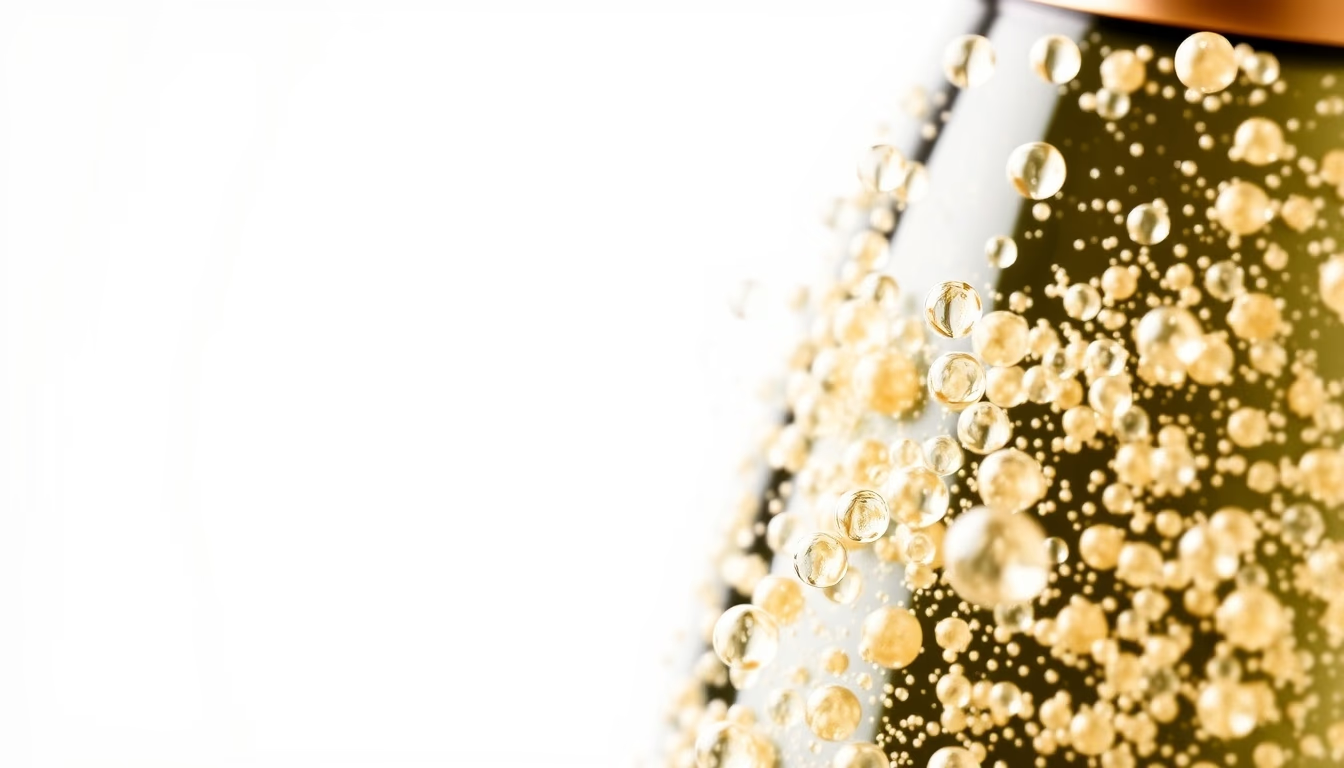
Closeup champagne bubbles reveal the characteristic effervescence of this sparkling wine, whose production process and bubble formation have been studied by scientists for centuries.
About this subject
Champagne bubbles are formed during the second fermentation, known as the méthode champenoise. After the initial fermentation, a mixture of sugar and yeast (liqueur de tirage) is added, and the wine is bottled and sealed. The yeasts consume the sugar and produce carbon dioxide, which, having no escape, dissolves into the liquid. When the bottle is opened, pressure is released and the gas forms bubbles. The size and persistence of the bubbles depend on factors such as temperature and the roughness of the glass, which serve as nucleation points.
From a scientific perspective, champagne bubbles are a complex phenomenon. Studies show that effervescence is not merely aesthetic: it influences the perception of taste and aroma. Bubbles transport aromatic volatile compounds to the surface, intensifying the wine's bouquet. Scientists like Gérard Liger-Belair from the University of Reims dedicate themselves to understanding bubble dynamics, including the famous “pearl chains” that rise in regular patterns on smooth glasses. The ideal serving temperature for champagne is between 6°C and 9°C, as cold retains more gas and maintains effervescence longer.
Culturally, champagne is synonymous with celebration and luxury. Produced exclusively in the Champagne region of France, it follows strict appellation rules. The most used grapes are Chardonnay, Pinot Noir, and Pinot Meunier. The internal pressure of a champagne bottle is about 6 atmospheres, three times the pressure of a car tire. To avoid accidents, sommeliers hold the cork and twist the bottle, not the cork, when opening. Each bottle contains approximately 250 million bubbles, which form and dissipate in an ephemeral spectacle that delights connoisseurs.
Frequently Asked Questions
Why do champagne bubbles rise in straight lines?
This phenomenon occurs due to nucleation: bubbles form at specific points on the glass, such as tiny imperfections or fibers. They rise in lines because dissolved gas accumulates at these spots, releasing bubbles in sequence.
What is the difference between champagne and other sparkling wines?
Champagne is a sparkling wine produced exclusively in the Champagne region of France using the traditional method (méthode champenoise). Other sparkling wines, like prosecco and cava, are made with different methods and have distinct taste and effervescence characteristics.
How does temperature affect champagne bubbles?
Lower temperatures (6°C to 9°C) retain more dissolved carbon dioxide, resulting in smaller and more persistent bubbles. Higher temperatures cause bubbles to escape quickly, reducing effervescence and altering flavor perception.
Direct URL
https://pub-c7d6a6ea828543ac903a74a341ccb2e1.r2.dev/imagens/champagne-bubbles-closeup-commercial-product-photography-p0.avifHow to credit
Include a visible link back to UtilizAí. Copy one of the snippets below:
<a href="https://xn--utiliza-eza.com/en/midia/imagens/champagne-bubbles-closeup-commercial-product-photography-p0">Champagne bubbles closeup</a> by <a href="https://xn--utiliza-eza.com">UtilizAí</a>, licensed under <a href="https://creativecommons.org/licenses/by/4.0/">CC BY 4.0</a>.
[Champagne bubbles closeup](https://xn--utiliza-eza.com/en/midia/imagens/champagne-bubbles-closeup-commercial-product-photography-p0) by [UtilizAí](https://xn--utiliza-eza.com), CC BY 4.0
License: CC-BY-4.0