Champagne bubbles closeup
1344×768 · AVIF · CC BY 4.0
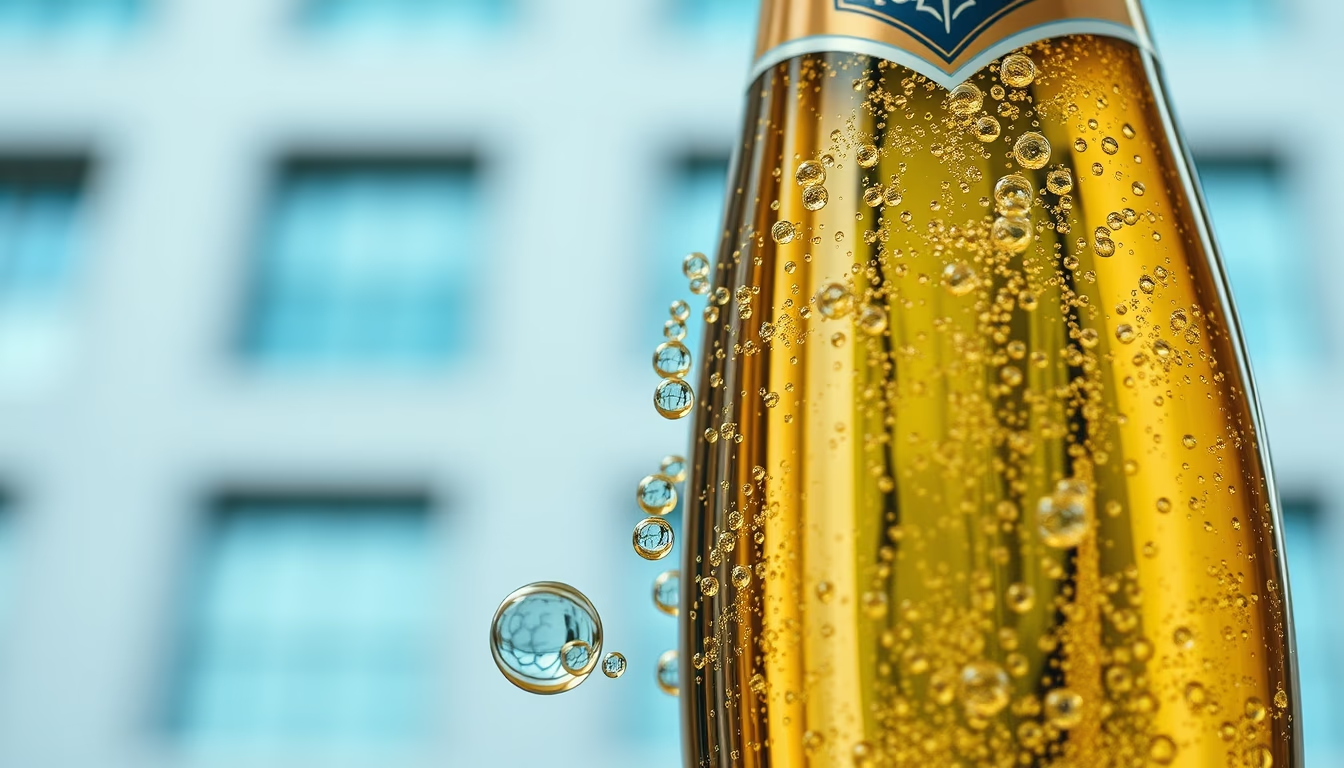
A close-up of champagne bubbles reveals the complex physics of nucleation and how glass shape affects bubble formation.
About this subject
Champagne, a sparkling wine from the Champagne region of France, owes its effervescence to carbon dioxide (CO2) produced during the second fermentation in bottle. Bubbles do not form randomly; they arise at microscopic imperfections in the glass or from cellulose fibers, a phenomenon called heterogeneous nucleation. Scientific studies show that bubble frequency and size depend on temperature and glass shape. Flute glasses, with their narrow shape, favor continuous streams of bubbles, while wider tulip glasses allow slower CO2 release.
The ideal serving temperature, between 8°C and 10°C, directly affects gas solubility: colder liquid retains more CO2, resulting in smaller and more persistent bubbles. At higher temperatures, bubbles are larger and escape quickly, giving a more intense effervescence. Interestingly, the myth that bubbles rise in a spiral is false; they actually follow straight lines due to convection currents in the liquid.
Foam quality is also an indicator of good champagne. High-quality wines produce fine, abundant bubbles that form a persistent crown on the surface. Additionally, carbon dioxide stimulates pain and temperature receptors in the mouth, enhancing the perception of acidity and freshness. Thus, beyond taste, the visual and tactile experience of bubbles is essential to enjoying champagne.
Frequently Asked Questions
Why do champagne bubbles rise in chains rather than randomly?
Bubbles rise in chains because they form at specific nucleation sites on the glass, such as tiny imperfections or fibers. These sites release bubbles at regular intervals, creating continuous streams due to convection currents that move the liquid upward and sideways.
What is the ideal temperature for serving champagne to preserve bubbles?
The ideal temperature is between 8°C and 10°C. At this range, CO2 remains more soluble, resulting in fine and persistent bubbles. Higher temperatures accelerate gas release, making bubbles large and short-lived.
How does the glass shape affect bubble behavior?
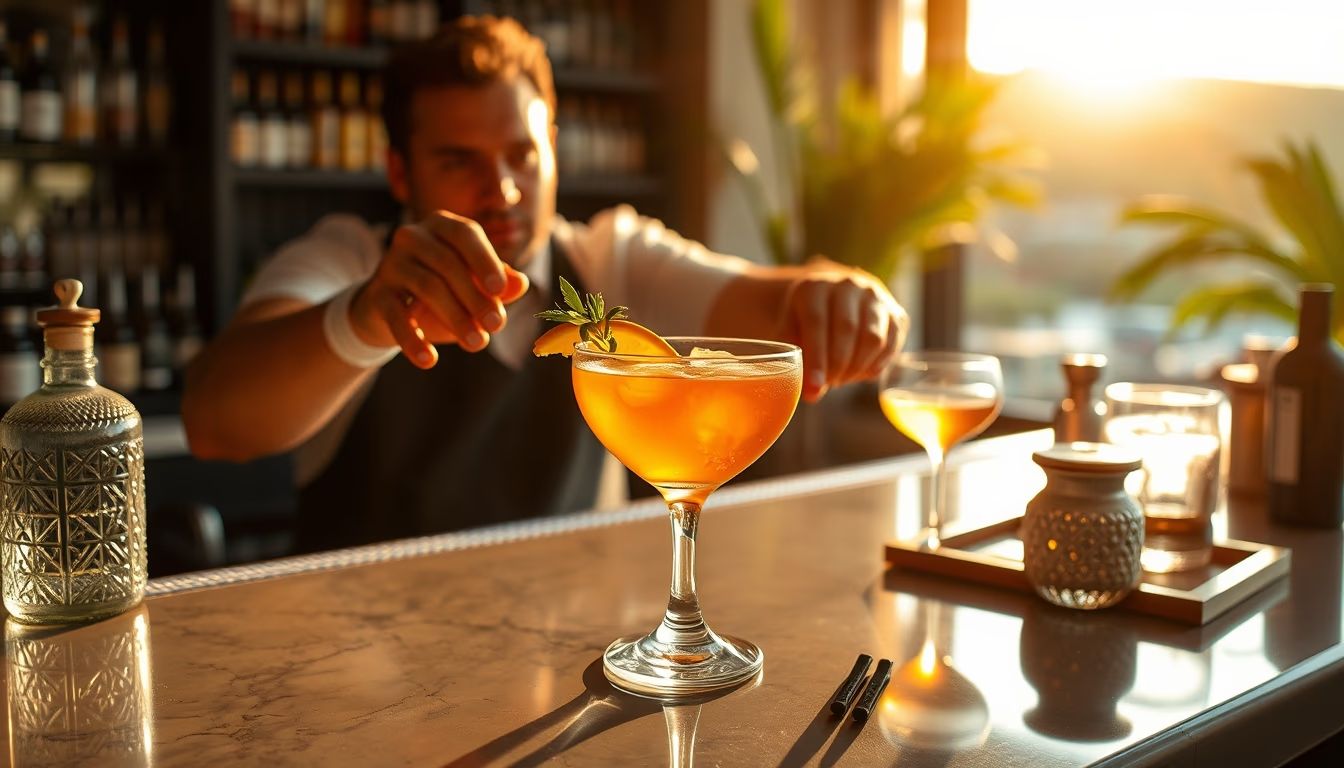
Flute glasses, tall and narrow, concentrate bubbles and maintain effervescence longer, enhancing the visual experience. Tulip glasses, with a wider opening, allow aromas to develop better, but bubbles dissipate more quickly. A smooth glass surface also reduces nucleation, decreasing the number of bubbles.
Direct URL
https://pub-c7d6a6ea828543ac903a74a341ccb2e1.r2.dev/imagens/champagne-bubbles-closeup-architectural-photography-p4.avifHow to credit
Include a visible link back to UtilizAí. Copy one of the snippets below:
<a href="https://xn--utiliza-eza.com/en/midia/imagens/champagne-bubbles-closeup-architectural-photography-p4">Champagne bubbles closeup</a> by <a href="https://xn--utiliza-eza.com">UtilizAí</a>, licensed under <a href="https://creativecommons.org/licenses/by/4.0/">CC BY 4.0</a>.
[Champagne bubbles closeup](https://xn--utiliza-eza.com/en/midia/imagens/champagne-bubbles-closeup-architectural-photography-p4) by [UtilizAí](https://xn--utiliza-eza.com), CC BY 4.0
License: CC-BY-4.0