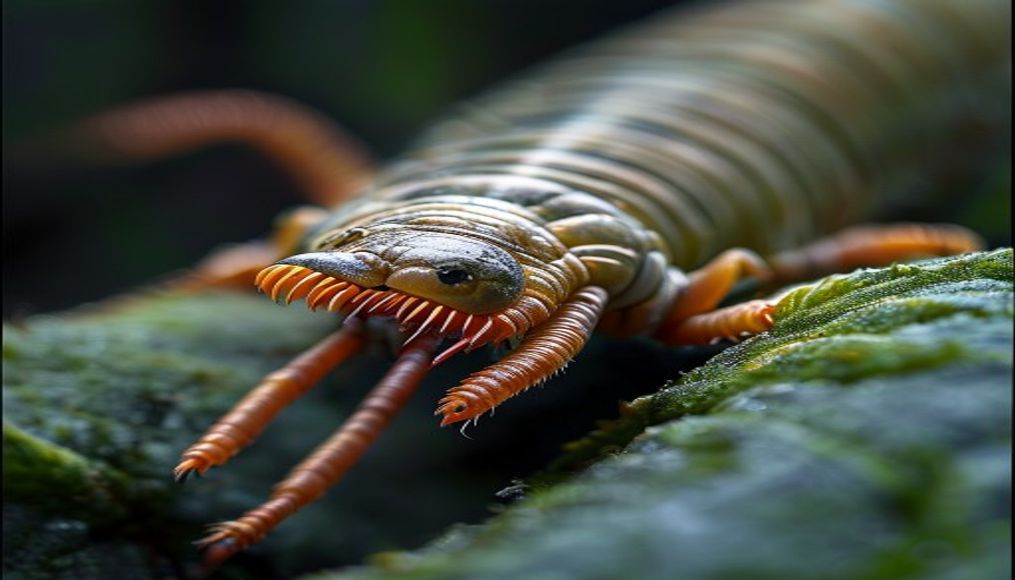
Centipede macro detail
1344×768 · AVIF · CC BY 4.0
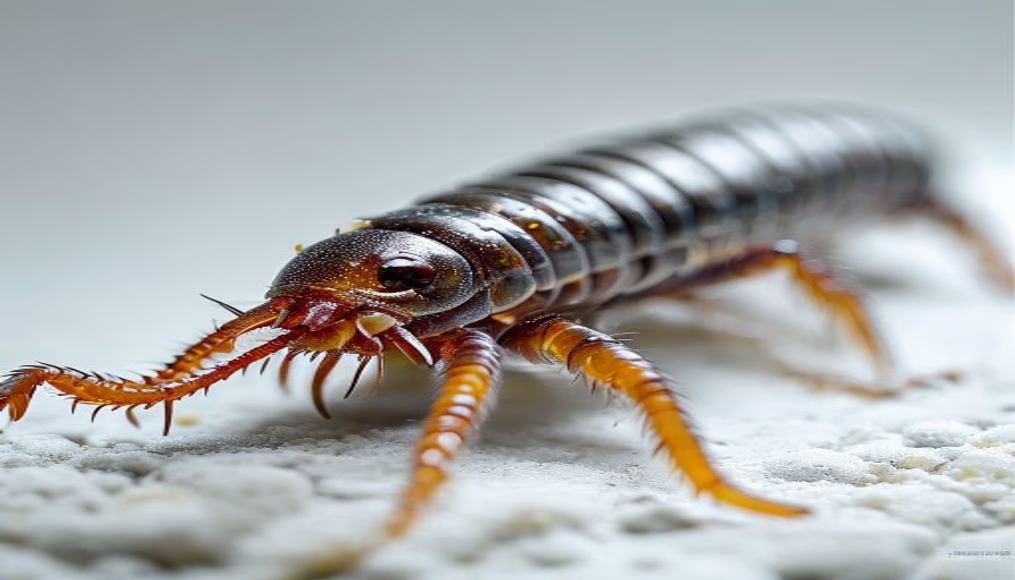
The centipede is a predatory arthropod of the class Chilopoda, known for its segmented body and numerous legs, inhabiting moist soils worldwide.
About this subject
Centipedes belong to the class Chilopoda within the phylum Arthropoda. Unlike insects, they have one pair of legs per body segment, ranging from 15 to 177 pairs depending on the species. They are carnivorous hunters that prey mainly on insects, spiders, and small invertebrates, using strong jaws and venom to immobilize victims. The venom is delivered through forcipules, modified front legs, and can cause intense pain in humans, though fatalities are rare.
These arthropods are found on every continent except Antarctica, favoring moist, dark environments such as under rocks, logs, leaf litter, and soil. They are primarily nocturnal and avoid light. Despite the common name "centipede" (meaning "hundred feet"), they rarely have exactly one hundred legs, the number varies among species and even throughout the animal's life, as they can lose and regenerate legs.
Centipedes play an important ecological role as natural pest controllers, feeding on unwanted insects. Some species, such as the giant Asian centipede (Scolopendra subspinipes), can reach up to 30 cm in length and are feared for their painful bite. Interestingly, there are bioluminescent species that emit green or blue light, though this ability is rare among chilopods.
Frequently Asked Questions
Are centipedes venomous?
Yes, centipedes have venom glands in their forcipules (modified front legs) and use it to hunt. Their bite can be painful to humans but is rarely fatal, except in cases of allergy or very large species.
How many legs does a centipede have?
The number of legs varies by species and life stage. Centipedes have between 15 and 177 pairs of legs, always an odd number of pairs. The name "centipede" is misleading, as they rarely have exactly 100 legs.
Where do centipedes live?
Centipedes prefer moist, dark environments such as under rocks, logs, leaf litter, in soil, or inside crevices. They are found worldwide except Antarctica and are most active at night.
Direct URL
https://pub-c7d6a6ea828543ac903a74a341ccb2e1.r2.dev/imagens/centipede-macro-detail-commercial-product-photography-p0.avifHow to credit
Include a visible link back to UtilizAí. Copy one of the snippets below:
<a href="https://xn--utiliza-eza.com/en/midia/imagens/centipede-macro-detail-commercial-product-photography-p0">Centipede macro detail</a> by <a href="https://xn--utiliza-eza.com">UtilizAí</a>, licensed under <a href="https://creativecommons.org/licenses/by/4.0/">CC BY 4.0</a>.
[Centipede macro detail](https://xn--utiliza-eza.com/en/midia/imagens/centipede-macro-detail-commercial-product-photography-p0) by [UtilizAí](https://xn--utiliza-eza.com), CC BY 4.0
License: CC-BY-4.0