Celtic harp small
1344×768 · AVIF · CC BY 4.0
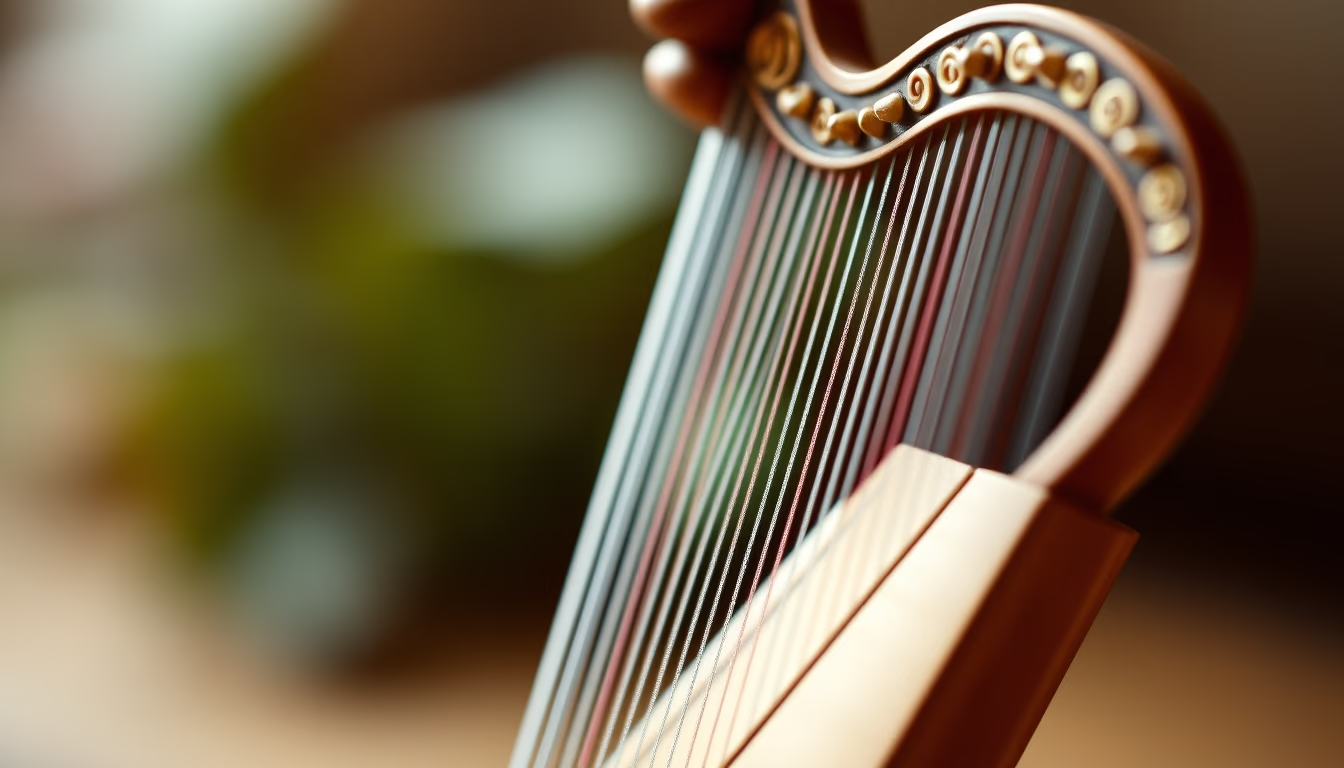
The Celtic harp, also known as cláirseach, is a traditional string instrument from Ireland and Scotland, serving as a national symbol of Ireland.
About this subject
The Celtic harp is a plucked string instrument that dates back to at least the 8th century in Ireland and Scotland. Unlike the classical orchestral harp, the Celtic harp is smaller, typically with metal strings (bronze or steel) and a trapezoid-shaped soundbox. The term 'Celtic harp' encompasses historical variations such as the Irish cláirseach and the Scottish clarsach.
In Gaelic culture, the harp held a central role in royal courts and among bards. Harpists were highly respected and transmitted stories and poems through music. The symbol of the Celtic harp is so iconic that it appears on Ireland's coat of arms, the presidential flag, and even on European coins. The instrument was suppressed during English rule in the 16th century but revived in the 19th century with the Celtic revival movement.
Interestingly, the oldest surviving Celtic harp, known as the 'Brian Boru Harp', dates from the 14th or 15th century and is displayed at Trinity College Dublin. Traditional construction uses willow wood for the soundbox and bronze strings, producing a brighter, more percussive sound than nylon-stringed harps. Today, the Celtic harp is played at folk festivals and in new age music, keeping the tradition alive.
Frequently Asked Questions
What is a Celtic harp?
A Celtic harp is a traditional string instrument from Ireland and Scotland, smaller than the classical harp, with metal strings and a trapezoid-shaped soundbox. It is a national symbol of Ireland.
How does a Celtic harp differ from a classical harp?
The Celtic harp is smaller, has metal strings (bronze or steel) instead of nylon, and typically lacks pedals. Its sound is brighter and more percussive, suited for folk music.
What is the historical origin of the Celtic harp?
The Celtic harp originated in Ireland and Scotland around the 8th century. It was used by bards and nobles but was suppressed in the 16th century, revived in the 19th century with the Celtic revival movement.
Direct URL
https://pub-c7d6a6ea828543ac903a74a341ccb2e1.r2.dev/imagens/celtic-harp-small-tilt-shift-miniature-p1.avifHow to credit
Include a visible link back to UtilizAí. Copy one of the snippets below:
<a href="https://xn--utiliza-eza.com/en/midia/imagens/celtic-harp-small-tilt-shift-miniature-p1">Celtic harp small</a> by <a href="https://xn--utiliza-eza.com">UtilizAí</a>, licensed under <a href="https://creativecommons.org/licenses/by/4.0/">CC BY 4.0</a>.
[Celtic harp small](https://xn--utiliza-eza.com/en/midia/imagens/celtic-harp-small-tilt-shift-miniature-p1) by [UtilizAí](https://xn--utiliza-eza.com), CC BY 4.0
License: CC-BY-4.0