Cello in concert hall
1344×768 · AVIF · CC BY 4.0
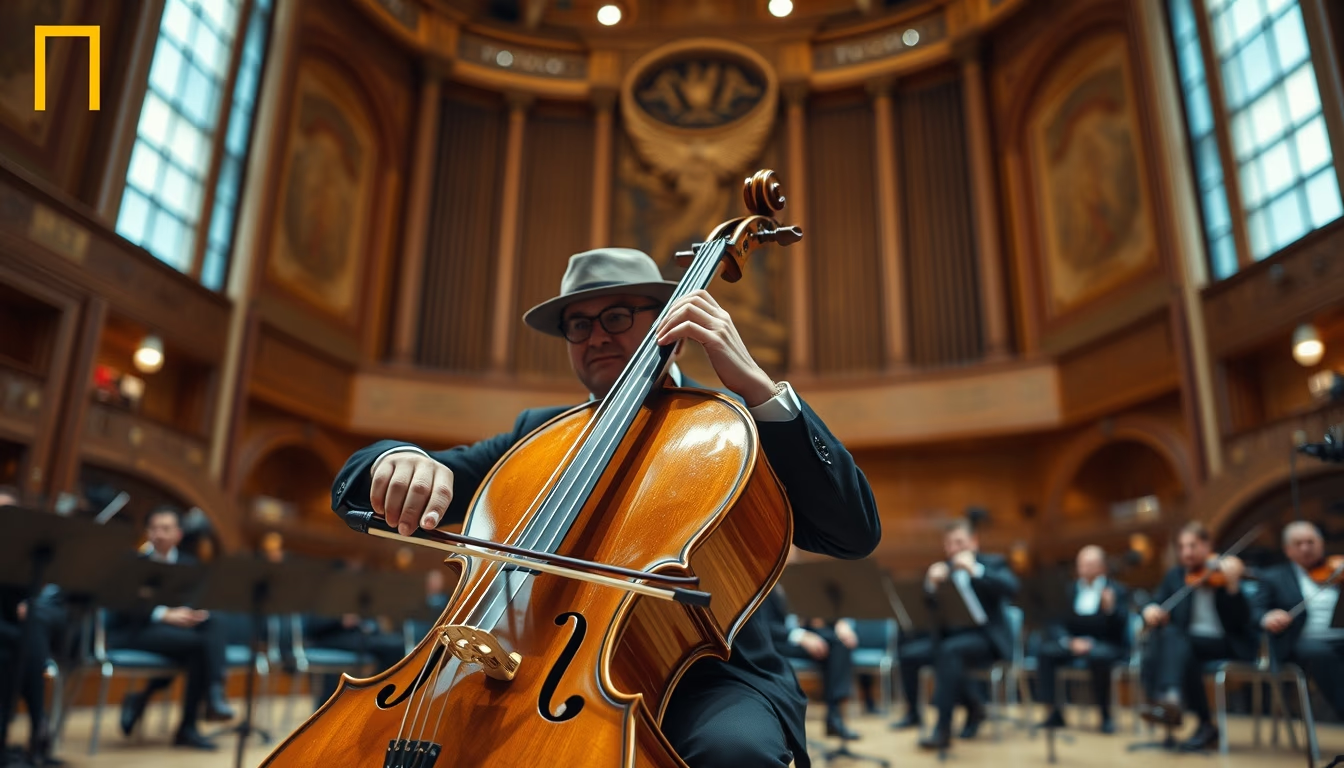
The cello is a string instrument that plays a central role in concert music, with a deep and expressive timbre.
About this subject
The cello, also known as violoncello, is a bowed string instrument belonging to the violin family. Its origins date back to 16th century Italy, evolving from the viola da gamba. Unlike the violin and viola, the cello is played in a vertical position, supported on the floor by an endpin, with the bow drawn horizontally. It has four strings tuned in fifths (C, G, D, A), with the lowest string being C, giving the cello its rich, melancholic timbre.
Crafting a cello requires meticulous artistry. Woods such as spruce, maple, and ebony are used for the top, ribs, neck, and fittings. Varnish, applied in thin layers, affects resonance and protection. The bow, traditionally made from brazilwood or carbon fiber, features horsehair that, when rubbed against strings, produces vibration. The sound is amplified by the hollow body acting as a resonance chamber. The choice of bridge, soundpost, and tuning pegs also influences tonal quality.
In an orchestral setting, the cello provides harmonic and melodic foundations. Alongside double basses, it forms the bass section of the orchestra, but also performs expressive solos in works such as Dvorak's Cello Concerto and Bach's Suites. In chamber music, it is essential in string quartets and trios. The cello boasts a vast solo repertoire, with compositions by Haydn, Elgar, and Villa-Lobos, who incorporated Brazilian elements into his works.
Concert halls are acoustically designed to enhance the instrument's qualities. The cello benefits from spaces with controlled reverberation, allowing sound projection without loss of clarity. The musician's position on stage, usually seated, and interaction with the hall's acoustics influence performance. Cello concerts, whether solo or in ensembles, continue to attract audiences, highlighting the instrument's enduring relevance in global musical culture.
Frequently Asked Questions
What is the difference between a cello and a violin?
The cello is larger, has lower-pitched strings, and is played vertically, while the violin is smaller, higher-pitched, and held on the shoulder. Both belong to the same family but have different roles and sounds.
Is the cello difficult to learn?
Yes, it requires practice and motor coordination. Mastering posture, intonation, and bowing takes years of study, but the repertoire rewards the effort.
What are the most famous cello works?
Notable pieces include Dvorak's Cello Concerto, Bach's Suites, Elgar's Concerto, and Villa-Lobos' Bachiana Brasileira No. 5.
Direct URL
https://pub-c7d6a6ea828543ac903a74a341ccb2e1.r2.dev/imagens/cello-in-concert-hall-national-geographic-style-p5.avifHow to credit
Include a visible link back to UtilizAí. Copy one of the snippets below:
<a href="https://xn--utiliza-eza.com/en/midia/imagens/cello-in-concert-hall-national-geographic-style-p5">Cello in concert hall</a> by <a href="https://xn--utiliza-eza.com">UtilizAí</a>, licensed under <a href="https://creativecommons.org/licenses/by/4.0/">CC BY 4.0</a>.
[Cello in concert hall](https://xn--utiliza-eza.com/en/midia/imagens/cello-in-concert-hall-national-geographic-style-p5) by [UtilizAí](https://xn--utiliza-eza.com), CC BY 4.0
License: CC-BY-4.0