Cello in concert hall
1344×768 · AVIF · CC BY 4.0
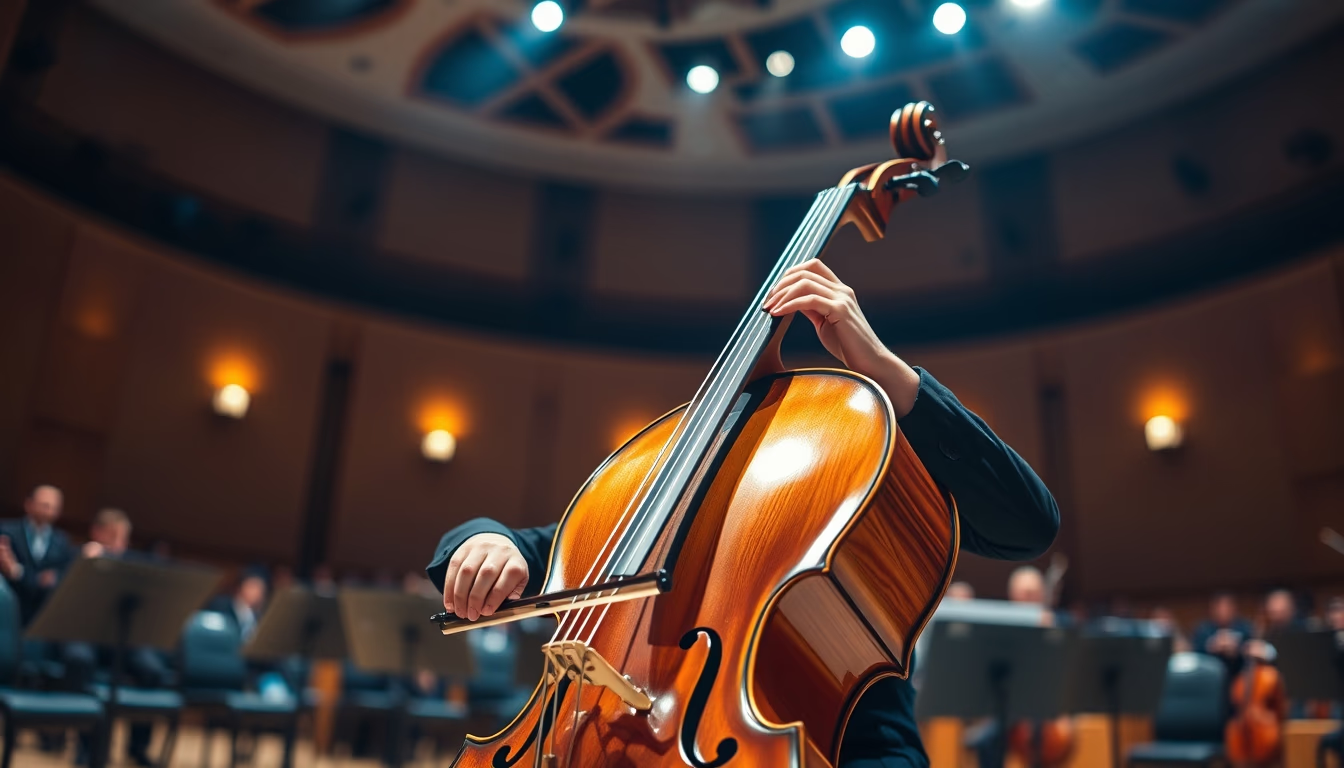
The cello, a string instrument from the violin family, is a central piece in orchestras and solo performances in concert halls worldwide.
About this subject
The cello is a bowed string instrument from the violin family, with a size and pitch range between the viola and the double bass. It has four strings tuned in fifths: C2, G2, D3, and A3, spanning approximately from C2 to C6. Its construction typically uses spruce for the top, maple for the back and sides, and ebony for the fingerboard and pegs. The bow, traditionally made of brazilwood and horsehair, is essential for producing the instrument's rich, resonant tone.
In a symphony orchestra, the cello section comprises eight to twelve musicians, providing harmonic and melodic foundation across various registers. Beyond orchestral roles, the cello boasts a vast solo and chamber repertoire. Johann Sebastian Bach's Six Suites for Solo Cello are masterpieces of the instrument's literature, while composers like Antonín Dvořák and Edward Elgar wrote concertos that fully explore the cello's expressive and technical capabilities.
The modern cello emerged in 17th-century Italy, with luthier families such as Stradivari and Guarneri refining its design. Over centuries, modifications included adjustments to the neck and the addition of the endpin, enhancing stability and playing positions. Today, cellists like Yo-Yo Ma and Jacqueline du Pré have brought the instrument global acclaim, performing everything from Baroque to contemporary works.
Playing technique involves drawing the bow across the strings while the left hand presses the strings against the fingerboard to vary pitch. The musician sits, holding the cello between the knees. The cello's versatility extends beyond classical concert halls into jazz, rock, and film scores, demonstrating its adaptability across diverse musical genres.
Frequently Asked Questions
What is the difference between a cello and a violin?
The cello is larger and has a lower pitch range than the violin. The violin is tuned in G, D, A, E, while the cello is tuned in C, G, D, A, one octave lower. Additionally, the cello is played seated, held between the knees, whereas the violin is held under the chin.
What are the main parts of a cello?
The main parts include the body (consisting of the top, back, and sides), the neck, the fingerboard, the pegs, the tailpiece, the bridge, the endpin, and the four strings. The bow consists of the stick, the hair, and the frog.
Who are the greatest cellists in history?
Among the greatest cellists are Pablo Casals, Mstislav Rostropovich, Jacqueline du Pré, and Yo-Yo Ma. These musicians are renowned for their iconic interpretations of the cello repertoire and significant contributions to the instrument's technical and artistic development.
Direct URL
https://pub-c7d6a6ea828543ac903a74a341ccb2e1.r2.dev/imagens/cello-in-concert-hall-magazine-editorial-p2.avifHow to credit
Include a visible link back to UtilizAí. Copy one of the snippets below:
<a href="https://xn--utiliza-eza.com/en/midia/imagens/cello-in-concert-hall-magazine-editorial-p2">Cello in concert hall</a> by <a href="https://xn--utiliza-eza.com">UtilizAí</a>, licensed under <a href="https://creativecommons.org/licenses/by/4.0/">CC BY 4.0</a>.
[Cello in concert hall](https://xn--utiliza-eza.com/en/midia/imagens/cello-in-concert-hall-magazine-editorial-p2) by [UtilizAí](https://xn--utiliza-eza.com), CC BY 4.0
License: CC-BY-4.0