Cello in concert hall
1344×768 · AVIF · CC BY 4.0
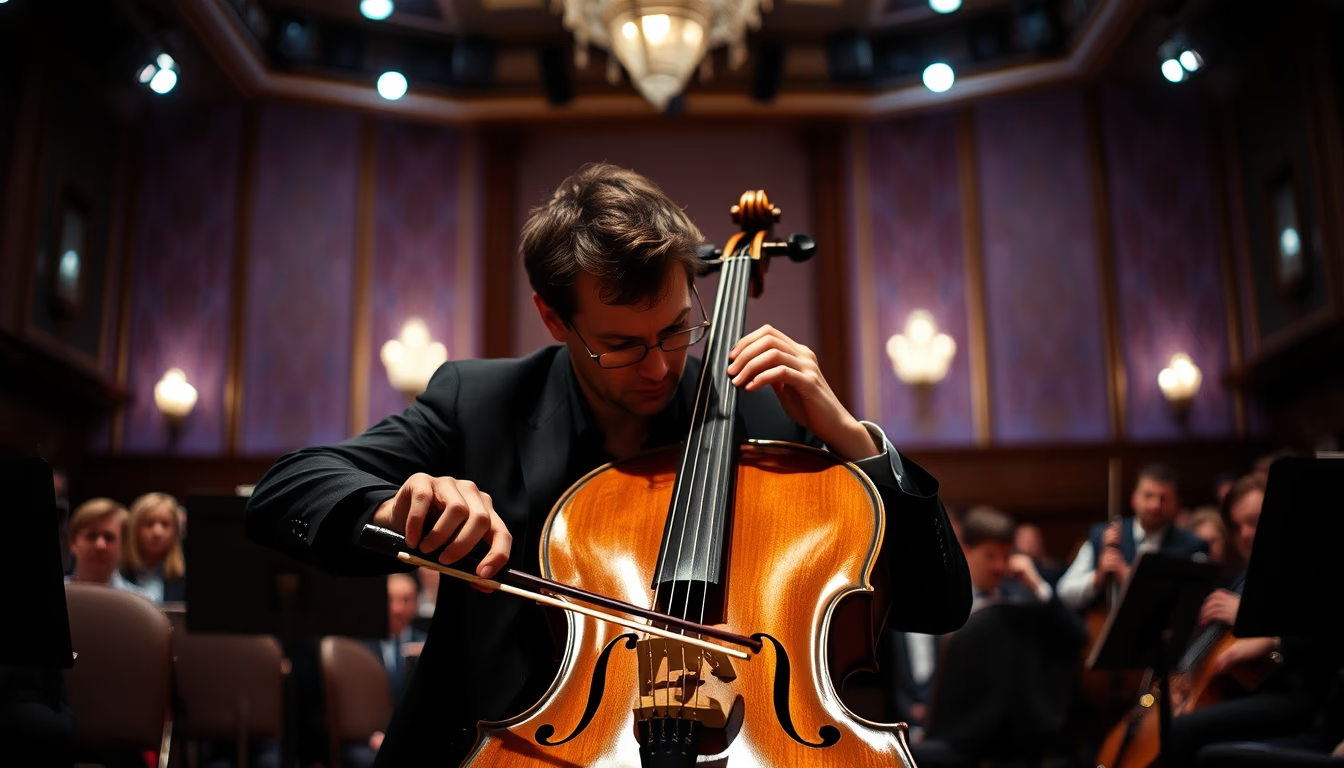
The cello, a string instrument from the violin family, is a prominent presence in concert halls worldwide, known for its expressive and rich tone.
About this subject
The cello is a bowed string instrument with four strings tuned in perfect fifths (C, G, D, A). Its construction involves carefully selected woods: spruce for the top and maple for the back and sides, providing resonance and sound projection. In a concert hall, the cello holds a central position in the symphony orchestra, typically placed to the conductor's right, forming the lower string section alongside double basses.
The cello repertoire includes masterpieces such as Bach's Suites, Dvořák's and Haydn's Concertos, and Beethoven's Sonatas. The instrument's tone can convey lyrical and nostalgic melodies as well as dramatic, virtuosic passages. In historically renowned concert halls like Vienna's Musikverein or Buenos Aires' Teatro Colón, the acoustics are meticulously designed to enhance the cello's timbral qualities, allowing each note to resonate with clarity and depth.
Cello technique has evolved over centuries, with masters like Pablo Casals and Yo-Yo Ma pushing the instrument's expressive boundaries. The player sits with the cello between their legs, allowing free movement of fingers and bow. The bow, traditionally made of pernambuco wood and horsehair, is crucial for articulation and dynamics. While synthetic materials are now used, traditional craftsmanship remains highly valued.
Interestingly, the cello has also found a place in jazz, rock, and popular music, with artists like Apocalyptica and 2Cellos demonstrating its versatility. In concert halls, the instrument continues to symbolize musical sophistication and technical mastery, attracting diverse audiences to solo, chamber, and orchestral performances.
Frequently Asked Questions
What is the difference between a cello and a violin?
The cello is larger than the violin, tuned an octave below the viola. It is played seated with the instrument between the legs, while the violin is held under the chin. The cello produces a deeper, richer sound.
How long does it take to learn to play the cello?
Basic proficiency may take one to two years to produce pleasant sounds, but mastery requires continuous practice over many years, especially for complex classical repertoire.
What are the most famous pieces for cello?
Bach's Cello Suites, Dvořák's Cello Concerto, Haydn's Cello Concerto in C major, and Brahms' Cello Sonata are among the most iconic works.
Direct URL
https://pub-c7d6a6ea828543ac903a74a341ccb2e1.r2.dev/imagens/cello-in-concert-hall-film-grain-authentic-p8.avifHow to credit
Include a visible link back to UtilizAí. Copy one of the snippets below:
<a href="https://xn--utiliza-eza.com/en/midia/imagens/cello-in-concert-hall-film-grain-authentic-p8">Cello in concert hall</a> by <a href="https://xn--utiliza-eza.com">UtilizAí</a>, licensed under <a href="https://creativecommons.org/licenses/by/4.0/">CC BY 4.0</a>.
[Cello in concert hall](https://xn--utiliza-eza.com/en/midia/imagens/cello-in-concert-hall-film-grain-authentic-p8) by [UtilizAí](https://xn--utiliza-eza.com), CC BY 4.0
License: CC-BY-4.0