Cell division microscope
1344×768 · AVIF · CC BY 4.0
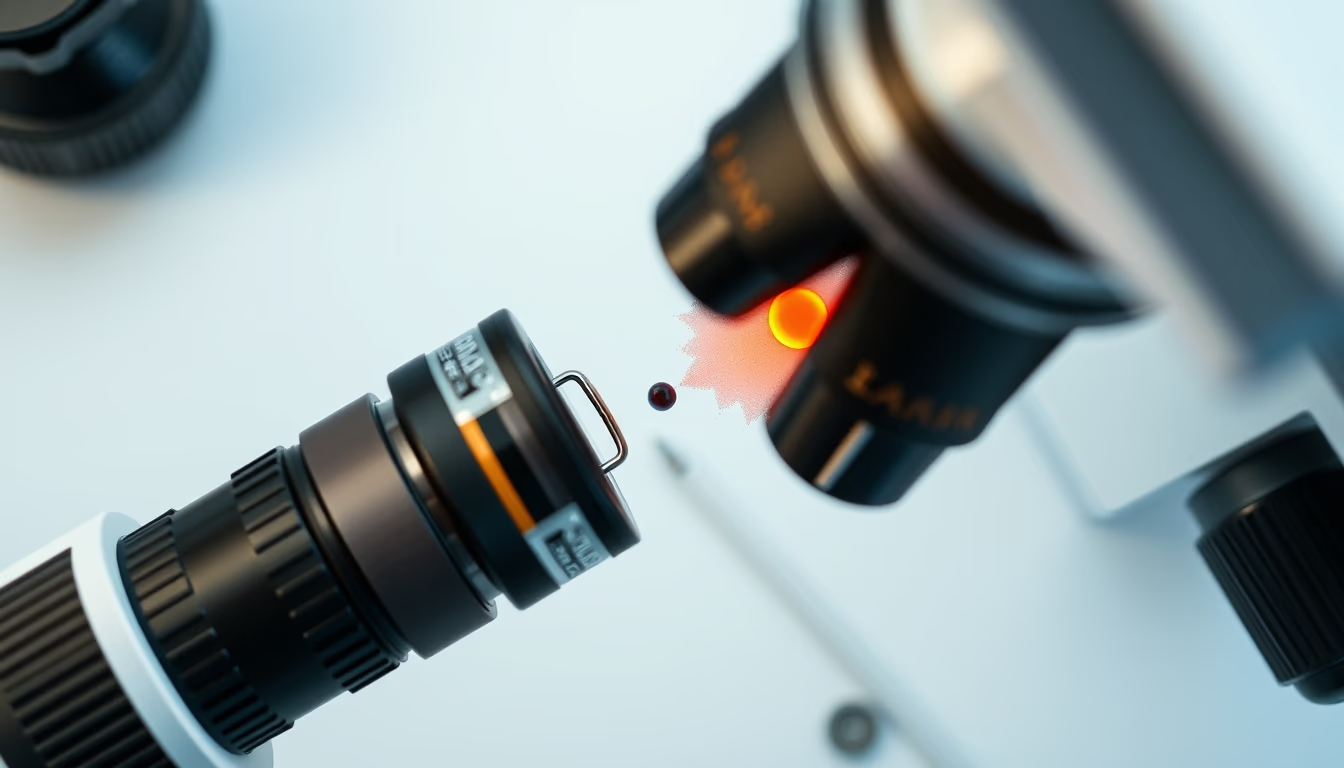
Cell division is the vital process by which a cell divides into two, essential for growth and repair. Understand the phases of mitosis and the importance of microscopy.
About this subject
Cell division is a fundamental process for life, enabling growth, tissue repair, and reproduction in multicellular organisms. There are two main types: mitosis, which produces two genetically identical daughter cells, and meiosis, which generates gametes with half the genetic material. Mitosis, the central focus of microscopic observation, is divided into four phases: prophase, metaphase, anaphase, and telophase. During prophase, chromosomes condense and the mitotic spindle begins to form. In metaphase, chromosomes align at the equatorial plate. Anaphase follows with the separation of sister chromatids, pulled to opposite poles. Finally, in telophase, new nuclei form and cytokinesis divides the cytoplasm.
Microscopic observation of cell division was crucial for understanding cell biology. From Rudolf Virchow's pioneering studies in the 19th century establishing the principle "omnis cellula e cellula" (every cell arises from another cell) to modern fluorescence microscopy techniques, tracking the stages of mitosis has enabled identification of molecular mechanisms and regulatory pathways. Light microscopy with stains like Giemsa reveals chromosomes, while electron microscopy details organelles such as the centrosome and microtubules.
In addition to mitosis, cell division includes meiosis, essential for sexual reproduction, involving chromosome reduction and genetic recombination. Errors in the process, such as nondisjunction, can lead to conditions like Down syndrome. The study of cell division is also vital for oncology, as cancer is associated with uncontrolled cell proliferation. Ongoing research seeks new drugs that interfere with mitosis in tumor cells, such as taxanes that stabilize microtubules.
Frequently Asked Questions
What is cell division?
Cell division is the process by which a cell divides to form two or more daughter cells. It includes mitosis for somatic cells and meiosis for gametes.
What are the phases of mitosis?
The phases of mitosis are prophase, metaphase, anaphase, and telophase, followed by cytokinesis. Each phase involves specific events with chromosomes and the mitotic spindle.
Why is cell division important?
It is essential for growth, tissue repair, and reproduction. It is also key in cancer research, as uncontrolled division leads to tumors.
Direct URL
https://pub-c7d6a6ea828543ac903a74a341ccb2e1.r2.dev/imagens/cell-division-microscope-isometric-flat-lay-p2.avifHow to credit
Include a visible link back to UtilizAí. Copy one of the snippets below:
<a href="https://xn--utiliza-eza.com/en/midia/imagens/cell-division-microscope-isometric-flat-lay-p2">Cell division microscope</a> by <a href="https://xn--utiliza-eza.com">UtilizAí</a>, licensed under <a href="https://creativecommons.org/licenses/by/4.0/">CC BY 4.0</a>.
[Cell division microscope](https://xn--utiliza-eza.com/en/midia/imagens/cell-division-microscope-isometric-flat-lay-p2) by [UtilizAí](https://xn--utiliza-eza.com), CC BY 4.0
License: CC-BY-4.0