Cell division microscope
1344×768 · AVIF · CC BY 4.0
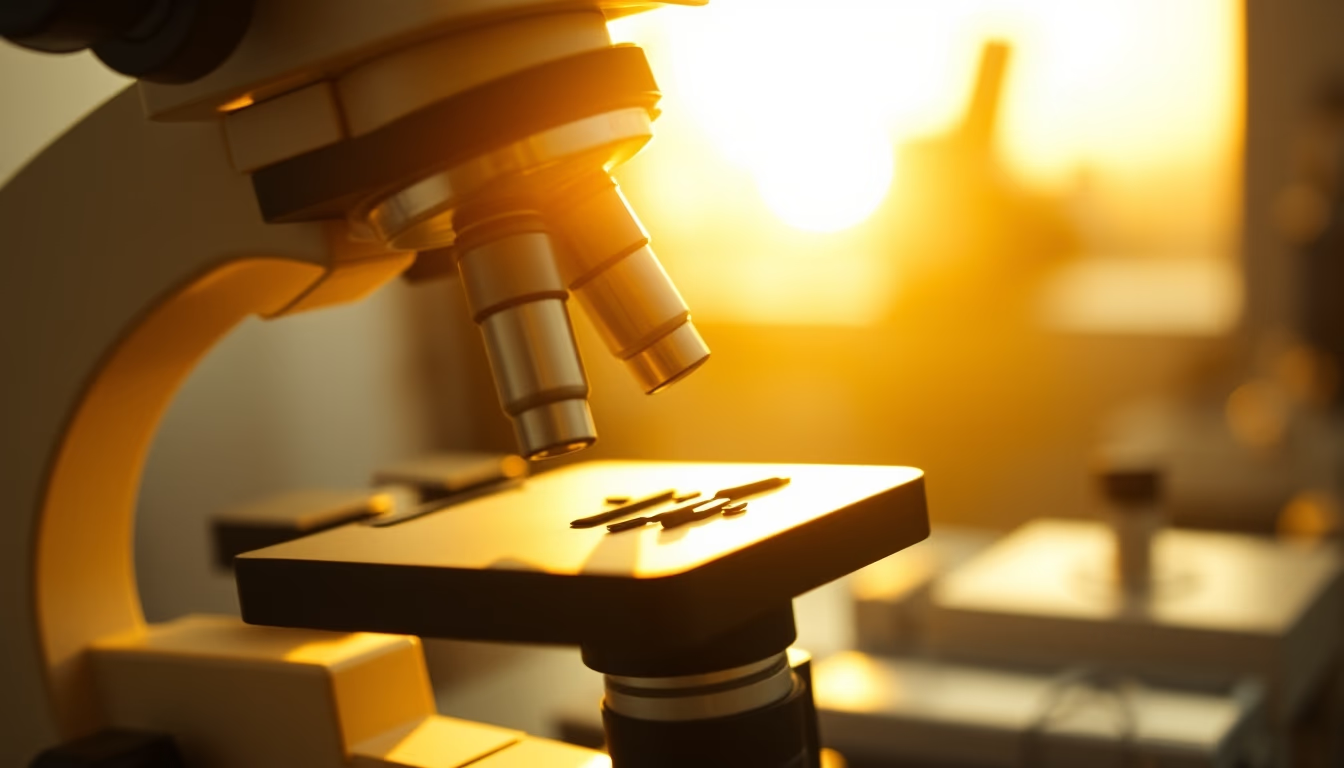
Cell division is the fundamental process by which cells replicate, essential for growth, repair, and reproduction of living organisms.
About this subject
Cell division is a crucial biological process occurring in all living organisms. In eukaryotes, the main types are mitosis, which produces two identical daughter cells for growth and tissue repair, and meiosis, which generates gametes with half the genetic material for sexual reproduction. Mitosis consists of prophase, metaphase, anaphase, and telophase, followed by cytokinesis. During prophase, chromosomes condense and the mitotic spindle forms. In metaphase, chromosomes align at the equatorial plate. In anaphase, sister chromatids separate and move to opposite poles. In telophase, the nuclear membrane reassembles and the cell begins to divide. Cytokinesis involves the formation of a contractile ring in animal cells or a cell plate in plant cells. Regulation is carried out by cyclins and cyclin-dependent kinases (CDKs), and failures can lead to cancer or genetic disorders. The light microscope allows observation of stained chromosomes, especially in metaphase when they are most condensed. Notably, German biologist Walther Flemming described mitosis in 1882, coining the term. The cell cycle also includes interphase, composed of G1, S, and G2 phases, where the cell grows and duplicates its DNA. In animal cells, the centrosome duplicates during interphase and organizes the spindle. Cell division is influenced by factors such as nutrients, hormones, and stress signals. In unicellular organisms like yeast, cell division equals reproduction. Division time varies: human skin cells divide every 24 hours, while early embryos divide every 30 minutes. Understanding cell division is the basis for cancer therapies, such as drugs that inhibit mitosis (taxanes).
Frequently Asked Questions
What is the difference between mitosis and meiosis?
Mitosis produces two daughter cells genetically identical to the parent cell, used for growth and repair. Meiosis produces four daughter cells with half the chromosome number, essential for sexual reproduction.
How is cell division regulated in the human body?
Regulation is carried out by proteins called cyclins and cyclin-dependent kinases (CDKs). They act at cell cycle checkpoints, ensuring the cell only proceeds if conditions are favorable.
What can go wrong during cell division?
Errors in chromosome segregation can cause aneuploidy, such as Down syndrome. Failures in regulation can lead to cancer, with uncontrolled cell proliferation.
Direct URL
https://pub-c7d6a6ea828543ac903a74a341ccb2e1.r2.dev/imagens/cell-division-microscope-cinematic-wide-shot-p6.avifHow to credit
Include a visible link back to UtilizAí. Copy one of the snippets below:
<a href="https://xn--utiliza-eza.com/en/midia/imagens/cell-division-microscope-cinematic-wide-shot-p6">Cell division microscope</a> by <a href="https://xn--utiliza-eza.com">UtilizAí</a>, licensed under <a href="https://creativecommons.org/licenses/by/4.0/">CC BY 4.0</a>.
[Cell division microscope](https://xn--utiliza-eza.com/en/midia/imagens/cell-division-microscope-cinematic-wide-shot-p6) by [UtilizAí](https://xn--utiliza-eza.com), CC BY 4.0
License: CC-BY-4.0