Cell division microscope
1344×768 · AVIF · CC BY 4.0
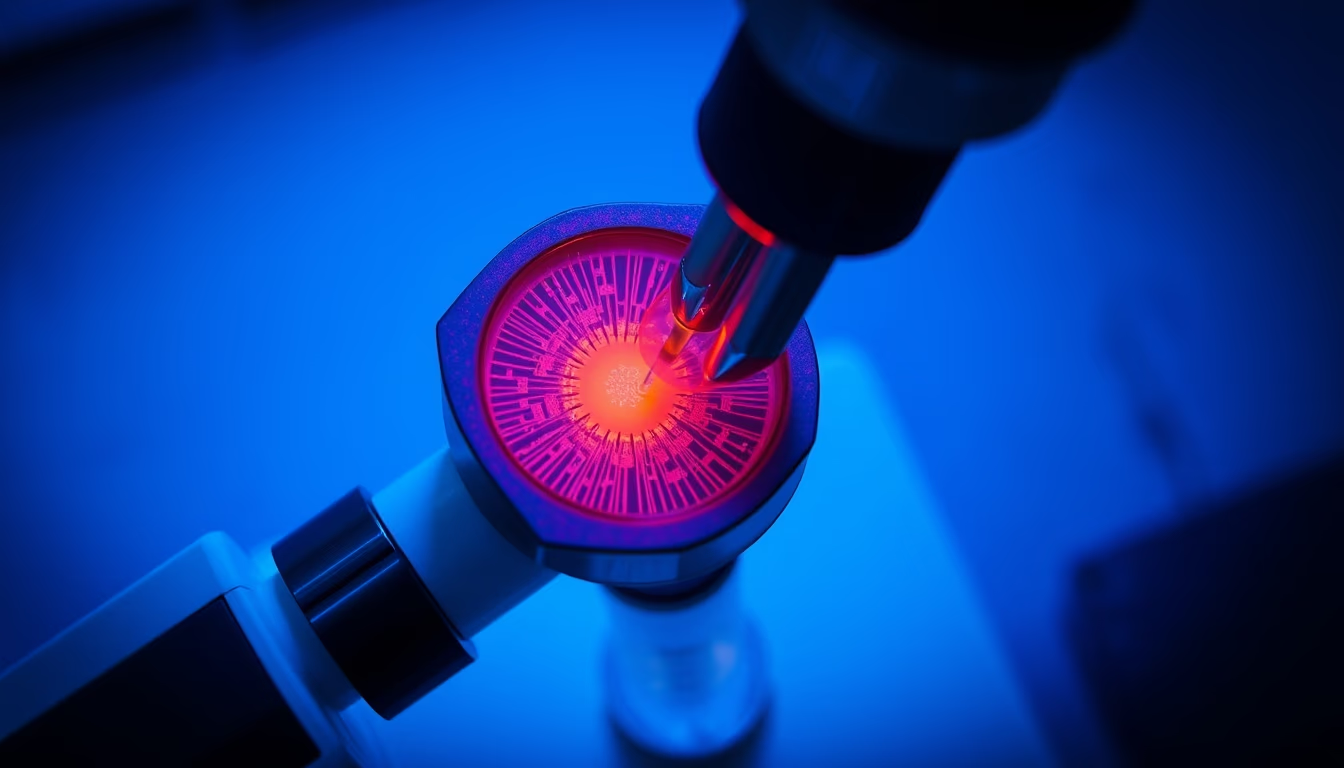
Cell division is a fundamental process for growth and tissue repair, studied in detail with microscopes. Discover the stages of mitosis.
About this subject
Cell division is the process by which a mother cell gives rise to two genetically identical daughter cells, known as mitosis. This phenomenon occurs in somatic cells and is essential for growth, cell replacement, and tissue regeneration in multicellular organisms. The phases of mitosis are prophase, metaphase, anaphase, and telophase, followed by cytokinesis. During prophase, chromatin condenses into visible chromosomes and the nuclear envelope disintegrates. In metaphase, chromosomes align at the equatorial plate. Anaphase is characterized by the separation of sister chromatids, pulled by spindle fibers to opposite poles. Finally, in telophase, two new nuclei form and the cell physically divides through cytokinesis.
Detailed study of cell division became possible thanks to the development of the light microscope and, more recently, electron and fluorescence microscopes. Techniques such as immunofluorescence allow labeling specific proteins of the spindle or chromosomes, revealing the dynamics of the process. German biologist Walther Flemming first described mitosis in salamander cells in 1882 using dyes to visualize chromosomes. Since then, advances in microscopy have enabled observation of even individual molecules involved in chromosome segregation.
Mitosis is controlled by a complex system of checkpoints and cyclins, ensuring the cell divides only when all conditions are adequate. Errors in this process can lead to aneuploidies (abnormal chromosome numbers), associated with diseases such as cancer. Therefore, the study of cell division is not only a basic topic in cell biology but also crucial for understanding pathologies and developing targeted therapies. In research labs, visualizing mitosis under the microscope is routine, whether in cell cultures or in fixed and stained tissues.
Frequently Asked Questions
What is mitosis?
Mitosis is the type of cell division that occurs in somatic cells, resulting in two daughter cells with the same number of chromosomes as the mother cell.
What are the phases of mitosis?
The phases are prophase, metaphase, anaphase, and telophase, followed by cytokinesis. Each phase involves specific events of chromosome condensation, alignment, and separation.
Why is cell division important for the body?
Cell division enables growth, replacement of dead cells, and tissue regeneration. It is also essential for asexual reproduction in single-celled organisms.
Direct URL
https://pub-c7d6a6ea828543ac903a74a341ccb2e1.r2.dev/imagens/cell-division-microscope-aerial-drone-shot-p8.avifHow to credit
Include a visible link back to UtilizAí. Copy one of the snippets below:
<a href="https://xn--utiliza-eza.com/en/midia/imagens/cell-division-microscope-aerial-drone-shot-p8">Cell division microscope</a> by <a href="https://xn--utiliza-eza.com">UtilizAí</a>, licensed under <a href="https://creativecommons.org/licenses/by/4.0/">CC BY 4.0</a>.
[Cell division microscope](https://xn--utiliza-eza.com/en/midia/imagens/cell-division-microscope-aerial-drone-shot-p8) by [UtilizAí](https://xn--utiliza-eza.com), CC BY 4.0
License: CC-BY-4.0