Cambodian temple bas relief
1344×768 · AVIF · CC BY 4.0
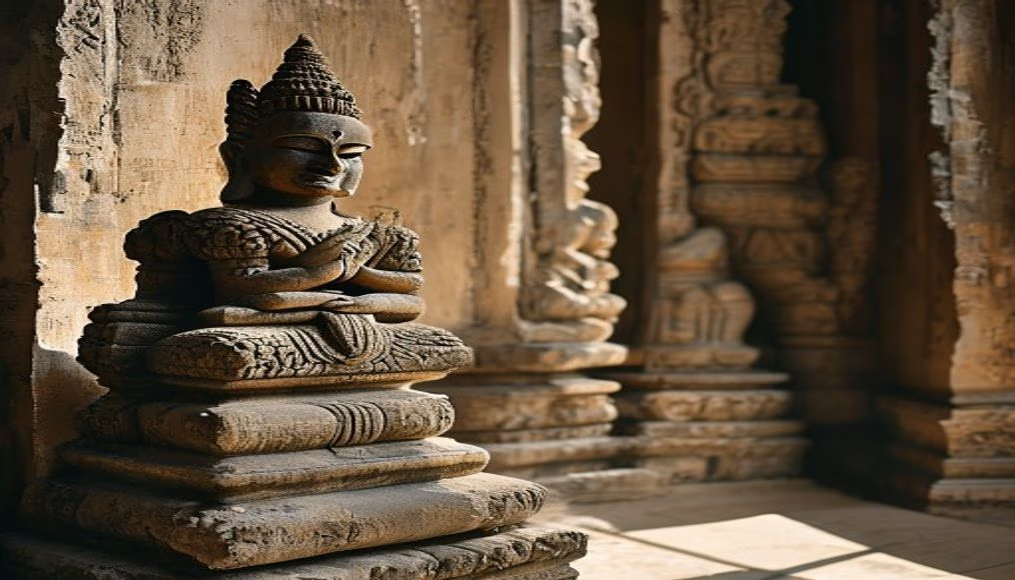
Cambodian temple bas reliefs carved in sandstone depict Hindu epics, historical scenes, and daily life of the Khmer Empire between the 9th and 15th centuries.
About this subject
The bas reliefs of Cambodian temples are among the most impressive artistic legacies of the Khmer Empire. Spread across sites like Angkor Wat, Bayon, and Banteay Srei, these sandstone carvings tell complex narratives that blend Hindu mythology with the actual history of Khmer kings. At Angkor Wat, for instance, the outer corridor features a continuous gallery of reliefs nearly 800 meters long, where episodes from the Ramayana and Mahabharata intertwine with scenes of battles and royal processions.
The technique of carving bas reliefs peaked between the 10th and 12th centuries, the period of the empire's greatest expansion. Khmer artisans used chisels and hammers to carve the stone surface, creating figures up to 20 centimeters deep. Overlapping layers gave a sense of movement and depth, depicting scenes of hunting, dancing, religious ceremonies, and even the daily life of fishermen on Tonle Sap Lake. Each panel was meticulously planned to be read like a comic strip.
Beyond aesthetic value, Khmer bas reliefs hold immense historical significance. They are a primary source for understanding the culture, clothing, weaponry, and architecture of the era. At Bayon temple in Angkor Thom, the smiling faces of Lokeshvara carved in stone coexist with reliefs showing the Khmer army on the march and trade with Chinese merchants. These records have helped archaeologists reconstruct trade routes and political alliances of medieval Southeast Asia.
Preserving these reliefs faces constant challenges. Weathering, acid rain, and lichen growth erode details. Conservation projects with UNESCO support use 3D technology to map every centimeter of the galleries and plan restorations. Even so, controlled tourist visits are essential to keep alive the contact with this art form that continues to inspire scholars and travelers worldwide.
Frequently Asked Questions
What do the bas reliefs of Cambodian temples depict?
They primarily depict scenes from Hindu mythology, such as the Ramayana and Mahabharata, as well as historical events of the Khmer Empire, including battles, royal processions, and everyday activities.
What technique was used to carve the bas reliefs in sandstone?
Khmer artisans used chisels and hammers to carve directly into sandstone, creating figures with varying depths. The technique included overlapping layers to give a sense of movement and perspective.
Which are the main temples with bas reliefs in Cambodia?
The most famous temples are Angkor Wat, Bayon (in Angkor Thom), and Banteay Srei, all located in the Angkor archaeological complex near Siem Reap.
Direct URL
https://pub-c7d6a6ea828543ac903a74a341ccb2e1.r2.dev/imagens/cambodian-temple-bas-relief-studio-still-life-p1.avifHow to credit
Include a visible link back to UtilizAí. Copy one of the snippets below:
<a href="https://xn--utiliza-eza.com/en/midia/imagens/cambodian-temple-bas-relief-studio-still-life-p1">Cambodian temple bas relief</a> by <a href="https://xn--utiliza-eza.com">UtilizAí</a>, licensed under <a href="https://creativecommons.org/licenses/by/4.0/">CC BY 4.0</a>.
[Cambodian temple bas relief](https://xn--utiliza-eza.com/en/midia/imagens/cambodian-temple-bas-relief-studio-still-life-p1) by [UtilizAí](https://xn--utiliza-eza.com), CC BY 4.0
License: CC-BY-4.0