Chamber of Deputies plenary during a session vote
1344×768 · AVIF · CC BY 4.0
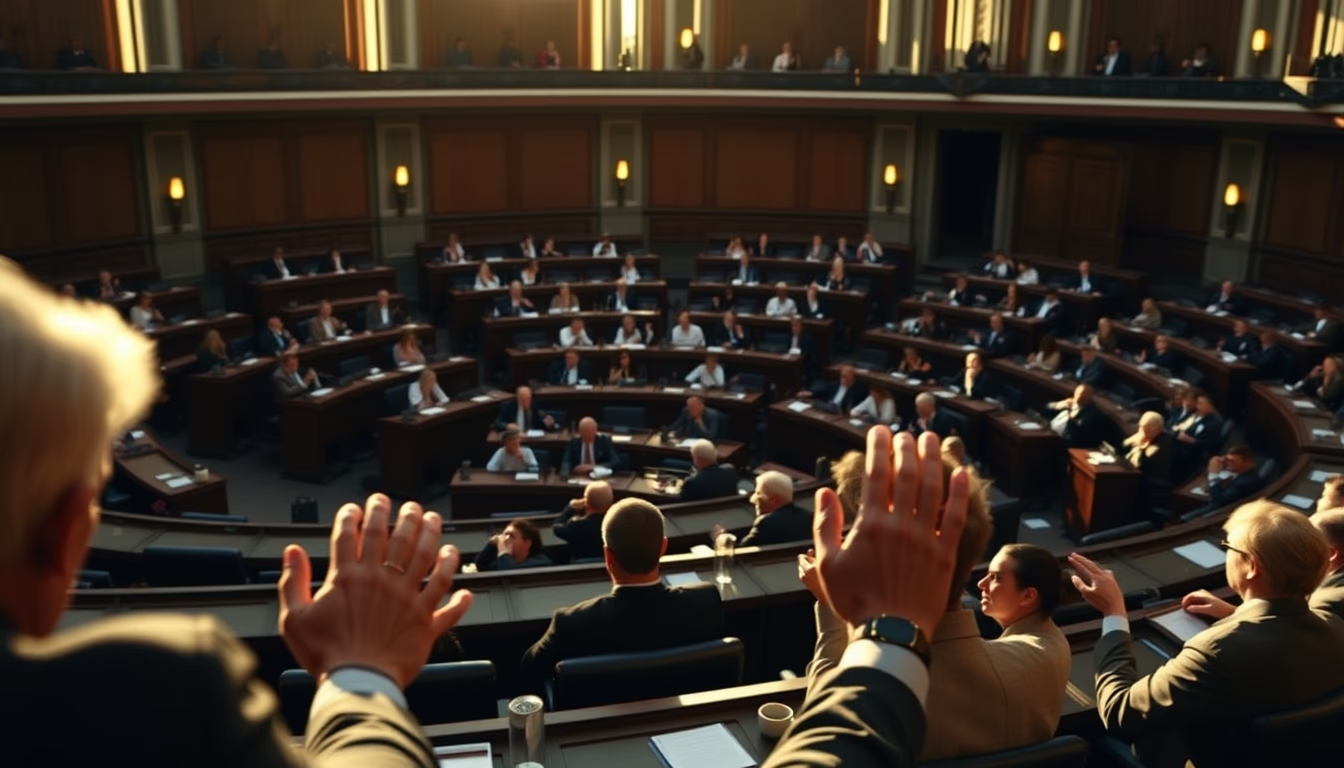
The Ulysses Guimarães Plenary, in the Chamber of Deputies, during a symbolic or nominal vote, is the epicenter of the Brazilian legislative process.
About this subject
The Ulysses Guimarães Plenary, located in the National Congress Palace in Brasília, is the main deliberation space of the Chamber of Deputies. With capacity for 513 federal deputies, the plenary is the stage for votes that define laws, constitutional amendments, and crucial political decisions for the country. The name honors Ulysses Guimarães, a central figure in Brazil's re-democratization and president of the 1988 Constituent Assembly.
During a voting session, deputies occupy their seats arranged in a semicircle, with the board president (currently Arthur Lira) leading the proceedings. The voting system can be symbolic (deputies stand to indicate their vote) or nominal (individual electronic registration). Nominal votes are mandatory for supplementary laws, constitutional amendments, and presidential vetoes. The electronic panel, installed in 1995, displays each parliamentarian's vote in real time.
The plenary is also known for historic moments, such as the approval of Dilma Rousseff's impeachment in 2016 and the voting of the Social Security reform in 2019. The architecture of the space, designed by Oscar Niemeyer, emphasizes transparency with large glass panels and acoustics designed for heated debates. The upper gallery, with capacity for 600 people, allows citizens to follow the sessions, reinforcing the principle of publicity of legislative acts.
Curiosity: the minimum quorum for voting is 257 deputies (absolute majority). For constitutional amendments, 308 favorable votes are required (3/5 of members). The voting system is managed by Infoleg, a platform that also provides open data on parliamentary performance.
Frequently Asked Questions
How many deputies are needed to pass a constitutional amendment?
308 favorable votes are required, which corresponds to 3/5 of the 513 deputies.
How does symbolic voting work in the Chamber?
In symbolic voting, deputies stand up to indicate their vote (yes, no, or abstention), and the president visually declares the result.
What does the name 'Ulysses Guimarães Plenary' mean?
The name honors Ulysses Guimarães, a federal deputy and president of the 1988 Constituent Assembly, responsible for the current Brazilian Constitution.
Direct URL
https://pub-c7d6a6ea828543ac903a74a341ccb2e1.r2.dev/imagens/camara-dos-deputados-plenary-during-a-session-vote-wide-late-afternoon-2.avifHow to credit
Include a visible link back to UtilizAí. Copy one of the snippets below:
<a href="https://xn--utiliza-eza.com/en/midia/imagens/camara-dos-deputados-plenary-during-a-session-vote-wide-late-afternoon-2">Chamber of Deputies plenary during a session vote</a> by <a href="https://xn--utiliza-eza.com">UtilizAí</a>, licensed under <a href="https://creativecommons.org/licenses/by/4.0/">CC BY 4.0</a>.
[Chamber of Deputies plenary during a session vote](https://xn--utiliza-eza.com/en/midia/imagens/camara-dos-deputados-plenary-during-a-session-vote-wide-late-afternoon-2) by [UtilizAí](https://xn--utiliza-eza.com), CC BY 4.0
License: CC-BY-4.0
Tags
Related images
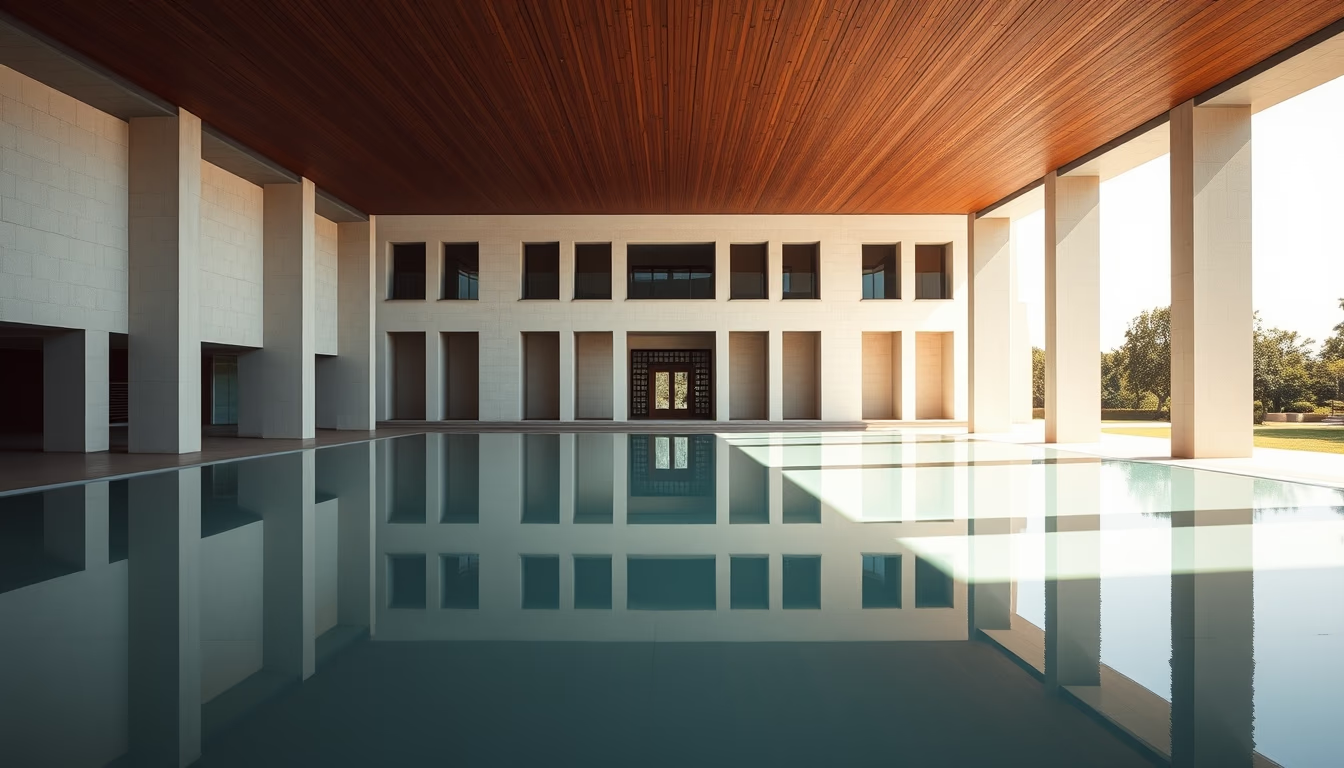 Itamaraty Palace modernist exterior with reflecting pool in Brasília
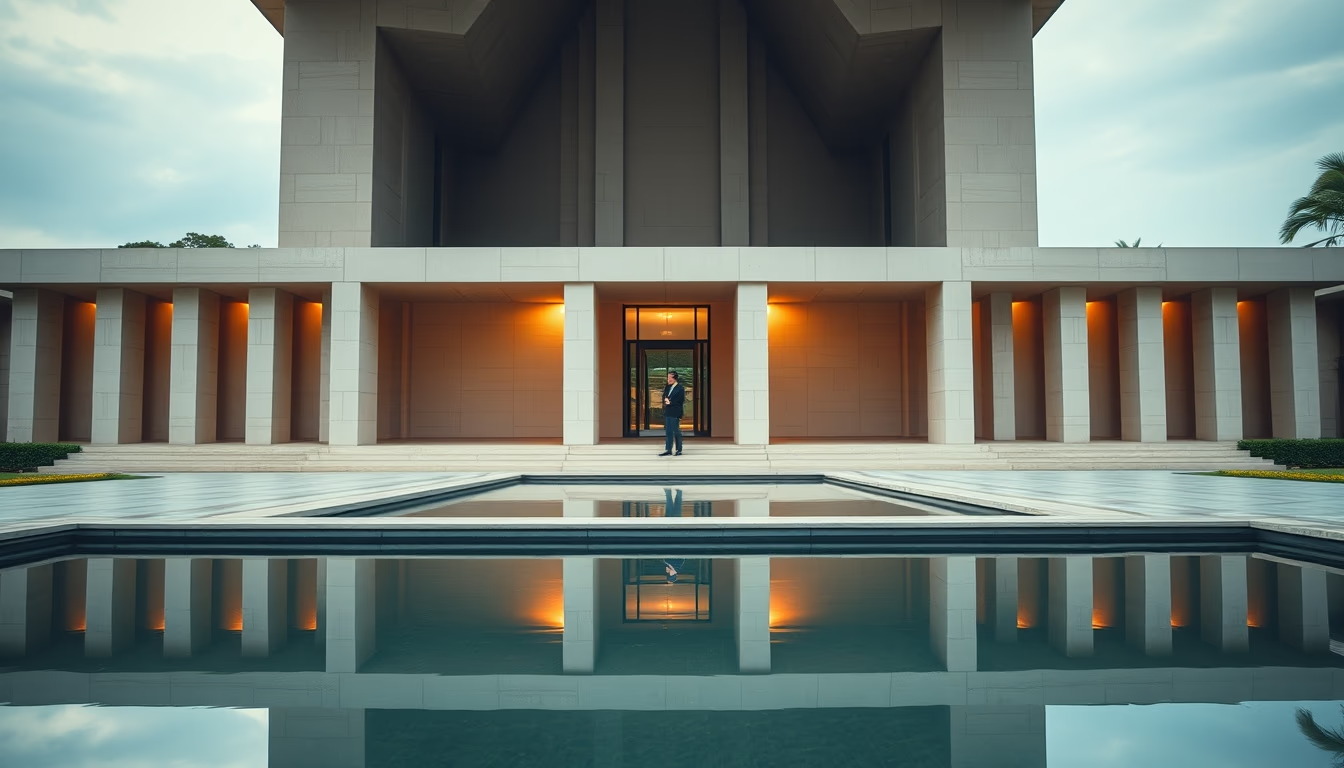 Itamaraty Palace modernist exterior with reflecting pool in Brasília
 Itamaraty Palace modernist exterior with reflecting pool in Brasília
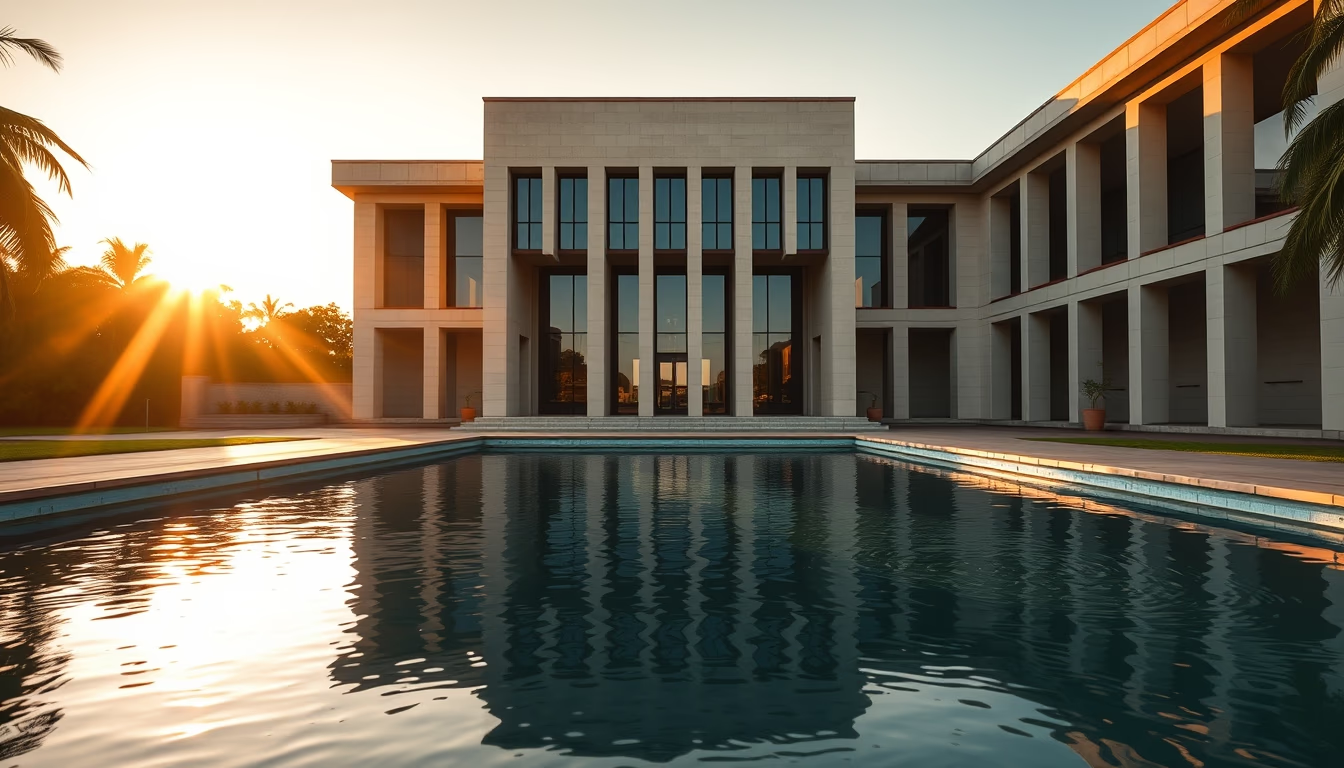 Itamaraty Palace modernist exterior with reflecting pool in Brasília
 Itamaraty Palace modernist exterior with reflecting pool in Brasília
 Itamaraty Palace modernist exterior with reflecting pool in Brasília