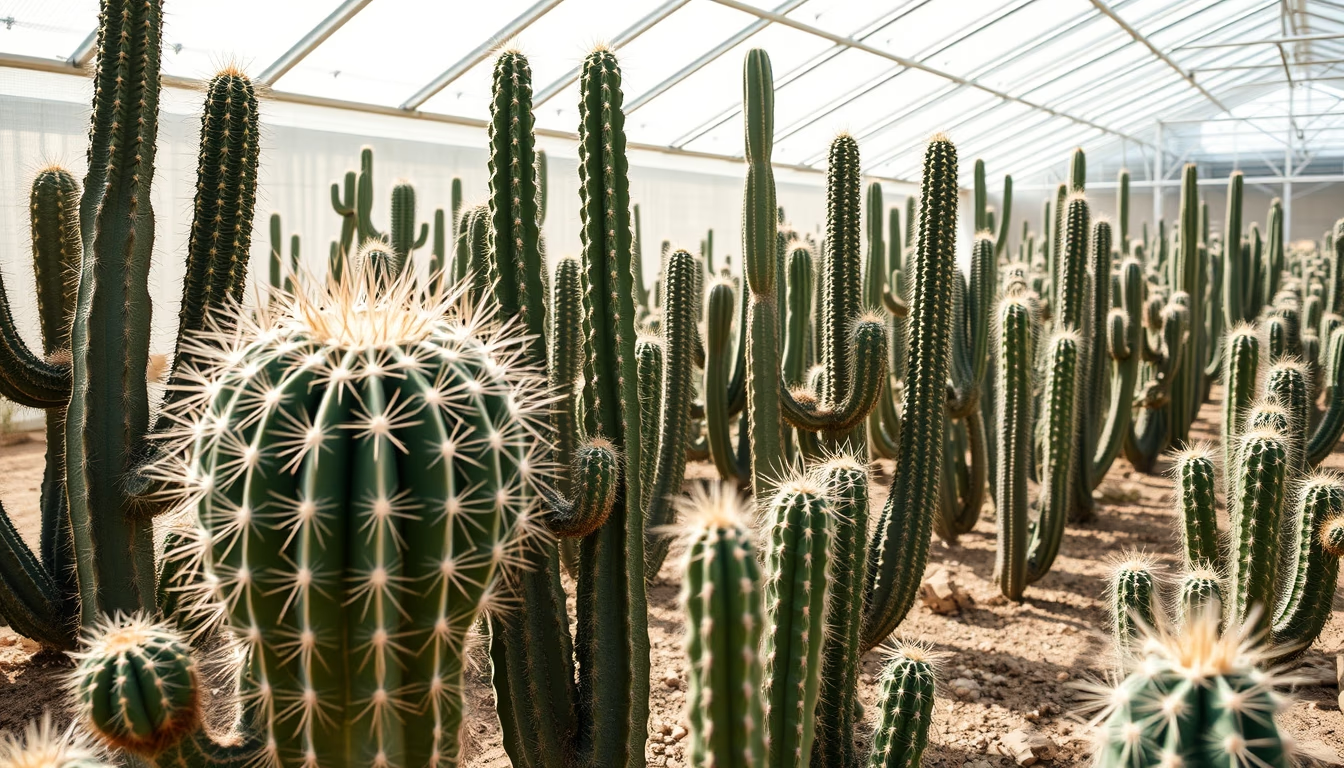
Cactus greenhouse desert
1344×768 · AVIF · CC BY 4.0
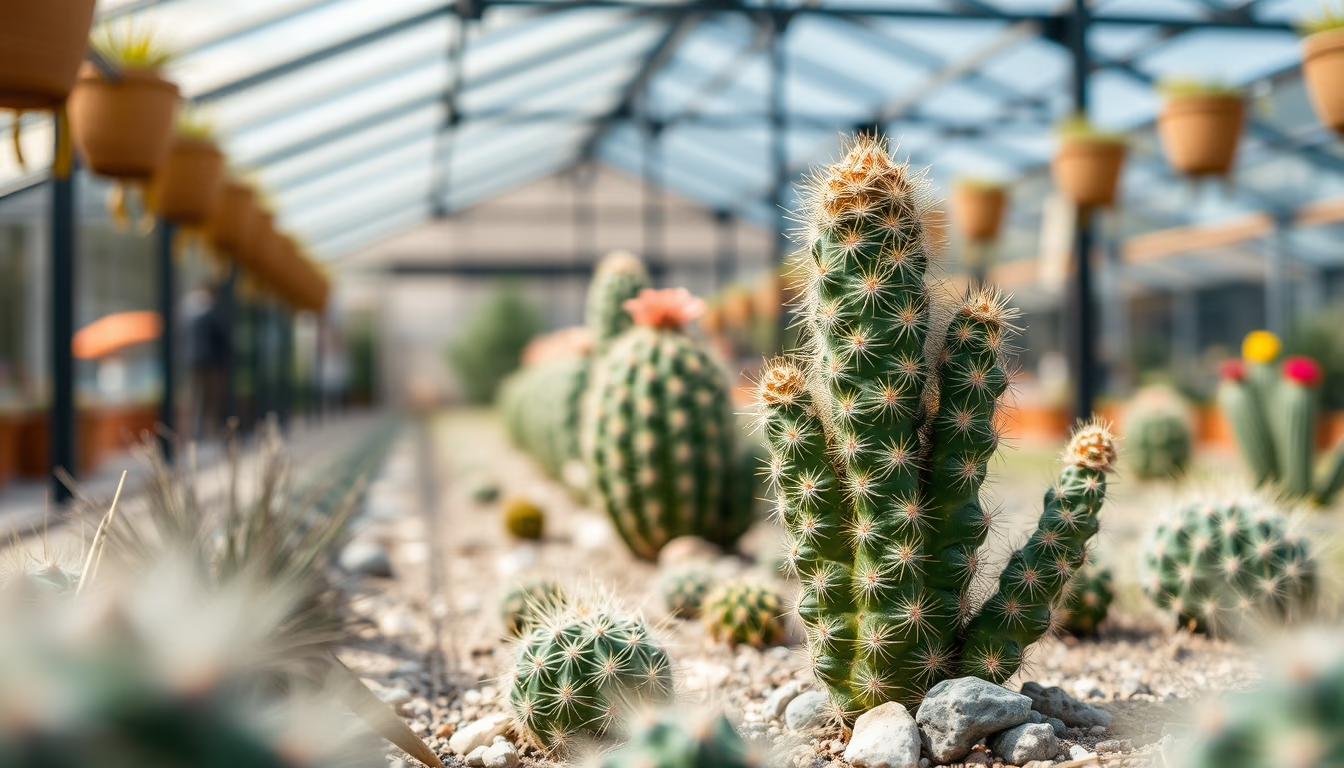
Cactus greenhouses in deserts combine protected horticulture with arid-adapted species, enabling commercial cultivation and conservation.
About this subject
Cactus greenhouses in desert regions are structures designed to control temperature, humidity, and solar radiation, creating an ideal microclimate for cacti growth. Unlike open-field cultivation, these greenhouses protect plants from nighttime frosts, strong winds, and excessive daytime heat common in deserts like the Sonoran (USA/Mexico) and the Atacama (Chile). In Arizona, for instance, commercial nurseries use greenhouses with 50% to 70% shade cloths and misting systems to maintain relative humidity between 40% and 60%, reducing water stress.
The importance goes beyond ornamental cultivation: desert greenhouses are used to propagate endangered species such as the golden barrel cactus (Echinocactus grusonii) and the saguaro (Carnegiea gigantea). They also enable controlled-scale fruit production like prickly pear (Opuntia ficus-indica), with harvests up to 30% larger than in open fields. Drip irrigation techniques with substrate moisture sensors reduce water consumption by up to 60% compared to traditional methods.
A curious fact is that some modern greenhouses in regions like the Mojave Desert use photovoltaic solar panels to power fans and pumps, becoming energy self-sufficient. The tunnel or half-moon shape common in these greenhouses facilitates air circulation and prevents heat buildup. Additionally, the use of sandy substrates with high drainage mimics the native soil of cacti, preventing root rot.
In Brazil, although the climate is not desertic, similar greenhouses are employed in the Caatinga for cultivating mandacaru and xique-xique, showcasing the technology's adaptability. The cactus greenhouse in the desert represents a marriage between agricultural engineering and botany, proving that even the harshest environments can become productive with proper planning.
Frequently Asked Questions
Why grow cacti in greenhouses in the desert if they are already adapted to the climate?
Although cacti are desert-adapted, greenhouses provide protection from climate extremes (frost, excessive heat, wind) and allow precise control of irrigation and nutrients, resulting in faster growth and uniform production. They also facilitate the cultivation of non-native or endangered species.
Which cactus species are most commonly grown in desert greenhouses?
Common ones include ornamental cacti like Echinocactus grusonii (golden barrel), Mammillaria, and Ferocactus, as well as fruit cacti like Opuntia ficus-indica (prickly pear) and Hylocereus undatus (dragon fruit). Rare or threatened species are also propagated for conservation.
What is the irrigation system like in a desert cactus greenhouse?
Automated drip irrigation is predominant, with substrate moisture sensors triggering watering only when needed. Water is often recycled, and the substrate (sand, perlite, gravel) ensures fast drainage to prevent waterlogging. In larger greenhouses, misting systems help control air humidity.
Direct URL
https://pub-c7d6a6ea828543ac903a74a341ccb2e1.r2.dev/imagens/cactus-greenhouse-desert-tilt-shift-miniature-fresh11.avifHow to credit
Include a visible link back to UtilizAí. Copy one of the snippets below:
<a href="https://xn--utiliza-eza.com/en/midia/imagens/cactus-greenhouse-desert-tilt-shift-miniature-fresh11">Cactus greenhouse desert</a> by <a href="https://xn--utiliza-eza.com">UtilizAí</a>, licensed under <a href="https://creativecommons.org/licenses/by/4.0/">CC BY 4.0</a>.
[Cactus greenhouse desert](https://xn--utiliza-eza.com/en/midia/imagens/cactus-greenhouse-desert-tilt-shift-miniature-fresh11) by [UtilizAí](https://xn--utiliza-eza.com), CC BY 4.0
License: CC-BY-4.0