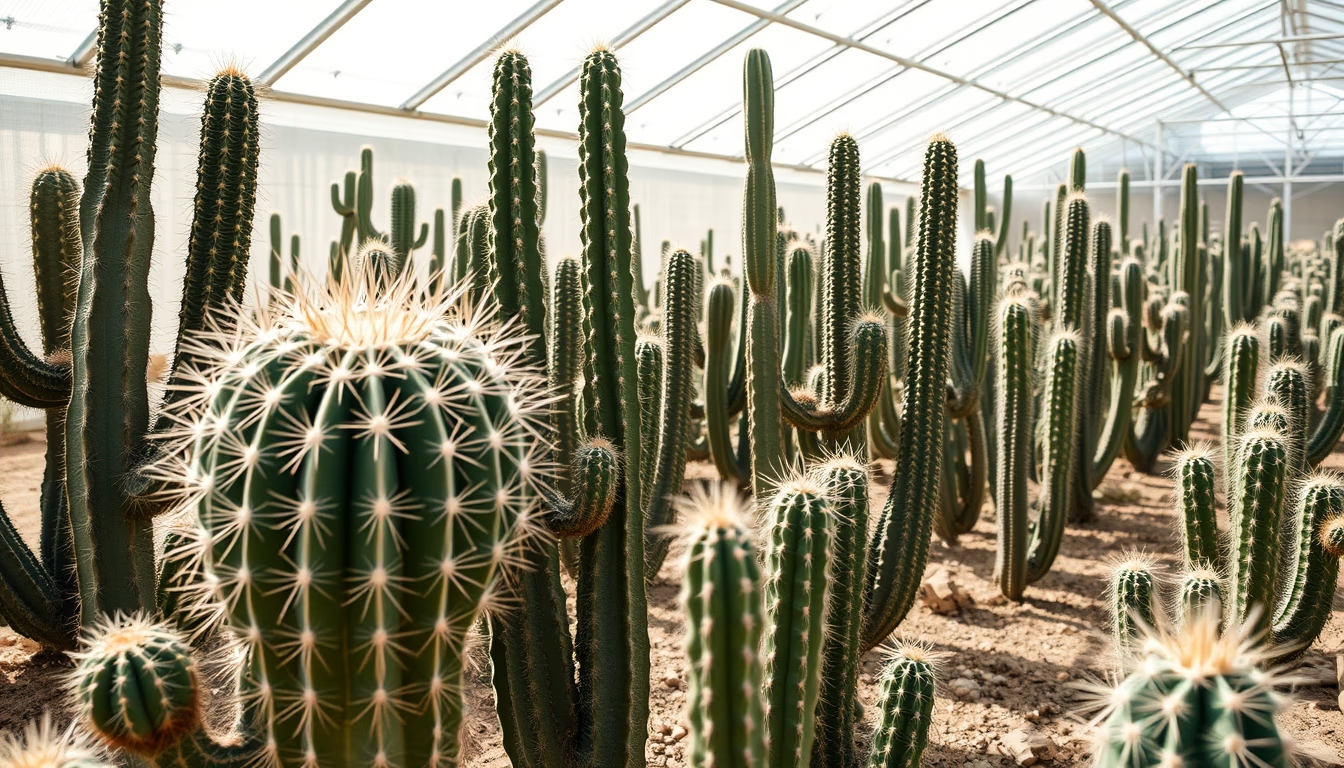
Cactus greenhouse desert
1344×768 · AVIF · CC BY 4.0
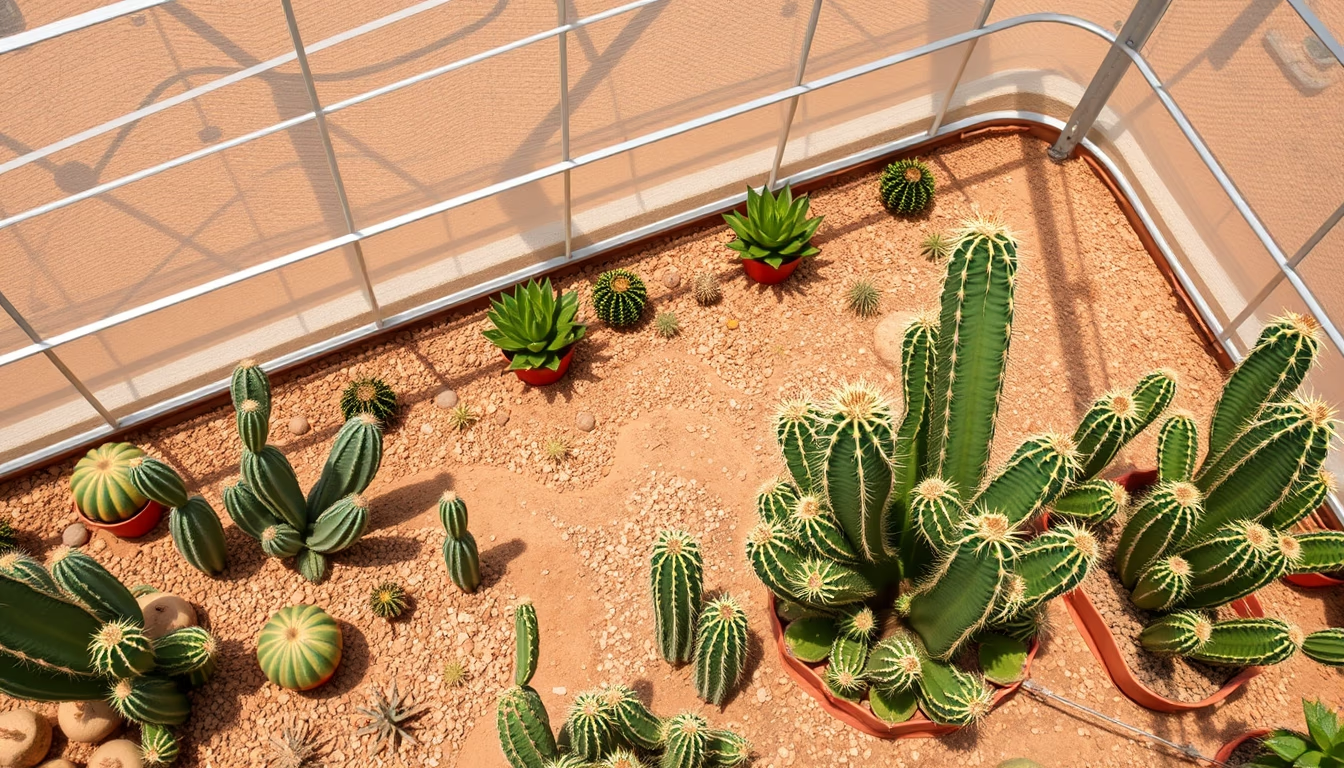
Cactus greenhouses in deserts merge sustainability and arid-land horticulture, revolutionizing cultivation in dry regions.
About this subject
Cactus greenhouses in deserts represent an innovation in horticulture adapted to extreme conditions. These structures control temperature, humidity, and solar radiation, allowing the cultivation of species like the saguaro cactus (Carnegiea gigantea) and prickly pear (Opuntia ficus-indica) even in areas with annual rainfall below 250 mm. The technique is common in the Southwestern United States, northern Mexico, and regions like the Atacama Desert, where water scarcity is offset by drip irrigation systems powered by solar energy.
Construction uses materials such as polycarbonate and shade nets filtering up to 60% of light, mimicking natural shading from rocks or shrubs. Greenhouse cultivation reduces plant water stress and accelerates growth: a cactus that would take 10 years to reach 30 cm in the field may do so in 4 years under controlled conditions. Fruit production, like pitaya (Hylocereus undatus) and tuna (prickly pear), also gains commercial scale.
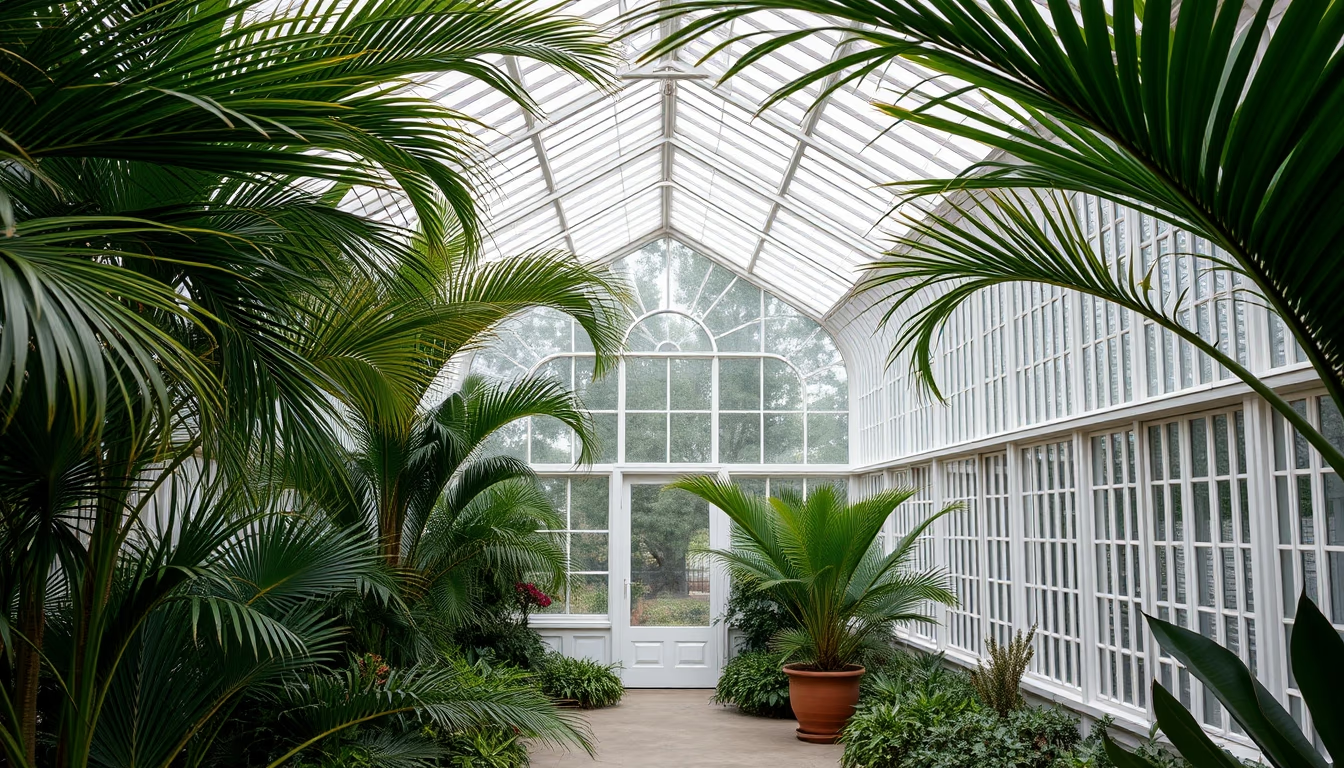
Historically, first cactus greenhouses appeared in 19th-century Europe for botanical collections, but desert applications gained momentum after 21st-century water crises. In Brazil, the Northeastern Semiarid region runs pilot projects with cactus greenhouses for animal feed and bioenergy, using species like mandacaru (Cereus jamacaru). Water efficiency reaches 90% compared to open-field cultivation, according to Embrapa studies.
Interesting fact: some greenhouses in the Sonoran Desert (USA) use semi-transparent photovoltaic panels that generate electricity while allowing photosynthesis. The combination of solar energy and closed horticulture turns deserts into potential sustainable breadbaskets.
Frequently Asked Questions
Which cacti are most commonly grown in desert greenhouses?
Species like saguaro (Carnegiea gigantea), prickly pear (Opuntia ficus-indica), and mandacaru (Cereus jamacaru) are common, along with fruit-bearing ones like pitaya (Hylocereus undatus). Choice depends on purpose: ornamental, animal feed, or fruit production.
How do cactus greenhouses deal with water scarcity?
They use drip irrigation, rainwater harvesting, and recirculation systems. The cover reduces evaporation, and sensors adjust humidity according to plant needs, saving up to 90% of water compared to open-air farming.
Are cactus greenhouses in deserts sustainable?
Yes, especially when combined with solar energy. Photovoltaic panels power pumps and climate control, and local production reduces transportation. Cacti are also pest-resistant, minimizing pesticide use.
Direct URL
https://pub-c7d6a6ea828543ac903a74a341ccb2e1.r2.dev/imagens/cactus-greenhouse-desert-isometric-flat-lay-fresh9.avifHow to credit
Include a visible link back to UtilizAí. Copy one of the snippets below:
<a href="https://xn--utiliza-eza.com/en/midia/imagens/cactus-greenhouse-desert-isometric-flat-lay-fresh9">Cactus greenhouse desert</a> by <a href="https://xn--utiliza-eza.com">UtilizAí</a>, licensed under <a href="https://creativecommons.org/licenses/by/4.0/">CC BY 4.0</a>.
[Cactus greenhouse desert](https://xn--utiliza-eza.com/en/midia/imagens/cactus-greenhouse-desert-isometric-flat-lay-fresh9) by [UtilizAí](https://xn--utiliza-eza.com), CC BY 4.0
License: CC-BY-4.0