Butterfly on flower macro
1344×768 · AVIF · CC BY 4.0
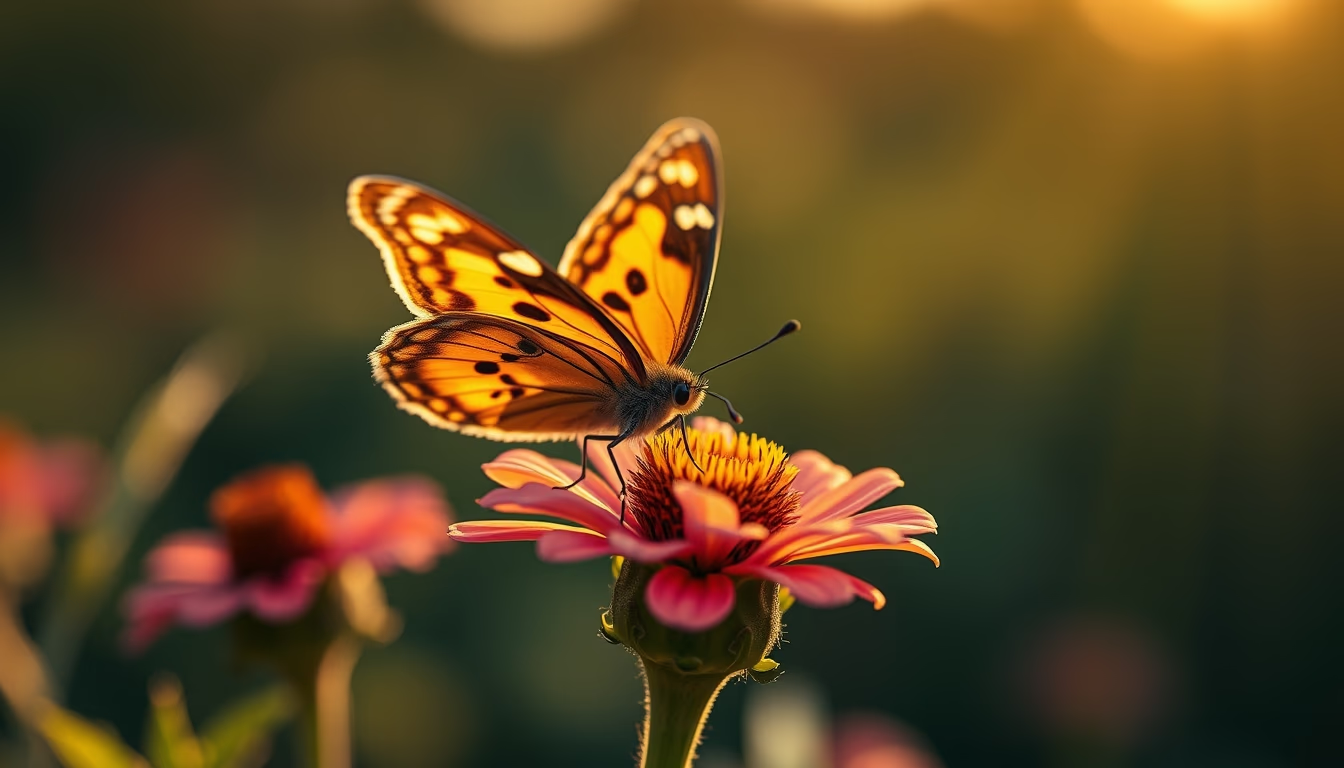
Macro shot of a butterfly landing on a wildflower reveals intricate wing details and pollination in extreme close-up.
About this subject
Macro photography of butterflies is one of the most challenging and rewarding areas of nature photography. This image captures a butterfly from the Nymphalidae family, possibly a Heliconius species, known for its colorful wings and patterns that serve as a warning to predators about its toxicity. These butterflies are common in tropical regions of the Americas, especially the Amazon and Brazilian Atlantic Forest.
The flower where the butterfly lands likely belongs to the Asteraceae family, such as wild daisies or sunflowers. Upon landing, the butterfly extends its proboscis to sip nectar, a process essential for cross-pollination. It is estimated that about 75% of flowering plants depend on pollinators like butterflies, bees, and hummingbirds for reproduction.
Details such as the scales on butterfly wings are visible only in extreme macro. These scales are responsible for vibrant colors, which can be structural (iridescent) or pigmentary. Macro photography with 1:1 or higher magnification lenses allows capturing textures unnoticed by the naked eye, such as wing veins and pollen grains attached to the insect's body.
Interestingly, some butterflies migrate long distances, like the monarch (Danaus plexippus), which travels up to 4,000 km from Canada to Mexico. In Brazil, the blue morpho (Morpho) is famous for its metallic color, resulting from microstructures that refract light. This image highlights the interaction between insect and flower, a microcosm of global biodiversity.
Frequently Asked Questions
What is the best lens for macro butterfly photography?
Macro lenses of 100mm or 105mm are ideal, offering comfortable working distance and 1:1 magnification. Popular choices include Canon EF 100mm f/2.8L Macro or Nikon AF-S 105mm f/2.8G VR for nature photographers.
Why do butterflies have such vibrant colors?
Vibrant colors come from scales on the wings that can be pigmentary (containing melanin or carotenoids) or structural (microstructures refracting light, creating metallic or iridescent hues). These colors serve for camouflage, mate attraction, or toxicity warning.
Do butterflies help pollinate cultivated plants?
Yes, butterflies are important pollinators for many wild and cultivated plants, such as citrus fruits, mangoes, and passion fruit. However, they are less efficient than bees for commercial crops, as they carry less pollen and visit fewer flowers per minute.
Direct URL
https://pub-c7d6a6ea828543ac903a74a341ccb2e1.r2.dev/imagens/butterfly-on-flower-macro-cinematic-wide-shot-v2.avifHow to credit
Include a visible link back to UtilizAí. Copy one of the snippets below:
<a href="https://xn--utiliza-eza.com/en/midia/imagens/butterfly-on-flower-macro-cinematic-wide-shot-v2">Butterfly on flower macro</a> by <a href="https://xn--utiliza-eza.com">UtilizAí</a>, licensed under <a href="https://creativecommons.org/licenses/by/4.0/">CC BY 4.0</a>.
[Butterfly on flower macro](https://xn--utiliza-eza.com/en/midia/imagens/butterfly-on-flower-macro-cinematic-wide-shot-v2) by [UtilizAí](https://xn--utiliza-eza.com), CC BY 4.0
License: CC-BY-4.0