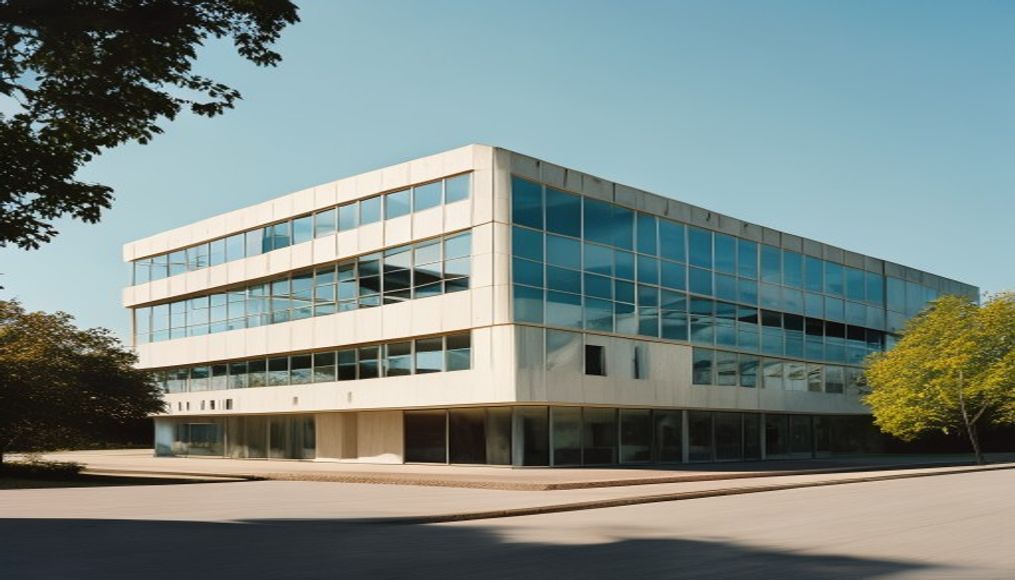
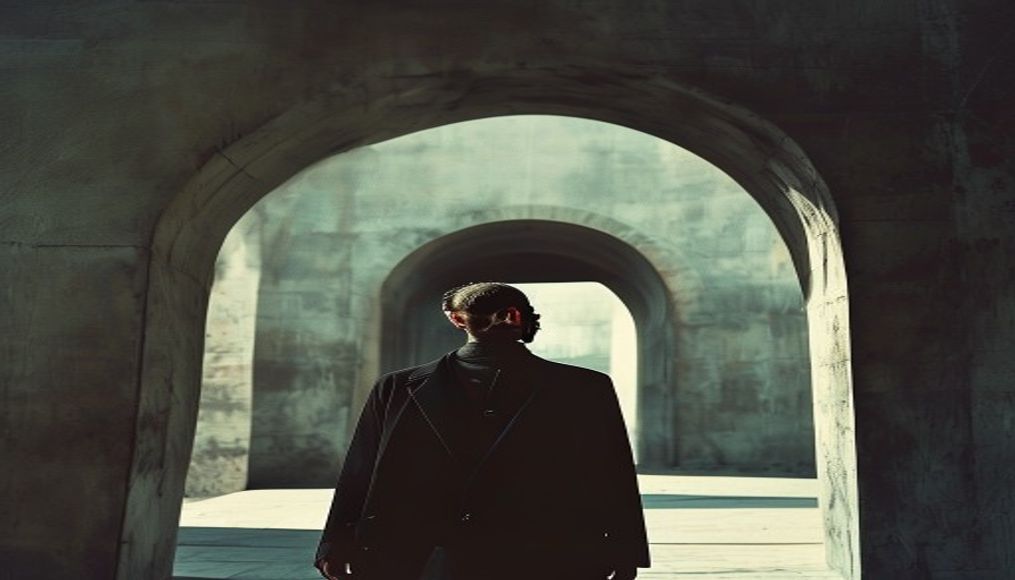
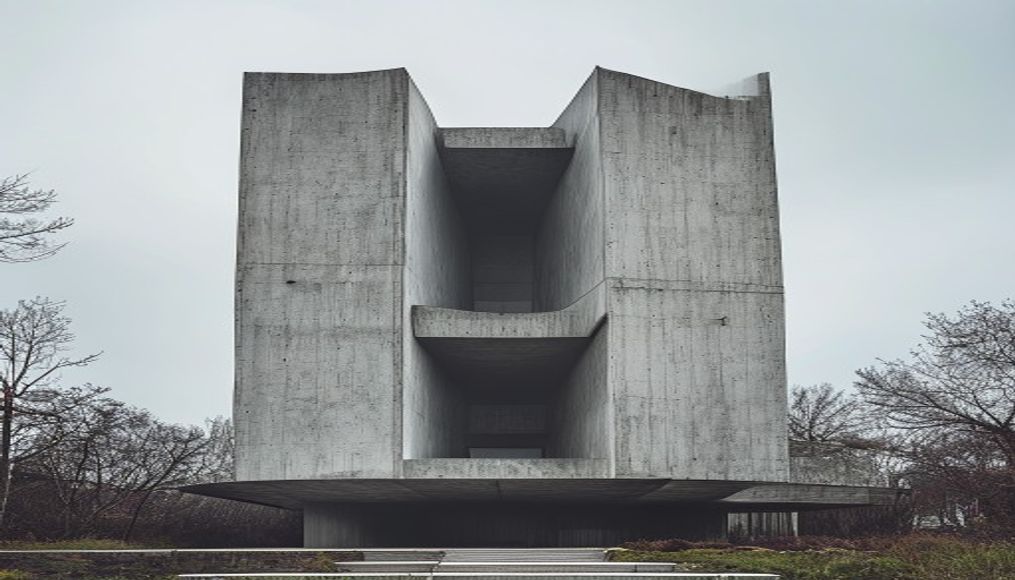
Brutalist concrete monument
1344×768 · AVIF · CC BY 4.0
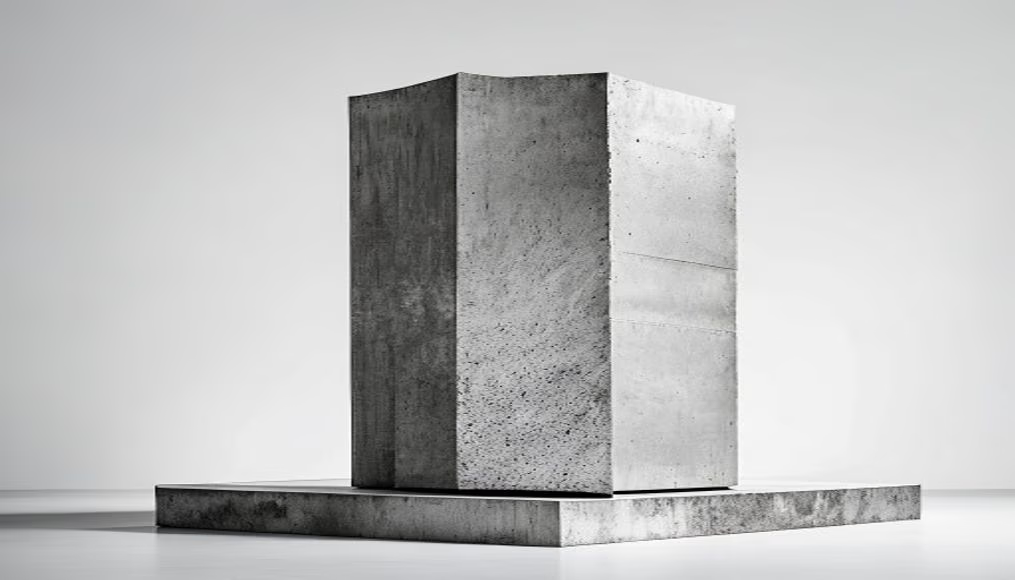
Brutalism is a 20th-century architectural movement that uses raw concrete and massive geometric forms, emphasizing structure as an aesthetic expression.
About this subject
Brutalism emerged in the 1950s, mainly in Europe, as a response to functionalism and the need for post-war reconstruction. The term derives from the French 'béton brut' (raw concrete), coined by architect Le Corbusier, who used this technique in projects like the Unité d'Habitation in Marseille (1952). The brutalist aesthetic values material honesty, exposing pipes, beams, and concrete blocks without cladding, creating a sense of solidity and permanence.
In Brazil, brutalism found fertile ground in works by architects such as Paulo Mendes da Rocha and Lina Bo Bardi. The São Paulo Museum of Art (MASP), designed by Lina, is an icon: suspended by two concrete porticos, it exemplifies the structural boldness and visual transparency of the movement. Another notable example is the Cathedral of Brasília, by Oscar Niemeyer, with its concrete columns rising in curves, symbolizing hands in prayer. Although often criticized for its austere and 'cold' appearance, brutalism has gained new appreciation in recent decades, recognized for its architectural integrity and influence on contemporary design.
The style's popularity declined in the 1980s, associated with impersonal public projects and urban decay. However, a wave of preservationism and critical review has brought brutalism back into focus, with museum exhibitions and campaigns to protect buildings threatened with demolition. The movement also influenced art, film, and photography, exploring the drama of its monolithic forms and light-and-shadow play. The tag 'wave-pollinations' suggests a curatorial approach connecting brutalist architecture to global influences and cultural trend waves.
Frequently Asked Questions
What are the main characteristics of brutalism?
Use of raw concrete (béton brut), massive geometric forms, emphasis on structure, exposed functions (like pipes), and an aesthetic that values material honesty.
Where can I see famous examples of brutalist architecture in Brazil?
In Brazil, notable examples include MASP (São Paulo Museum of Art), designed by Lina Bo Bardi, and the Cathedral of Brasília by Oscar Niemeyer. Both are icons of the movement.
Why was brutalism criticized and later appreciated?
It was criticized for its austere appearance and association with impersonal public projects, leading to decline in the 1980s. In recent decades, it has been valued for its architectural integrity, influence on design, and cultural heritage.
Direct URL
https://pub-c7d6a6ea828543ac903a74a341ccb2e1.r2.dev/imagens/brutalist-concrete-monument-commercial-product-photography-p0.avifHow to credit
Include a visible link back to UtilizAí. Copy one of the snippets below:
<a href="https://xn--utiliza-eza.com/en/midia/imagens/brutalist-concrete-monument-commercial-product-photography-p0">Brutalist concrete monument</a> by <a href="https://xn--utiliza-eza.com">UtilizAí</a>, licensed under <a href="https://creativecommons.org/licenses/by/4.0/">CC BY 4.0</a>.
[Brutalist concrete monument](https://xn--utiliza-eza.com/en/midia/imagens/brutalist-concrete-monument-commercial-product-photography-p0) by [UtilizAí](https://xn--utiliza-eza.com), CC BY 4.0
License: CC-BY-4.0