Brazilian factory worker on assembly line with safety helmet
1344×768 · AVIF · CC BY 4.0
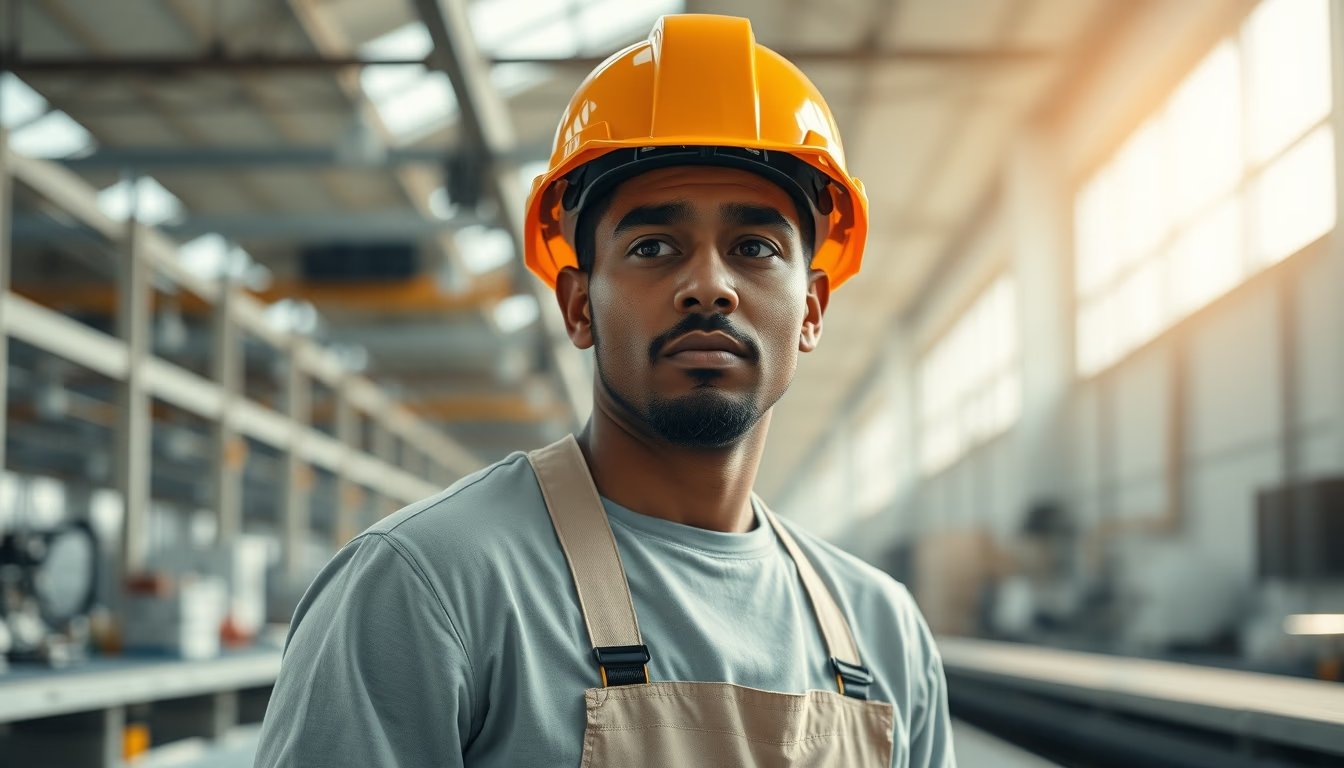
Brazilian factory worker on an assembly line wearing a safety helmet, in a symmetrical and brightly lit industrial environment.
About this subject
The assembly line is a cornerstone of modern industrial production, especially in the automotive and electronics sectors. In Brazil, mass production models were widely adopted from the 1950s onward, with the installation of automakers such as Volkswagen in São Bernardo do Campo (SP) and Ford in São Paulo. Today, the country has major industrial hubs in the ABC Paulista region, Minas Gerais, and Paraná, where thousands of workers operate on assembly lines.
The use of personal protective equipment (PPE), such as safety helmets, is mandatory by law in Brazil (NR-6 of the Ministry of Labor). The helmet protects against falling objects, electrical shocks, and burns, being essential in environments with risks of material drops or machine movement. Besides the helmet, workers often wear safety glasses, gloves, and safety shoes.
The symmetry and bright lighting of the image reflect a standardized and controlled work environment, common in factories adhering to quality standards such as ISO 9001 and methodologies like Lean Manufacturing. Proper lighting is crucial to reduce errors and accidents while improving productivity. Studies indicate that industrial lighting should be at least 300 lux for tasks requiring moderate precision.
In the Brazilian context, the manufacturing industry accounts for about 11% of GDP and employs millions of people. Despite advances in automation, the assembly line still requires skilled labor for assembly, inspection, and maintenance. Workplace safety is a growing concern, with prevention campaigns and stricter enforcement in recent years.
Frequently Asked Questions
What are the main safety equipment used on assembly lines in Brazil?
The main PPE include safety helmets, safety glasses, gloves, safety shoes, and ear protectors. They are regulated by NR-6 of the Ministry of Labor.
How does lighting affect productivity in factories?
Proper lighting reduces errors and accidents, improves concentration, and increases productivity. The NBR ISO/CIE 8995-1 standard recommends illuminance levels between 300 and 500 lux for assembly tasks.
What is the importance of the assembly line for Brazilian industry?
The assembly line is essential for large-scale production, especially in the automotive, electronics, and consumer goods sectors. It enables greater efficiency, standardization, and cost reduction, being one of the pillars of industrial competitiveness.
Direct URL
https://pub-c7d6a6ea828543ac903a74a341ccb2e1.r2.dev/imagens/brazilian-factory-worker-on-assembly-line-with-safety-helmet-symmetric-bright-midday-6.avifHow to credit
Include a visible link back to UtilizAí. Copy one of the snippets below:
<a href="https://xn--utiliza-eza.com/en/midia/imagens/brazilian-factory-worker-on-assembly-line-with-safety-helmet-symmetric-bright-midday-6">Brazilian factory worker on assembly line with safety helmet</a> by <a href="https://xn--utiliza-eza.com">UtilizAí</a>, licensed under <a href="https://creativecommons.org/licenses/by/4.0/">CC BY 4.0</a>.
[Brazilian factory worker on assembly line with safety helmet](https://xn--utiliza-eza.com/en/midia/imagens/brazilian-factory-worker-on-assembly-line-with-safety-helmet-symmetric-bright-midday-6) by [UtilizAí](https://xn--utiliza-eza.com), CC BY 4.0
License: CC-BY-4.0
Tags
Related images
 Food delivery rider on motorbike in São Paulo traffic
 Food delivery rider on motorbike in São Paulo traffic
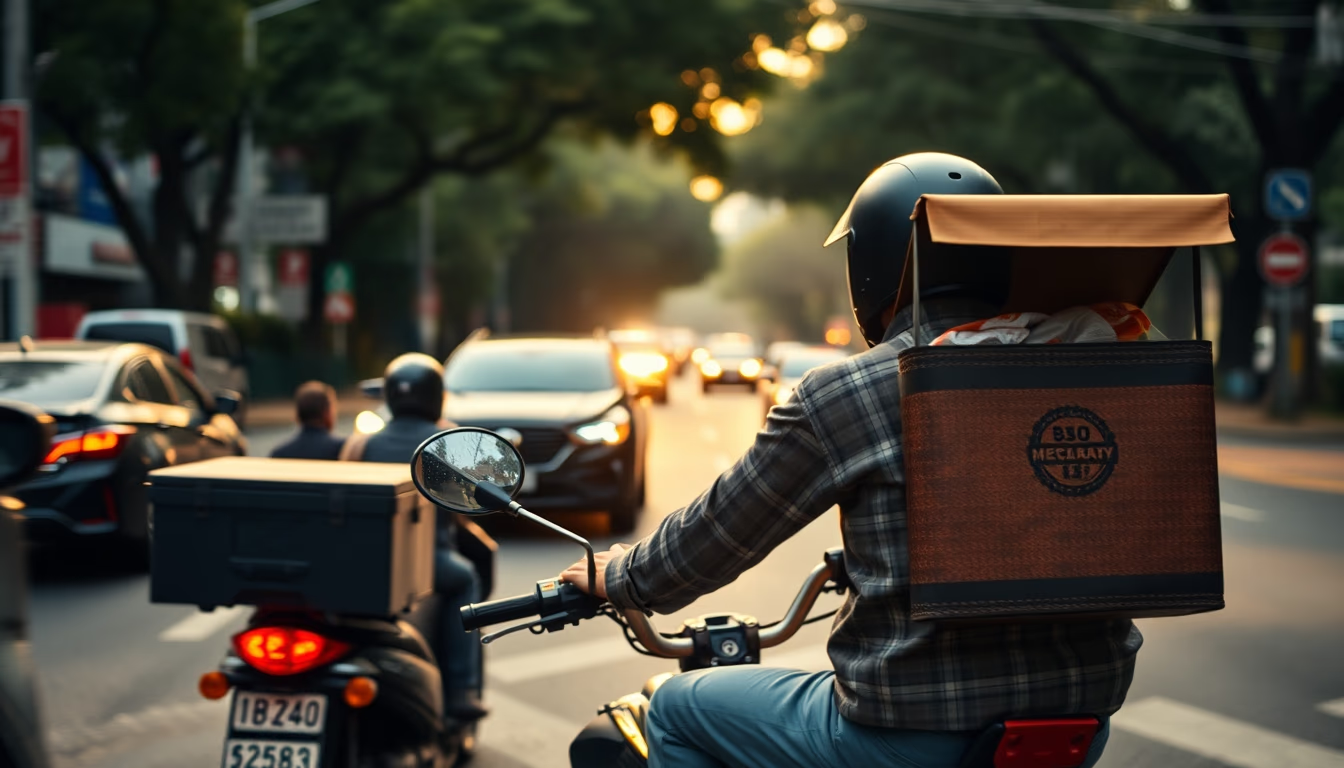 Food delivery rider on motorbike in São Paulo traffic
 Food delivery rider on motorbike in São Paulo traffic
 Food delivery rider on motorbike in São Paulo traffic
 Food delivery rider on motorbike in São Paulo traffic