Brazilian factory worker on assembly line with safety helmet
1344×768 · AVIF · CC BY 4.0
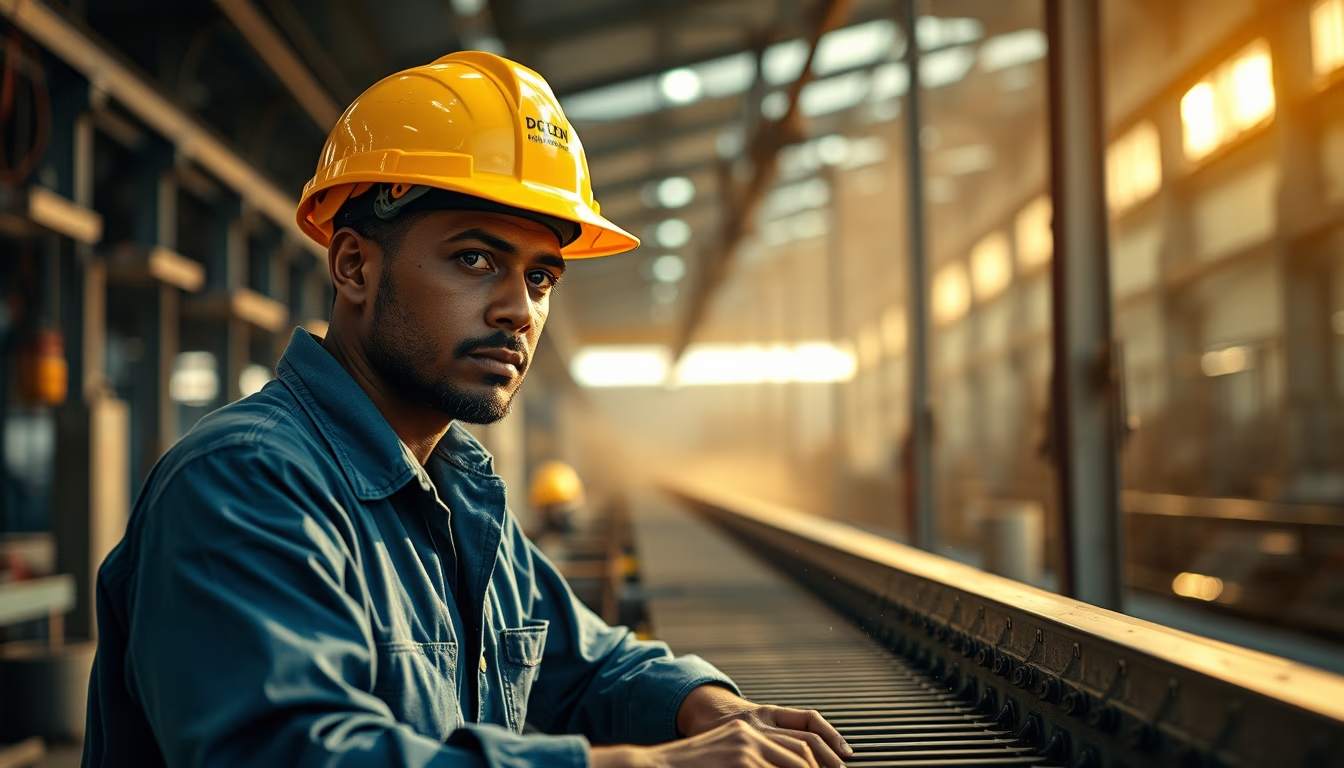
Brazilian industrial worker on an assembly line, wearing a safety helmet, in a factory environment with diffuse natural lighting.
About this subject
Brazil's manufacturing industry employs about 10 million workers and is a cornerstone of the national economy. In this context, the assembly line worker represents the productive force operating machinery and tools to manufacture everything from auto parts to household appliances. The use of a safety helmet is mandatory in Brazilian factories under Regulatory Standard NR-6, which establishes Personal Protective Equipment (PPE) for industrial activities. The work environment typically includes conveyor belts, pneumatic tools, and exhaust systems to maintain air quality. Natural lighting, as seen in the image, is valued for improving visual comfort and reducing electricity consumption, although many factories also use artificial light to ensure productivity during night shifts. Workplace safety in Brazil has evolved since the 1970s, when the Consolidation of Labor Laws (CLT) began requiring preventive measures. Today, companies invest in training and equipment to reduce accidents, which still total about 500,000 occurrences per year in the country, according to data from the Ministry of Labor. The assembly line, popularized by Henry Ford in the early 20th century, is a mass production method that divides work into repetitive tasks, optimizing time and efficiency. In Brazil, this system is widely used in the automotive, electronics, and consumer goods sectors.
Frequently Asked Questions
What are the main PPE required in Brazilian industry?
Besides the safety helmet, common PPE includes safety glasses, gloves, earplugs, safety shoes, and respirators, as per NR-6.
How does natural lighting benefit factory workers?
Natural lighting reduces eye strain, improves mood and well-being, and lowers electricity consumption, being encouraged by ergonomic standards.
What is the importance of the assembly line in Brazilian industry?
The assembly line enables large-scale production with efficiency and standardization, being essential for sectors like automotive and electronics, which generate thousands of jobs.
Direct URL
https://pub-c7d6a6ea828543ac903a74a341ccb2e1.r2.dev/imagens/brazilian-factory-worker-on-assembly-line-with-safety-helmet-editorial-overcast-daytime-2.avifHow to credit
Include a visible link back to UtilizAí. Copy one of the snippets below:
<a href="https://xn--utiliza-eza.com/en/midia/imagens/brazilian-factory-worker-on-assembly-line-with-safety-helmet-editorial-overcast-daytime-2">Brazilian factory worker on assembly line with safety helmet</a> by <a href="https://xn--utiliza-eza.com">UtilizAí</a>, licensed under <a href="https://creativecommons.org/licenses/by/4.0/">CC BY 4.0</a>.
[Brazilian factory worker on assembly line with safety helmet](https://xn--utiliza-eza.com/en/midia/imagens/brazilian-factory-worker-on-assembly-line-with-safety-helmet-editorial-overcast-daytime-2) by [UtilizAí](https://xn--utiliza-eza.com), CC BY 4.0
License: CC-BY-4.0
Tags
Related images
 Food delivery rider on motorbike in São Paulo traffic
 Food delivery rider on motorbike in São Paulo traffic
 Food delivery rider on motorbike in São Paulo traffic
 Food delivery rider on motorbike in São Paulo traffic
 Food delivery rider on motorbike in São Paulo traffic
 Food delivery rider on motorbike in São Paulo traffic