Brazilian factory worker on assembly line with safety helmet
1344×768 · AVIF · CC BY 4.0
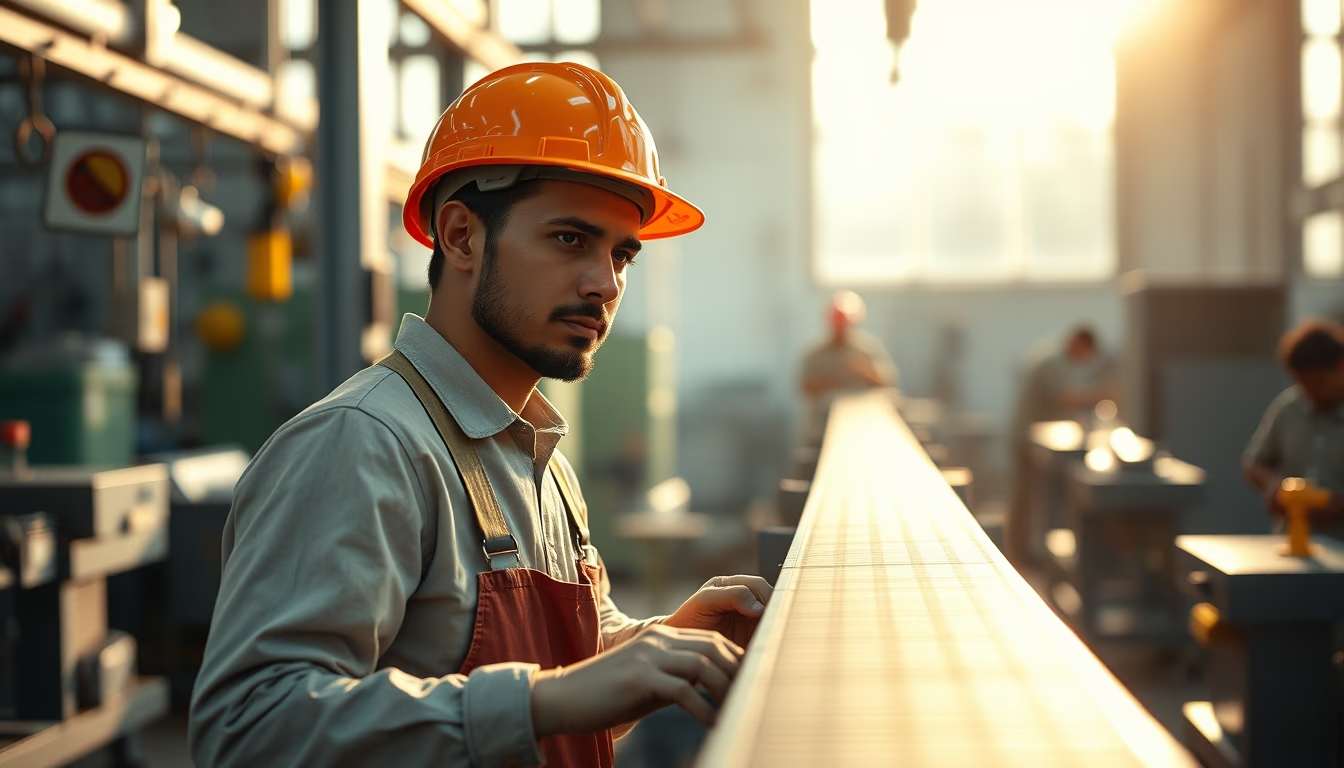
Brazilian factory worker on an assembly line wearing a safety helmet during the morning shift.
About this subject
The assembly line is a cornerstone of modern industrial production, introduced by Henry Ford in 1913 to manufacture the Model T. In Brazil, this system arrived with the installation of automakers such as Ford in São Paulo (1919) and General Motors (1925). Today, the country has one of the largest industrial parks in Latin America, with emphasis on the automotive, electronics, and consumer goods sectors. The use of personal protective equipment, such as safety helmets, is mandatory per regulatory norms (NR-6) of the Ministry of Labor, reducing accidents in environments with risk of impact or falling objects.
The morning shift, typically from 6 a.m. to 2 p.m., is one of the most common in Brazilian factories. During this period, productivity tends to be higher due to workers' overnight rest. IBGE studies show that about 10 million Brazilians work in the manufacturing industry, many in shift rotations. The routine includes mandatory breaks for workplace gymnastics, which help prevent repetitive strain injuries.
Occupational safety in Brazil has advanced significantly since the 1970s, with the creation of internal accident prevention committees (CIPA) and oversight by the Ministry of Labor. Yet, data from the Digital Observatory of Occupational Health and Safety indicate about 700,000 work accidents occur annually in the country, with the industrial sector being one of the most affected. The safety helmet, along with gloves and boots, is essential to reduce injury severity.
The image portrays the reality of thousands of Brazilian workers who start their day early to keep the economy moving. Although repetitive, the assembly line provides income and dignity for many families. Factory modernization with robotics and automation is changing this scenario, but a large contingent of manual workers remains, especially in medium-sized industries.
Frequently Asked Questions
What are the main risks on an industrial assembly line?
Risks include repetitive strain injuries, falls, impacts from objects or machinery, and exposure to noise or chemicals. Using PPE such as helmets, gloves, and earplugs is essential to mitigate them.
How does NR-6 regulate safety helmet use in Brazil?
NR-6 requires employers to provide free appropriate personal protective equipment, including helmets, and train workers on correct usage. Non-compliance can result in fines and sector shutdown.
Why is the morning shift important for industrial productivity?
The morning shift aligns with peak attention and physical readiness after overnight rest, leading to higher efficiency and fewer errors. Many factories schedule critical tasks during this period.
Direct URL
https://pub-c7d6a6ea828543ac903a74a341ccb2e1.r2.dev/imagens/brazilian-factory-worker-on-assembly-line-with-safety-helmet-documentary-morning-5.avifHow to credit
Include a visible link back to UtilizAí. Copy one of the snippets below:
<a href="https://xn--utiliza-eza.com/en/midia/imagens/brazilian-factory-worker-on-assembly-line-with-safety-helmet-documentary-morning-5">Brazilian factory worker on assembly line with safety helmet</a> by <a href="https://xn--utiliza-eza.com">UtilizAí</a>, licensed under <a href="https://creativecommons.org/licenses/by/4.0/">CC BY 4.0</a>.
[Brazilian factory worker on assembly line with safety helmet](https://xn--utiliza-eza.com/en/midia/imagens/brazilian-factory-worker-on-assembly-line-with-safety-helmet-documentary-morning-5) by [UtilizAí](https://xn--utiliza-eza.com), CC BY 4.0
License: CC-BY-4.0
Tags
Related images
 Food delivery rider on motorbike in São Paulo traffic
 Food delivery rider on motorbike in São Paulo traffic
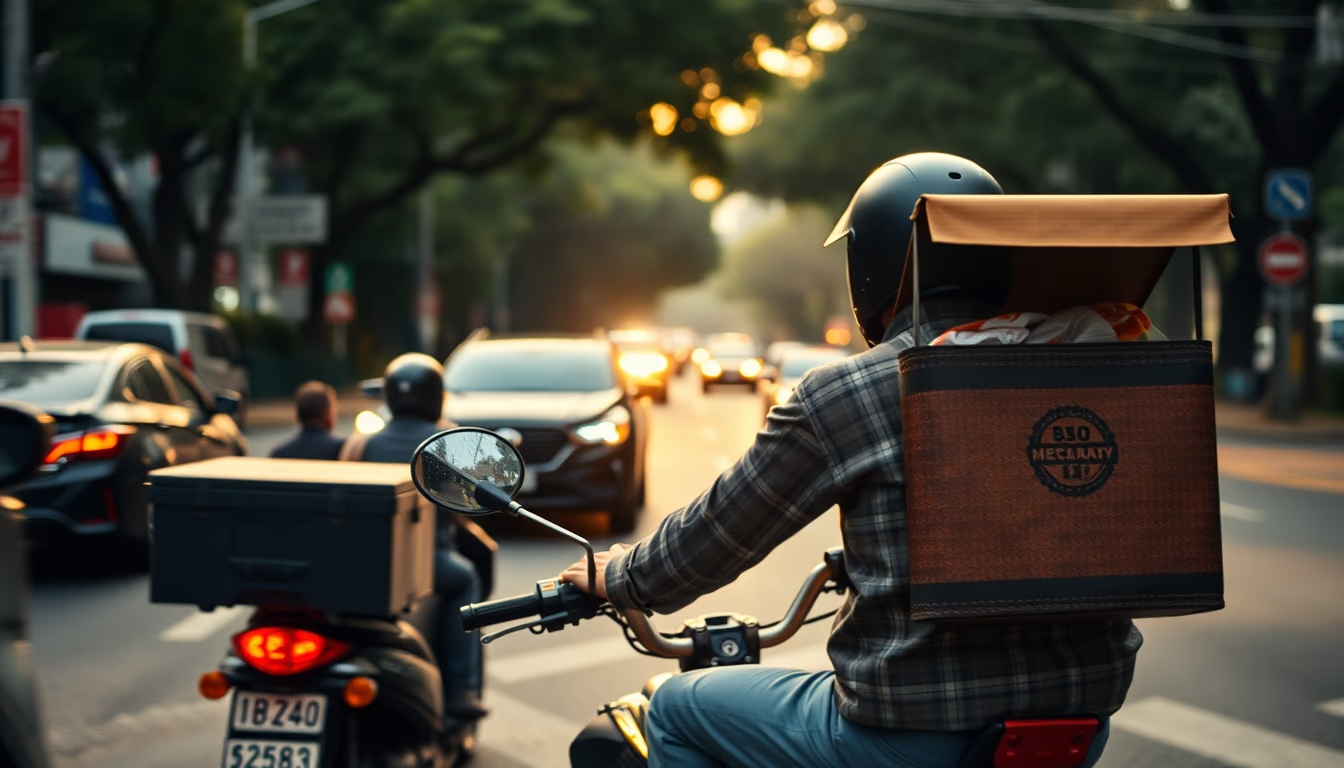 Food delivery rider on motorbike in São Paulo traffic
 Food delivery rider on motorbike in São Paulo traffic
 Food delivery rider on motorbike in São Paulo traffic
 Food delivery rider on motorbike in São Paulo traffic