Brandenburg gate berlin
1344×768 · AVIF · CC BY 4.0
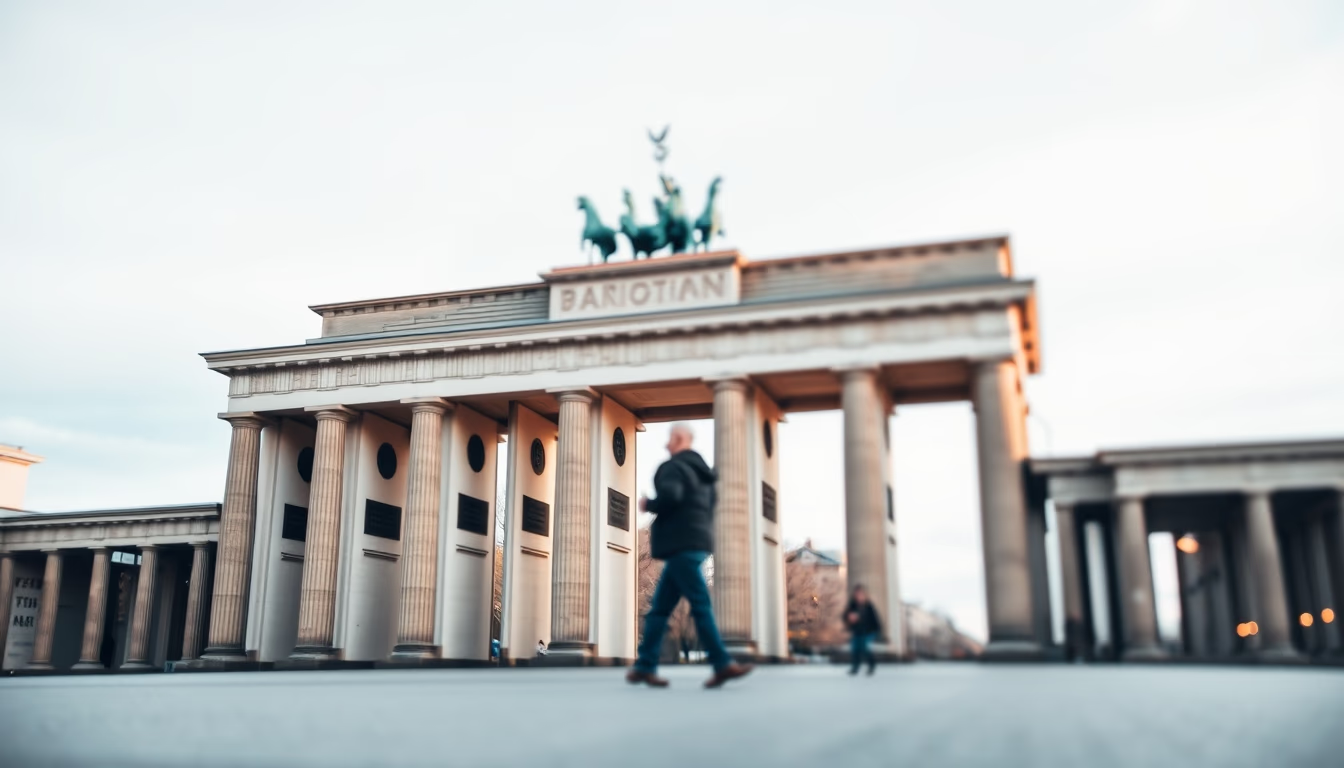
Brandenburg Gate is Berlin's most iconic landmark, symbolizing German reunification and European peace.
About this subject
The Brandenburg Gate (German: Brandenburger Tor) is a neoclassical triumphal arch located on Pariser Platz in Berlin. Designed by Carl Gotthard Langhans and built between 1788 and 1791, it was inspired by the Propylaea of the Acropolis in Athens. The structure features twelve Doric columns, five passageways, and a quadriga atop, originally depicting the goddess of peace, Irene.
Throughout history, the gate has witnessed pivotal events. During the Napoleonic Wars, the quadriga was taken to Paris by Napoleon but was triumphantly returned in 1814. In the Nazi era, it was used as a regime symbol yet survived World War II bombings. During the Cold War, the gate stood in a no-man's land between East and West Berlin, physically part of the Berlin Wall, becoming a poignant symbol of divided Germany.
After the wall fell in 1989, the Brandenburg Gate became the foremost symbol of German reunification. Today, it is one of Germany's most visited tourist attractions, hosting New Year's Eve celebrations, political speeches, and cultural events. The restored quadriga, sculpted by Johann Gottfried Schadow, depicts the goddess Victory driving a chariot pulled by four horses, representing victory and peace.
While many photographs use tilt-shift effects to give it a miniature appearance, the gate itself carries immense historical and architectural significance. Its central location, near the Reichstag and Tiergarten, makes it an essential landmark for understanding German and European history.
Frequently Asked Questions
Who built the Brandenburg Gate?
It was built by Carl Gotthard Langhans between 1788 and 1791.
What does the quadriga on top represent?
The quadriga originally represented the goddess Irene (peace) and later Victory, symbolizing peace and victory.
How is the Brandenburg Gate related to the Cold War?
During the Cold War, the gate stood in the Iron Curtain area and was part of the Berlin Wall, symbolizing division. After the wall fell, it became an icon of reunification.
Direct URL
https://pub-c7d6a6ea828543ac903a74a341ccb2e1.r2.dev/imagens/brandenburg-gate-berlin-tilt-shift-miniature-p11.avifHow to credit
Include a visible link back to UtilizAí. Copy one of the snippets below:
<a href="https://xn--utiliza-eza.com/en/midia/imagens/brandenburg-gate-berlin-tilt-shift-miniature-p11">Brandenburg gate berlin</a> by <a href="https://xn--utiliza-eza.com">UtilizAí</a>, licensed under <a href="https://creativecommons.org/licenses/by/4.0/">CC BY 4.0</a>.
[Brandenburg gate berlin](https://xn--utiliza-eza.com/en/midia/imagens/brandenburg-gate-berlin-tilt-shift-miniature-p11) by [UtilizAí](https://xn--utiliza-eza.com), CC BY 4.0
License: CC-BY-4.0