Brandenburg gate berlin
1344×768 · AVIF · CC BY 4.0
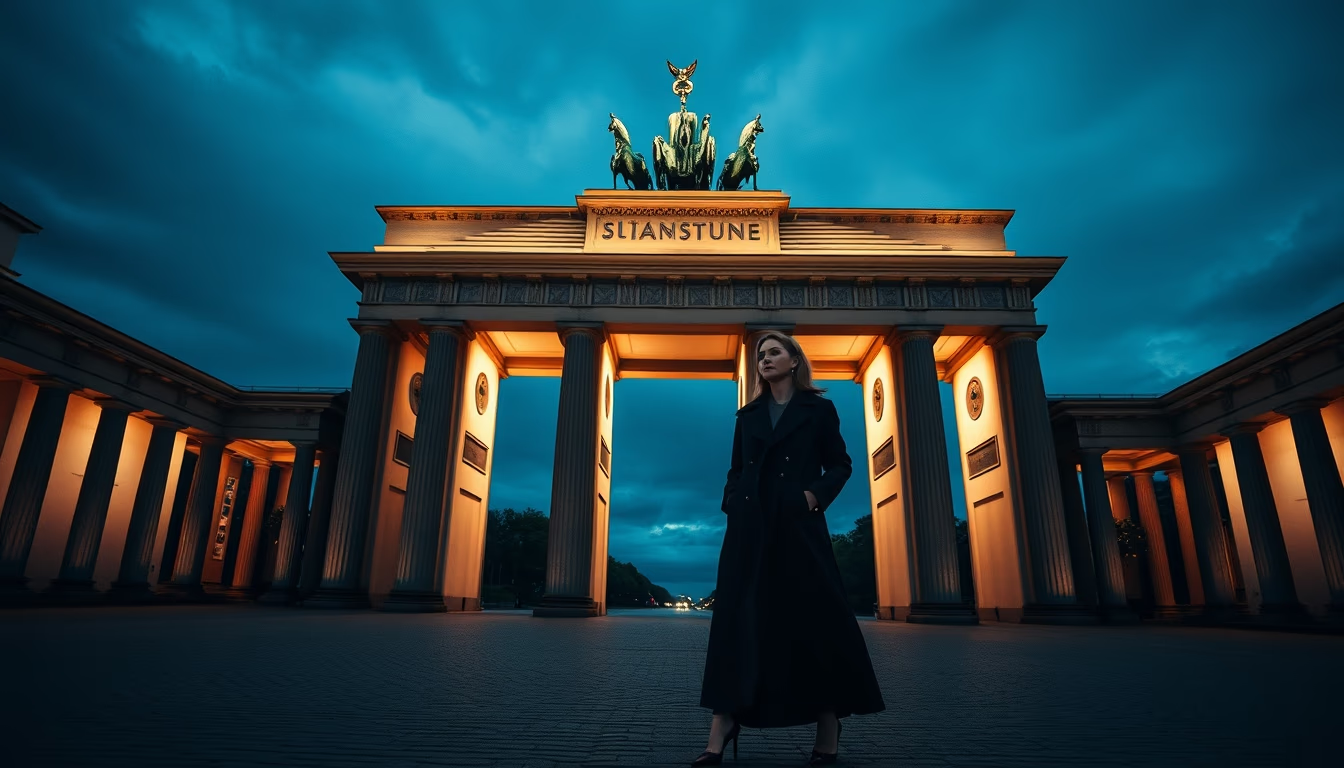
The Brandenburg Gate in Berlin, an 18th-century neoclassical monument, is the ultimate symbol of the city and German reunification.
About this subject
The Brandenburg Gate (Brandenburger Tor) is a neoclassical triumphal arch located at Pariser Platz in central Berlin. Commissioned by King Frederick William II of Prussia and built between 1788 and 1791 by architect Carl Gotthard Langhans, the gate was inspired by the Propylaea of the Acropolis in Athens. Originally part of a customs wall surrounding the city, it soon became a symbol of peace and prosperity.
The gate is crowned by the Quadriga, a 6-meter-tall bronze statue depicting the goddess Victory in a chariot pulled by four horses. Created by Johann Gottfried Schadow in 1793, the Quadriga was taken to Paris by Napoleon in 1806 as war booty but triumphantly returned to Berlin in 1814. During World War II, the gate was severely damaged and the Quadriga destroyed; after the war, it was rebuilt jointly by East and West Germany. The statue was recreated from original molds.
With the division of Berlin and the construction of the Berlin Wall in 1961, the Brandenburg Gate stood in the no-man's land between the two sectors, inaccessible from both sides. It became a powerful symbol of separation. When the Wall fell on November 9, 1989, thousands gathered at the gate to celebrate reunification. Since then, it has been the venue for major events such as New Year's Eve parties and political demonstrations. The monument underwent a complete restoration in the early 2000s, including stone cleaning and regilding of the Quadriga.
Today, the Brandenburg Gate is one of Germany's most visited landmarks and frequently appears in films, books, and promotional materials. Its image is associated not only with Berlin but also with values like freedom, unity, and democracy. The monument is illuminated at night, creating a visual spectacle that attracts tourists and locals alike. The surrounding Pariser Platz was rebuilt after reunification with modern buildings that respect the historic scale, including embassies and the Hotel Adlon.
Frequently Asked Questions
When was the Brandenburg Gate built?
The gate was built between 1788 and 1791 under King Frederick William II of Prussia as part of a customs wall.
What does the Quadriga on top of the gate represent?
The Quadriga depicts the goddess Victory (or Peace in its original version) driving a chariot pulled by four horses, symbolizing peace and triumph.
Why is the Brandenburg Gate a symbol of German reunification?
After the fall of the Berlin Wall in 1989, the gate, previously in the no-man's land between East and West, became the site of reunification celebrations, representing the overcoming of division.
Direct URL
https://pub-c7d6a6ea828543ac903a74a341ccb2e1.r2.dev/imagens/brandenburg-gate-berlin-high-fashion-editorial-p3.avifHow to credit
Include a visible link back to UtilizAí. Copy one of the snippets below:
<a href="https://xn--utiliza-eza.com/en/midia/imagens/brandenburg-gate-berlin-high-fashion-editorial-p3">Brandenburg gate berlin</a> by <a href="https://xn--utiliza-eza.com">UtilizAí</a>, licensed under <a href="https://creativecommons.org/licenses/by/4.0/">CC BY 4.0</a>.
[Brandenburg gate berlin](https://xn--utiliza-eza.com/en/midia/imagens/brandenburg-gate-berlin-high-fashion-editorial-p3) by [UtilizAí](https://xn--utiliza-eza.com), CC BY 4.0
License: CC-BY-4.0