Brandenburg gate berlin
1344×768 · AVIF · CC BY 4.0
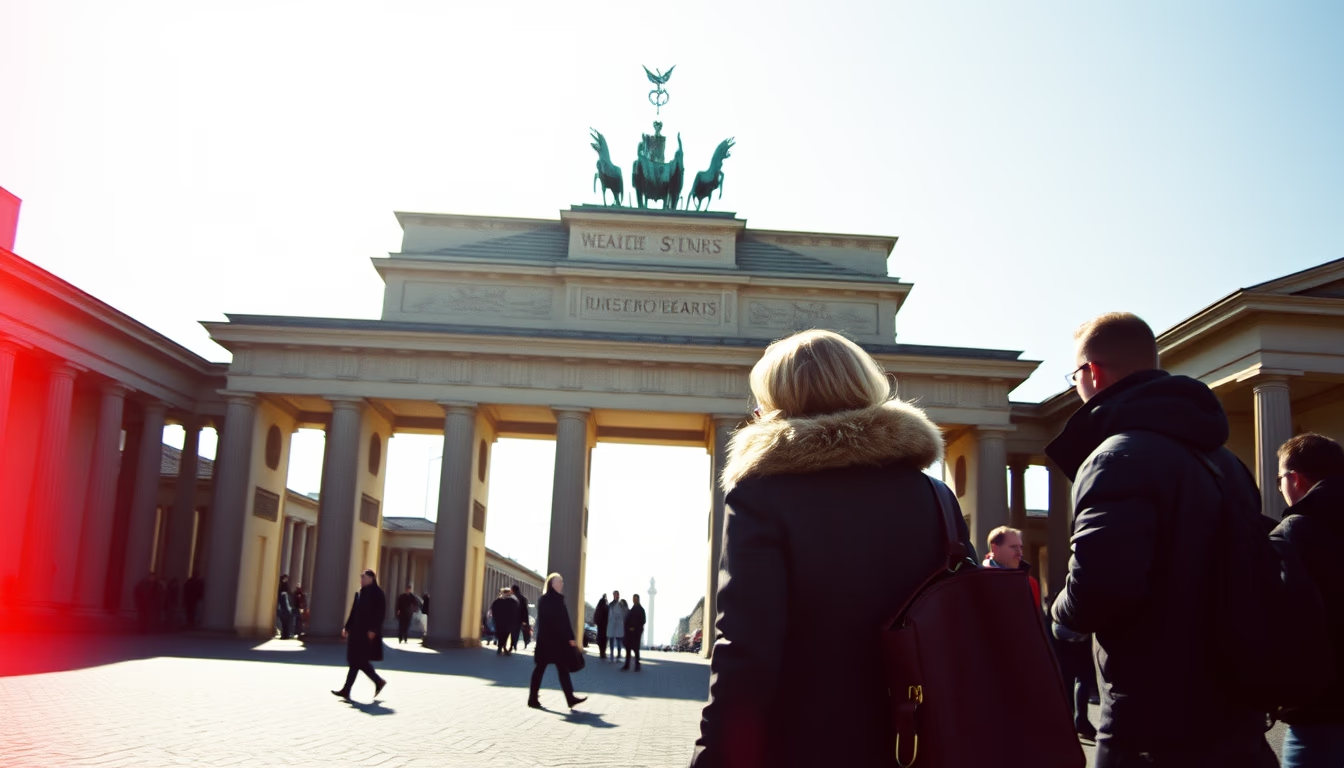
The Brandenburg Gate in Berlin is one of Germany's most iconic landmarks, symbolizing the country's reunification.
About this subject
Built between 1788 and 1791 by order of King Frederick William II of Prussia, the Brandenburg Gate was designed by Carl Gotthard Langhans as a neoclassical triumphal arch. Inspired by the Propylaea of the Acropolis in Athens, it features twelve Doric columns supporting a pediment adorned with the Quadriga, a sculpture of the goddess Victory in a chariot pulled by four horses. The original Quadriga was taken as spoils by Napoleon Bonaparte in 1806 and returned to Berlin eight years later.
During the Cold War, the gate stood isolated in the Soviet sector but immediately behind the Berlin Wall, becoming a potent symbol of the division between East and West. After the fall of the wall in 1989, thousands gathered there to celebrate German reunification. Today, the Brandenburg Gate is a central tourist attraction and venue for events such as Berlin's New Year's Eve party, drawing millions of visitors.
The monument is 26 meters high, 65.5 meters wide, and 11 meters deep. The current Quadriga is a replica, as the original was destroyed during World War II. In 2000, the gate underwent a complete restoration costing about 6 million euros. Located at Pariser Platz, it is neighbors with the Reichstag and Unter den Linden, a historic avenue. Although nationally emblematic, the Brandenburg Gate is also recognized as a European symbol of peace and unity.
Frequently Asked Questions
What was the original purpose of the Brandenburg Gate?
The gate was built as a triumphal arch to celebrate Prussian military victories and also served as a symbol of peace, marking the end of the Napoleonic Wars era.
Why did the Brandenburg Gate become a symbol of German reunification?
After World War II, the gate stood on the border between East and West Berlin, next to the Berlin Wall. Its location made it an icon of division, and after the Wall fell in 1989, it became a landmark of reunification.
What does the Quadriga atop the gate represent?
The Quadriga is a statue of the goddess Victory, symbolizing victory and peace. Originally, the goddess held a laurel wreath and a scepter, but after a 19th-century restoration, an Iron Cross and a Prussian eagle were added.
Direct URL
https://pub-c7d6a6ea828543ac903a74a341ccb2e1.r2.dev/imagens/brandenburg-gate-berlin-film-grain-authentic-p5.avifHow to credit
Include a visible link back to UtilizAí. Copy one of the snippets below:
<a href="https://xn--utiliza-eza.com/en/midia/imagens/brandenburg-gate-berlin-film-grain-authentic-p5">Brandenburg gate berlin</a> by <a href="https://xn--utiliza-eza.com">UtilizAí</a>, licensed under <a href="https://creativecommons.org/licenses/by/4.0/">CC BY 4.0</a>.
[Brandenburg gate berlin](https://xn--utiliza-eza.com/en/midia/imagens/brandenburg-gate-berlin-film-grain-authentic-p5) by [UtilizAí](https://xn--utiliza-eza.com), CC BY 4.0
License: CC-BY-4.0