Bonsai tree minimalist
1344×768 · AVIF · CC BY 4.0
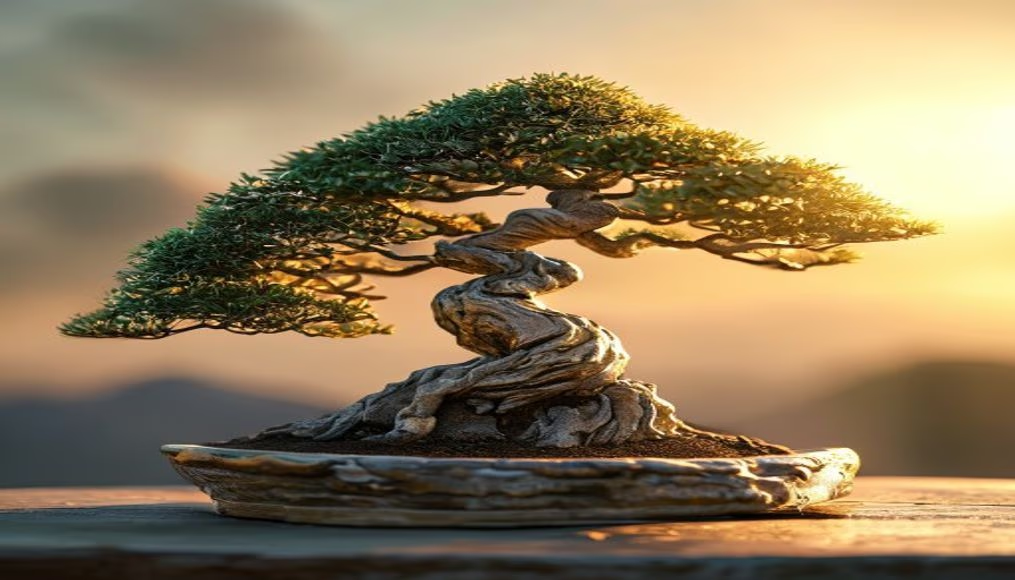
Bonsai is a centuries-old Japanese art of cultivating miniature trees, symbolizing harmony and patience.
About this subject
Bonsai, a Japanese term meaning "planted in a tray," is a practice that transforms ordinary trees into miniature versions through pruning, wiring, and intensive care. Originating in China over a thousand years ago as penjing, the technique was refined in Japan during the Kamakura period (1185, 1333), becoming a cultural symbol of discipline and contemplation. Each bonsai is a stylized representation of nature, following aesthetic principles such as balance, asymmetry, and simplicity.
Species selection is crucial for bonsai success. Conifers like pines and junipers are popular for their hardiness, while deciduous trees like maples and cherry blossoms offer striking seasonal changes. Cultivation requires technical knowledge: root and branch pruning, wiring to direct growth, and controlled watering. Additionally, the pot must complement the tree without visual competition, enhancing its form.
In contemporary times, bonsai has spread beyond Japan, gaining enthusiasts worldwide. International exhibitions like the Kokufu-ten in Japan and the World Bonsai Convention feature specimens worth thousands of dollars that may take decades to shape. The minimalist aesthetics of bonsai have also influenced interior design and photography, where simplicity evokes tranquility and focus. Destinations like the Bonsai Village in Omiya, Japan, attract travelers interested in this living art.
Frequently Asked Questions
What is the difference between bonsai and penjing?
Bonsai is the Japanese version of Chinese penjing. While penjing often includes miniature landscapes with rocks and water, bonsai focuses mainly on the isolated tree, following Japanese aesthetic principles.
How long does it take to shape a bonsai?
Time varies by species and desired style. Basic bonsai can take 3 to 5 years, while advanced specimens require decades of continuous care.
Can I grow a bonsai indoors?
Yes, but you need to choose tropical species like ficus or serissa that tolerate indoor conditions. Most traditional bonsai require direct sunlight and defined seasons to thrive.
Direct URL
https://pub-c7d6a6ea828543ac903a74a341ccb2e1.r2.dev/imagens/bonsai-tree-minimalist-travel-photography-v10.avifHow to credit
Include a visible link back to UtilizAí. Copy one of the snippets below:
<a href="https://xn--utiliza-eza.com/en/midia/imagens/bonsai-tree-minimalist-travel-photography-v10">Bonsai tree minimalist</a> by <a href="https://xn--utiliza-eza.com">UtilizAí</a>, licensed under <a href="https://creativecommons.org/licenses/by/4.0/">CC BY 4.0</a>.
[Bonsai tree minimalist](https://xn--utiliza-eza.com/en/midia/imagens/bonsai-tree-minimalist-travel-photography-v10) by [UtilizAí](https://xn--utiliza-eza.com), CC BY 4.0
License: CC-BY-4.0