Bonsai tree minimalist
1344×768 · AVIF · CC BY 4.0
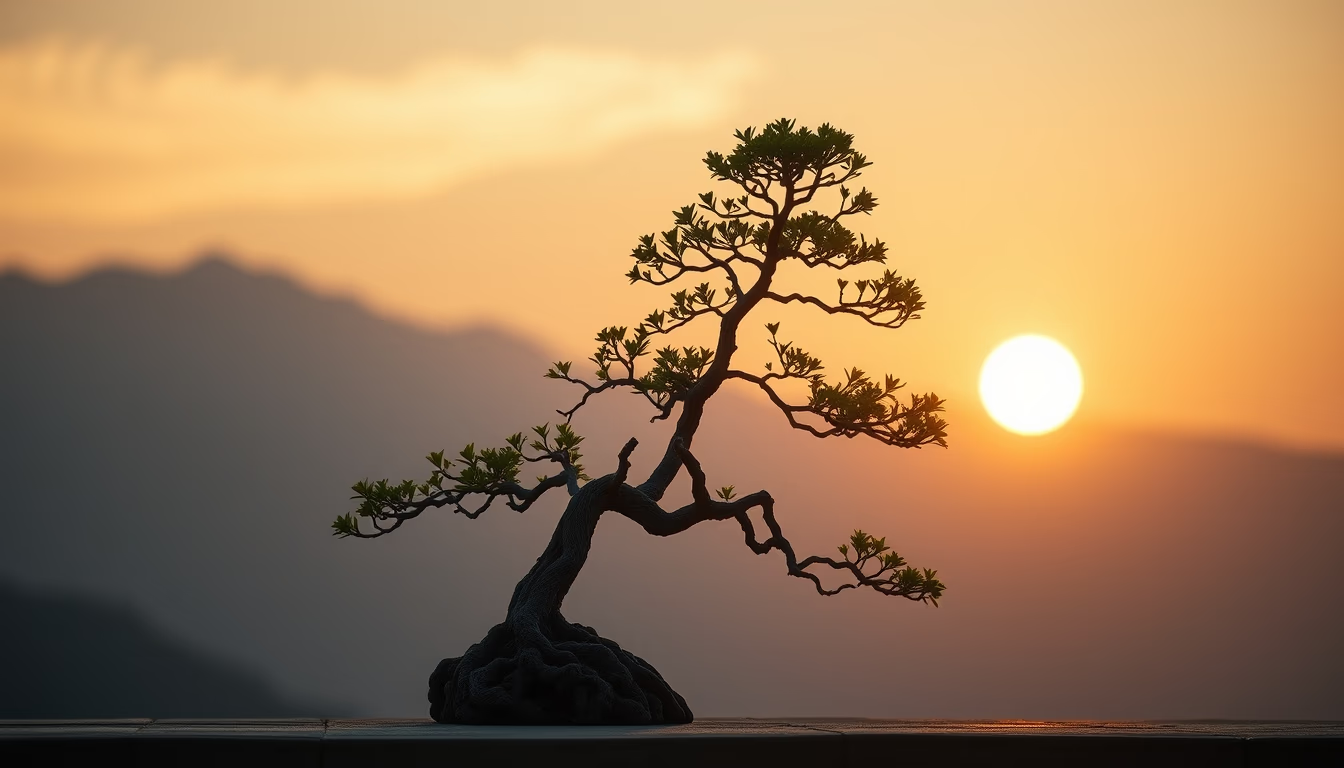
Bonsai is the ancient Japanese art of growing miniature trees, combining pruning and shaping techniques to create living landscapes on a small scale.
About this subject
Bonsai is a practice that dates back over a thousand years, originating in China as penjing and refined in Japan from the 12th century onward. Contrary to popular belief, it is not a genetically modified species but rather ordinary trees grown in shallow pots and subjected to regular root and crown pruning, as well as wiring to shape branches. Common species include pines, maples, junipers, and ficus, each requiring specific care in watering, fertilizing, and sun exposure.
The aesthetics of bonsai are heavily influenced by Zen Buddhism and the wabi-sabi philosophy, which values the beauty of imperfection and transience. Each bonsai style seeks to imitate natural forms found in the wild: the formal upright style (chokkan) resembles a solitary tree in an open field, while the cascade style (kengai) evokes trees growing on cliffs. Dozens of recognized styles exist, such as the slanting (shakan), windswept (fukinagashi), and literati (bunjin), which mimics trees twisted by harsh conditions.
Caring for a bonsai is a long-term commitment: well-maintained trees can live for hundreds of years, passed down through generations. In Japan, some specimens are considered national treasures, such as the 400-year-old white pine at the Tokyo Imperial Palace. The practice gained global popularity in the 20th century, with exhibitions and clubs on every continent. In Brazil, the tropical climate favors species like jabuticaba and Surinam cherry, adapted by local enthusiasts.
Interestingly, the smallest bonsai in the world, called mame, fits in the palm of a hand, while the largest can exceed one meter in height. Maintenance requires patience and daily observation: watering when the soil surface dries, pruning new shoots, and repotting every two to three years to renew the substrate. More than a plant, bonsai is an artistic expression that reflects the harmony between humans and nature.
Frequently Asked Questions
What is the difference between a bonsai and a regular tree?
The main difference lies in the cultivation technique: bonsai is a regular tree kept in a shallow pot and pruned regularly to maintain a small size and desired shape. It is not a genetically dwarf species but rather the result of root and branch pruning, wiring, and specific care.
How long does it take to form a bonsai?
The time varies by species and desired style. A basic bonsai can be outlined in 3 to 5 years, but mature, refined trees take decades or even centuries. Many enthusiasts purchase pre-trained saplings to speed up the process.
Is it difficult to care for a bonsai at home?
It requires dedication but is not impossible. Care includes frequent watering (avoiding waterlogging), maintenance pruning, fertilizing at the right time, and adequate light exposure. Each species has specific needs, so it is important to research before acquiring one.
Direct URL
https://pub-c7d6a6ea828543ac903a74a341ccb2e1.r2.dev/imagens/bonsai-tree-minimalist-cinematic-wide-shot-v2.avifHow to credit
Include a visible link back to UtilizAí. Copy one of the snippets below:
<a href="https://xn--utiliza-eza.com/en/midia/imagens/bonsai-tree-minimalist-cinematic-wide-shot-v2">Bonsai tree minimalist</a> by <a href="https://xn--utiliza-eza.com">UtilizAí</a>, licensed under <a href="https://creativecommons.org/licenses/by/4.0/">CC BY 4.0</a>.
[Bonsai tree minimalist](https://xn--utiliza-eza.com/en/midia/imagens/bonsai-tree-minimalist-cinematic-wide-shot-v2) by [UtilizAí](https://xn--utiliza-eza.com), CC BY 4.0
License: CC-BY-4.0