Bonsai maple autumn red
1344×768 · AVIF · CC BY 4.0
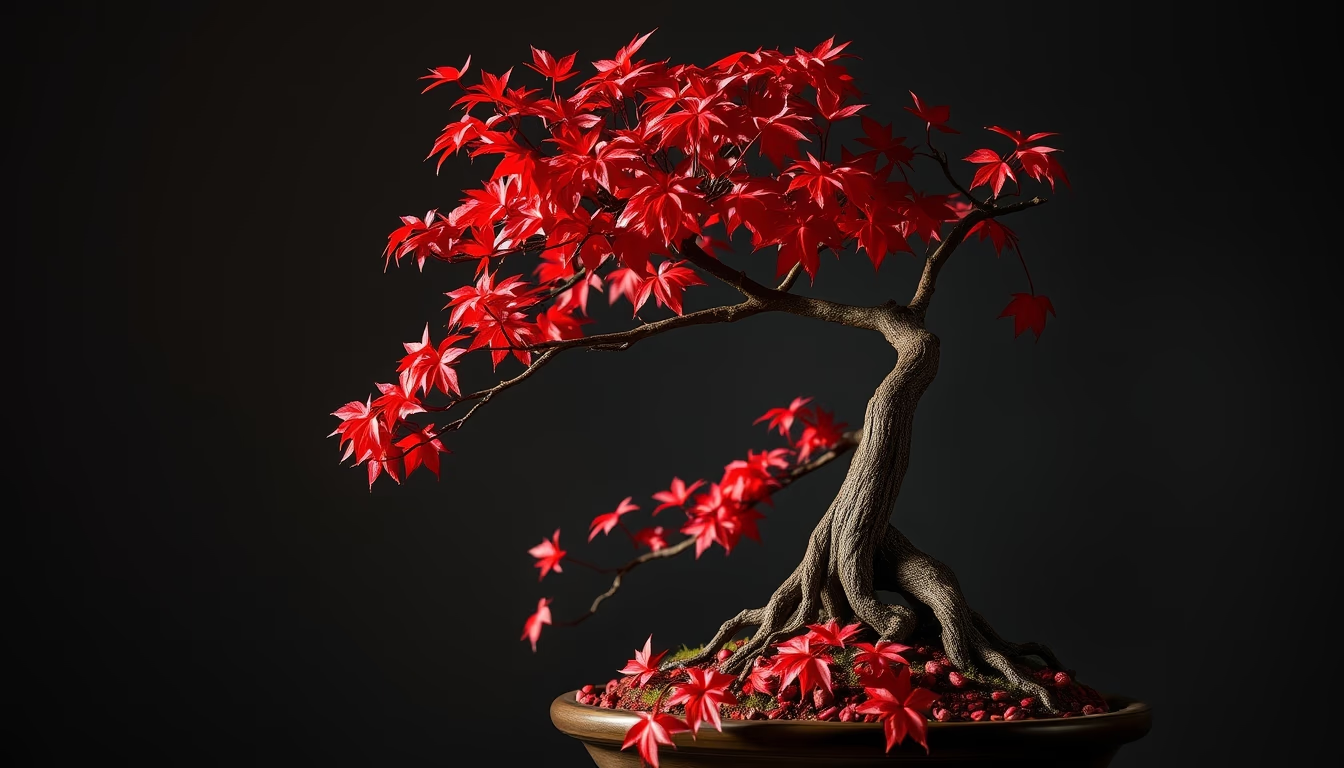
The red maple bonsai in autumn displays intense foliage, combining ancient Japanese art with seasonal beauty.
About this subject
The red maple bonsai (Acer palmatum) is one of the most admired species in the bonsai world, especially during autumn when its leaves turn shades from orange to deep red. Native to Japan, Korea, and China, the Japanese maple has been cultivated for centuries not only for its beauty but also for its ability to dramatically express the seasons. In bonsai, the miniature tree represents a stylized version of nature, requiring specific pruning, watering, and fertilization techniques to maintain small leaves and vivid colors.
The autumn leaf color change, known as senescence, occurs due to reduced chlorophyll and accumulation of anthocyanins, pigments that protect cells from sun damage. Healthy maples exposed to cold and intense sunlight maximize color intensity. In bonsai cultivation, placing the tree in full sun during autumn stimulates coloration, while protecting it from severe frosts. Watering should be reduced without letting the substrate dry out completely.
Culturally, the red maple symbolizes the transience of life in Japan, a central theme in the aesthetic concept of wabi-sabi. Momijigari (autumn leaf viewing) is a tradition as significant as hanami (cherry blossom viewing). A maple bonsai in autumn evokes this ephemerality, making it a prized piece in exhibitions and collections. Among the most used varieties are 'Deshojo', which sprouts red in spring and intensifies in autumn, and 'Kiyohime', with small leaves and compact growth.
Frequently Asked Questions
How to get intense red leaves on a maple bonsai in autumn?
To intensify red color, place the bonsai in full sun during autumn, reduce watering (without letting it dry completely), and avoid nitrogen-rich fertilizers after summer. Genetics also matter: 'Deshojo' and 'Shishigashira' are known for vibrant coloration.
What are the main maple species used for bonsai?
The most common are Acer palmatum (Japanese maple) and its cultivars like 'Deshojo', 'Kiyohime', 'Shishigashira', and 'Seigen'. Acer buergerianum (trident maple) is also popular, though its autumn leaves tend toward orange and yellow.
Does a maple bonsai lose all its leaves in winter?
Yes, maple is deciduous, losing all leaves in winter. This dormancy period is essential for its health. Fallen leaves should be removed to prevent fungi, and the tree should be protected from extreme frost, especially if in a pot.
Direct URL
https://pub-c7d6a6ea828543ac903a74a341ccb2e1.r2.dev/imagens/bonsai-maple-autumn-red-fine-art-photography-fresh16.avifHow to credit
Include a visible link back to UtilizAí. Copy one of the snippets below:
<a href="https://xn--utiliza-eza.com/en/midia/imagens/bonsai-maple-autumn-red-fine-art-photography-fresh16">Bonsai maple autumn red</a> by <a href="https://xn--utiliza-eza.com">UtilizAí</a>, licensed under <a href="https://creativecommons.org/licenses/by/4.0/">CC BY 4.0</a>.
[Bonsai maple autumn red](https://xn--utiliza-eza.com/en/midia/imagens/bonsai-maple-autumn-red-fine-art-photography-fresh16) by [UtilizAí](https://xn--utiliza-eza.com), CC BY 4.0
License: CC-BY-4.0