Bonsai ficus aerial roots
1344×768 · AVIF · CC BY 4.0
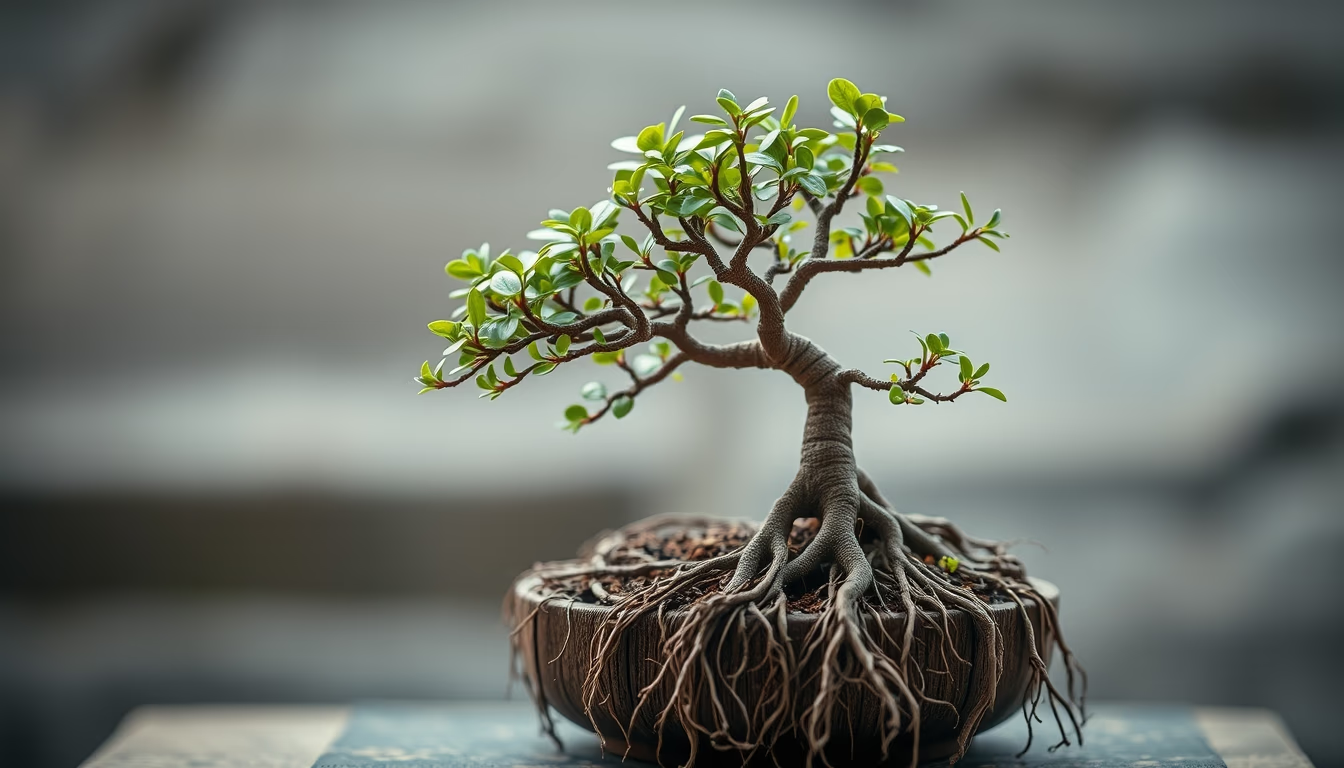
Ficus bonsai with aerial roots: understand how these structures form and their importance in the art of bonsai.
About this subject
Aerial roots are a distinctive feature of many ficus species, especially Ficus retusa and Ficus microcarpa, commonly used in bonsai. In nature, these roots grow from branches or the trunk toward the ground, helping the tree anchor and absorb nutrients and humidity from the air in tropical environments. In bonsai cultivation, aerial roots are highly valued for giving the plant an ancient and majestic appearance, simulating centuries-old trees.
To stimulate the development of aerial roots in a ficus bonsai, specific techniques are employed, such as increasing ambient humidity, applying sphagnum moss to branches, and using wire rings to guide growth. When these roots touch the substrate, they thicken and become part of the trunk, creating a more robust base. Species like Ficus benghalensis (banyan tree) are famous for their aerial roots that form an extensive canopy.
Beyond aesthetics, aerial roots have practical functions in bonsai: they aid in water and nutrient absorption, especially in well-draining substrates. Maintaining air humidity around 60-70% is essential for their development. In dry regions, it is common to use humidity trays or misting devices. The presence of these roots also indicates that the tree is healthy and adapted to the growing environment.
Interestingly, the aerial roots of ficus are an example of evolutionary adaptation. In their natural habitat, such as tropical forests of Asia and Oceania, they allow fig trees to grow in poor soils and compete for sunlight. In bonsai, these roots are shaped through pruning and guidance to compose the "Neagari" (exposed root) style, which mimics trees that have undergone erosion. This technique requires patience and observation, as the roots grow slowly.
Frequently Asked Questions
How do I make a ficus bonsai develop aerial roots?
Increase ambient humidity to 60-70% using humidity trays or misting. Apply sphagnum moss to branches and use wire to guide growth. Ensure the tree is healthy and well-watered.
How long does it take for aerial roots to form?
It can take from a few months to years, depending on species, humidity, and care. Under ideal conditions, thin roots may appear in 3-6 months, but thick, woody roots take longer.
Which ficus species are best for aerial roots in bonsai?
Ficus retusa, Ficus microcarpa, and Ficus benghalensis are the most common. Ficus benghalensis produces abundant aerial roots, while Ficus retusa is more robust and tolerant of pruning.
Direct URL
https://pub-c7d6a6ea828543ac903a74a341ccb2e1.r2.dev/imagens/bonsai-ficus-aerial-roots-tilt-shift-miniature-fresh7.avifHow to credit
Include a visible link back to UtilizAí. Copy one of the snippets below:
<a href="https://xn--utiliza-eza.com/en/midia/imagens/bonsai-ficus-aerial-roots-tilt-shift-miniature-fresh7">Bonsai ficus aerial roots</a> by <a href="https://xn--utiliza-eza.com">UtilizAí</a>, licensed under <a href="https://creativecommons.org/licenses/by/4.0/">CC BY 4.0</a>.
[Bonsai ficus aerial roots](https://xn--utiliza-eza.com/en/midia/imagens/bonsai-ficus-aerial-roots-tilt-shift-miniature-fresh7) by [UtilizAí](https://xn--utiliza-eza.com), CC BY 4.0
License: CC-BY-4.0