Bonsai ficus aerial roots
1344×768 · AVIF · CC BY 4.0
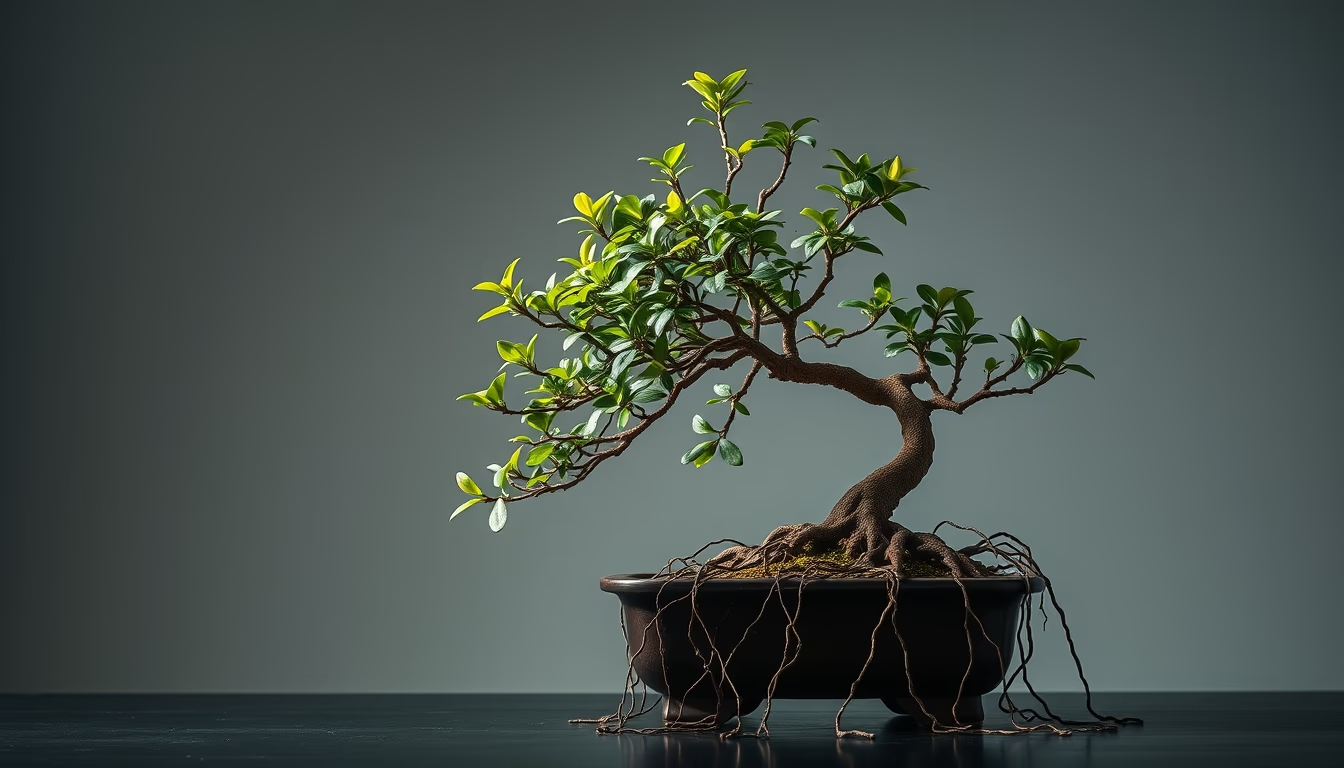
The aerial roots of ficus bonsai are structures that descend from branches in search of moisture and nutrients, a distinctive feature of this species.
About this subject
In tropical forests, many fig trees (Ficus spp.) develop aerial roots that, upon reaching the ground, thicken and act as additional trunks, supporting the canopy and enhancing water uptake. In bonsai, this feature is highly prized for conveying an aged and ancient appearance. Species such as Ficus retusa, Ficus microcarpa, and Ficus benjamina are the most common because they tolerate pruning and indoor environments well and produce aerial roots relatively easily. Stimulating root formation requires high humidity (above 60%), proper pruning, and in some cases, wrapping sphagnum moss around branches to create a favorable microclimate. In the art of bonsai, well-developed aerial roots are a sign of refined technique and patience, often taking years to mature. Culturally, in Japan and China, fig trees with aerial roots symbolize strength, longevity, and the connection between heaven and earth. Interestingly, some ficus species, like the strangler fig, use aerial roots to choke other trees in nature, but in bonsai this behavior is controlled by constant pruning. To keep these roots healthy, daily misting and ensuring the substrate never completely dries out are essential. A common mistake is confusing aerial roots with adventitious shoots; the former usually arise in response to water stress or injury, while the latter are attempts at vegetative growth. With proper care, a ficus bonsai can display aerial roots that last for decades and add drama to the composition.
Frequently Asked Questions
How to encourage aerial root growth on a ficus bonsai?
Maintain ambient humidity above 60% with daily misting and use localized moisture, such as wrapping branches with damp sphagnum moss. Regular pruning and a well-draining substrate also help.
Why do fig trees produce aerial roots?
In nature, aerial roots help the fig tree obtain nutrients and water from the air or soil when they reach the ground, functioning as extra support. In dry conditions or after injury, the tree produces them to compensate for water stress.
Can aerial roots harm the health of a ficus bonsai?
No, as long as the plant is healthy. Aerial roots are natural and indicate good adaptation. However, if they grow excessively and compete with the main trunk, they can be pruned to maintain the desired shape.
Direct URL
https://pub-c7d6a6ea828543ac903a74a341ccb2e1.r2.dev/imagens/bonsai-ficus-aerial-roots-studio-still-life-fresh3.avifHow to credit
Include a visible link back to UtilizAí. Copy one of the snippets below:
<a href="https://xn--utiliza-eza.com/en/midia/imagens/bonsai-ficus-aerial-roots-studio-still-life-fresh3">Bonsai ficus aerial roots</a> by <a href="https://xn--utiliza-eza.com">UtilizAí</a>, licensed under <a href="https://creativecommons.org/licenses/by/4.0/">CC BY 4.0</a>.
[Bonsai ficus aerial roots](https://xn--utiliza-eza.com/en/midia/imagens/bonsai-ficus-aerial-roots-studio-still-life-fresh3) by [UtilizAí](https://xn--utiliza-eza.com), CC BY 4.0
License: CC-BY-4.0