Blue mosque istanbul
1344×768 · AVIF · CC BY 4.0
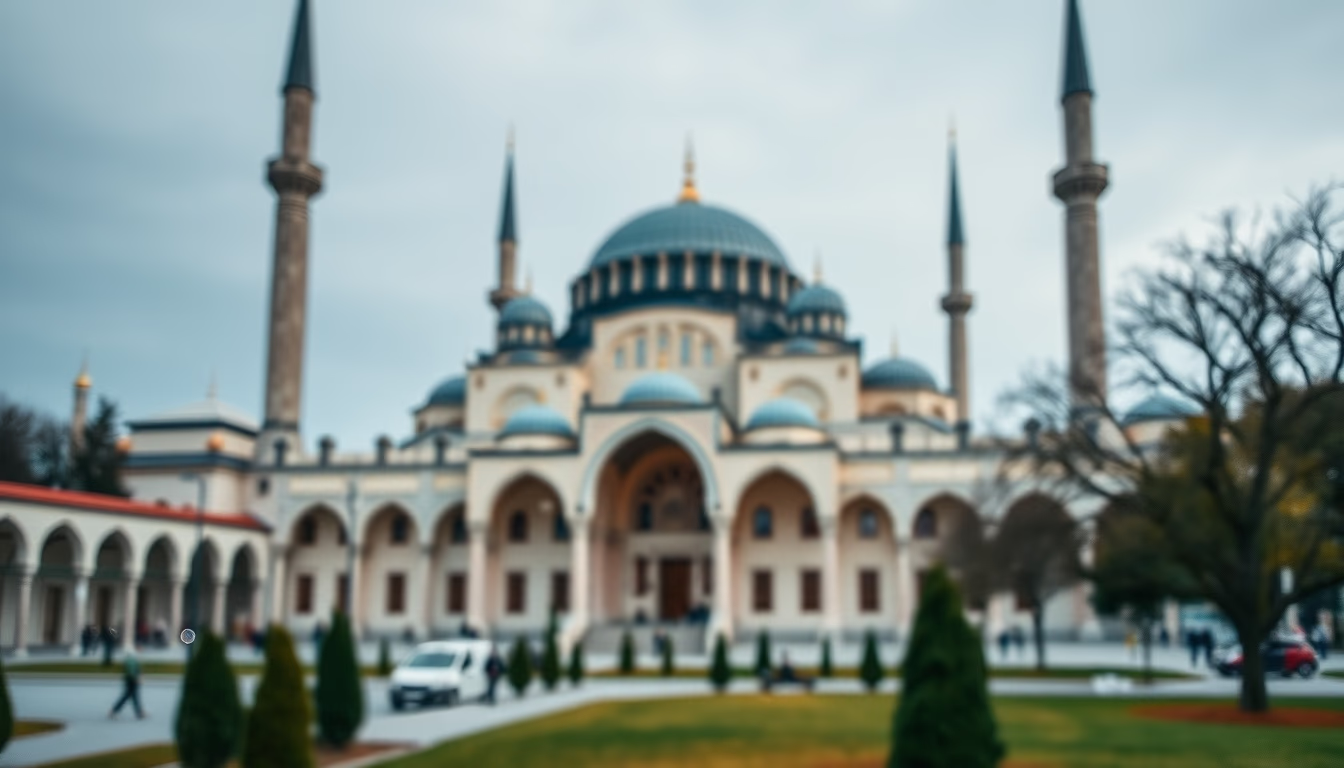
The Blue Mosque (Sultan Ahmed Mosque) in Istanbul is one of the world's most iconic landmarks, famous for its six minarets and Iznik blue tiles.
About this subject
The Blue Mosque, officially the Sultan Ahmed Mosque, is a masterpiece of Ottoman architecture located in the Sultanahmet district of Istanbul, Turkey. Built between 1609 and 1616 under the patronage of Sultan Ahmed I, the project was led by imperial architect Sedefkar Mehmed Agha, a student of the legendary Mimar Sinan. The mosque is popularly called 'Blue' because of the thousands of Iznik ceramic tiles adorning its interior, predominantly in shades of blue and green.
The building impresses with its grandeur and architectural innovations. Unlike most mosques of the time, which had four minarets, the Blue Mosque was equipped with six, a bold decision that sparked controversy since the sacred mosque in Mecca (Masjid al-Haram) also had six at the time. To resolve the issue, the sultan funded a seventh minaret for the Kaaba, maintaining religious hierarchy. The inner courtyard is almost as large as the mosque itself, and the central dome has a diameter of 23.5 meters and a height of 43 meters, supported by four massive pillars.
Culturally, the Blue Mosque remains an active place of worship and a top tourist attraction. It stands opposite the Hagia Sophia, and together they form the historic heart of Istanbul. The interior is a spectacle of natural light filtered through over 200 stained glass windows, creating a serene atmosphere. The mosque is one of the few sacred sites that allows visitation by non-Muslims at specific times outside prayer periods.
Verifiable facts include that the Iznik tiles used in decoration were produced during a period of technical decline but are still considered high quality. The mosque complex also includes a madrasa (school), a hospital, kitchens, and a market, following the Ottoman külliye model. The Blue Mosque has been a UNESCO World Heritage site as part of the Historic Areas of Istanbul since 1985.
Frequently Asked Questions
Why is the Blue Mosque called that?
The popular name comes from the thousands of Iznik ceramic tiles in blue and green tones that adorn its interior, creating a serene and distinctive atmosphere.
How many minarets does the Blue Mosque have and why is that special?
It has six minarets, an innovation at the time since most had four. This caused controversy with the mosque in Mecca, which also had six, until the sultan funded a seventh minaret for Mecca.
Is the Blue Mosque still used for prayers?
Yes, it is an active mosque with five daily prayers. Non-Muslim visitors can enter at specific times, respecting dress code and silence rules.
Direct URL
https://pub-c7d6a6ea828543ac903a74a341ccb2e1.r2.dev/imagens/blue-mosque-istanbul-tilt-shift-miniature-p5.avifHow to credit
Include a visible link back to UtilizAí. Copy one of the snippets below:
<a href="https://xn--utiliza-eza.com/en/midia/imagens/blue-mosque-istanbul-tilt-shift-miniature-p5">Blue mosque istanbul</a> by <a href="https://xn--utiliza-eza.com">UtilizAí</a>, licensed under <a href="https://creativecommons.org/licenses/by/4.0/">CC BY 4.0</a>.
[Blue mosque istanbul](https://xn--utiliza-eza.com/en/midia/imagens/blue-mosque-istanbul-tilt-shift-miniature-p5) by [UtilizAí](https://xn--utiliza-eza.com), CC BY 4.0
License: CC-BY-4.0