Biomedical lab clean
1344×768 · AVIF · CC BY 4.0
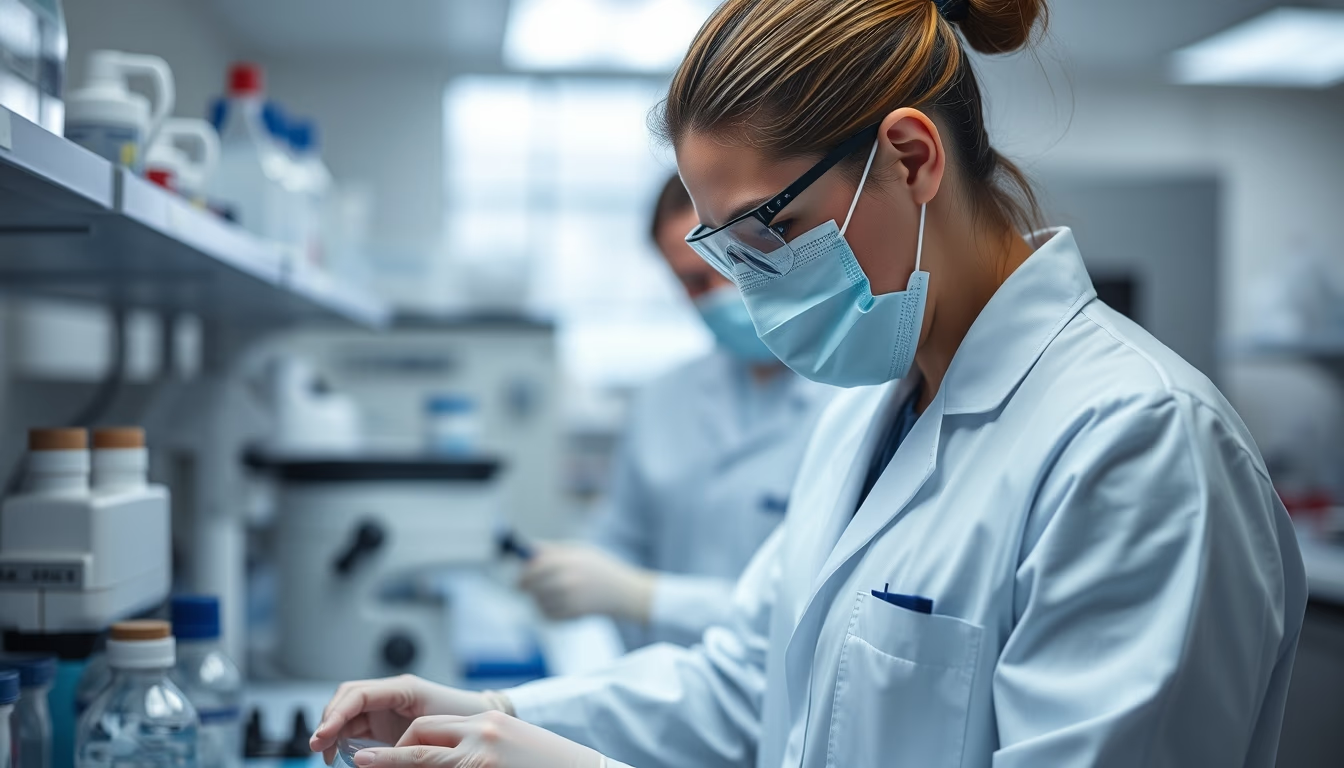
Biomedical laboratories follow strict cleaning and sterilization protocols to ensure experiment accuracy and researcher safety.
About this subject
A biomedical laboratory is a controlled environment where research in biology, medicine, and pharmacology is conducted. Cleanliness in these spaces goes beyond aesthetics: it is essential to prevent cross-contamination that could invalidate results or expose professionals to pathogens. In Brazil, agencies like ANVISA and Fiocruz establish standards for these facilities, including biosafety level classifications (BSL-1 to BSL-4). A BSL-2 laboratory, for example, requires washable surfaces, autoclaves for waste disposal, and HEPA-filtered ventilation.
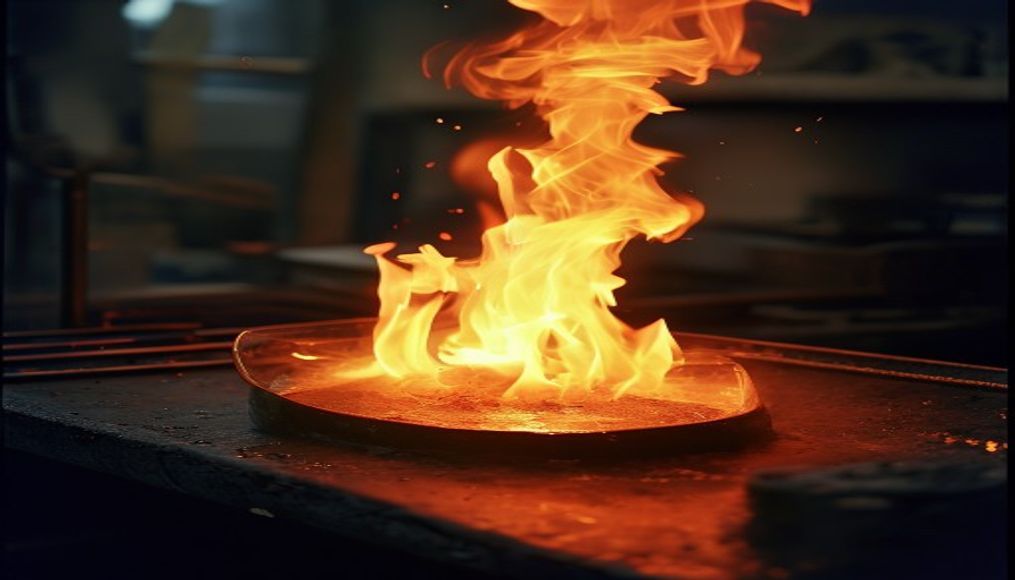
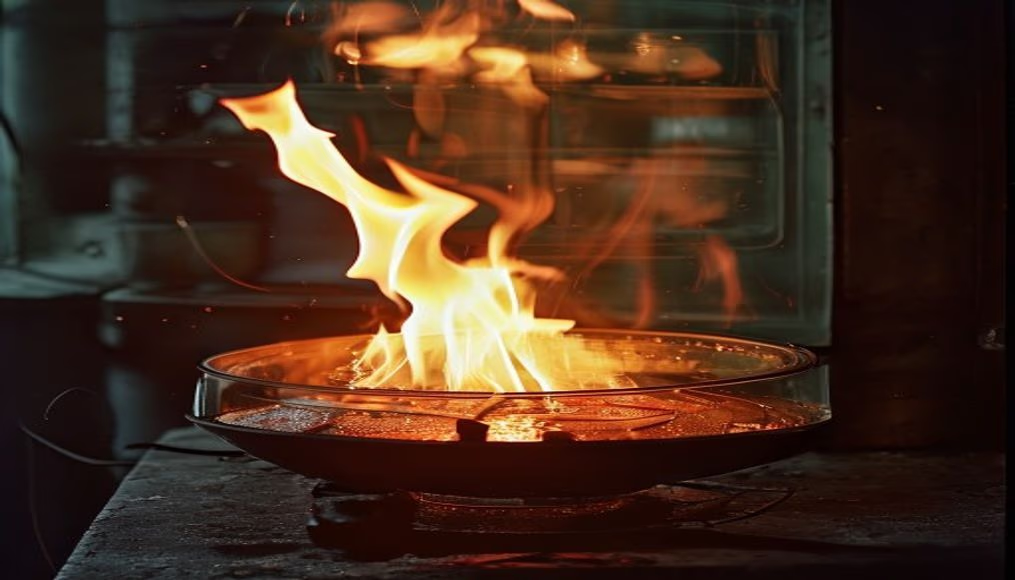
Sterilization of equipment and workbenches is performed using autoclaves (steam under pressure at 121°C), flaming, or chemical solutions such as 70% ethanol and sodium hypochlorite. Cleanrooms, common in cell culture laboratories, follow ISO 14644 standards defining air purity classes based on particle count per cubic meter. An ISO Class 5 environment, for instance, allows no more than 3,520 particles of 0.5 µm per cubic meter. Positive pressure in these rooms prevents unfiltered air from entering.
Beyond routine cleaning, laboratories undergo periodic validation of microbial and occupational contamination. Techniques such as swab tests and settle plates are used to verify the effectiveness of procedures. Proper cleaning also extends the lifespan of microscopes, centrifuges, and PCR equipment. In universities and research institutes, biological waste management is critical: sharps, gloves, and culture media must be disposed of in specific containers and treated before reaching landfills.
Frequently Asked Questions
Why is cleaning so important in biomedical laboratories?
Strict cleaning prevents contamination that could compromise experiments, cause false positives or negatives, and protect researchers from infectious agents. It also ensures data reliability and compliance with health regulations.
What are the biosafety levels (BSL) in Brazil?
Levels range from BSL-1 (low risk, minimal containment) to BSL-4 (maximum risk, with pressurized suits and isolated labs). In Brazil, most research laboratories operate at BSL-2, such as those in clinical microbiology.
What is a cleanroom and what are the most common classes?
A cleanroom is an environment with airborne particle control, used for handling sensitive samples. Classes follow ISO 14644: ISO 5 is common in cell culture labs, and ISO 8 is used in less critical areas. The class defines the maximum number of particles per cubic meter.
Direct URL
https://pub-c7d6a6ea828543ac903a74a341ccb2e1.r2.dev/imagens/biomedical-lab-clean-documentary-photography-p0.avifHow to credit
Include a visible link back to UtilizAí. Copy one of the snippets below:
<a href="https://xn--utiliza-eza.com/en/midia/imagens/biomedical-lab-clean-documentary-photography-p0">Biomedical lab clean</a> by <a href="https://xn--utiliza-eza.com">UtilizAí</a>, licensed under <a href="https://creativecommons.org/licenses/by/4.0/">CC BY 4.0</a>.
[Biomedical lab clean](https://xn--utiliza-eza.com/en/midia/imagens/biomedical-lab-clean-documentary-photography-p0) by [UtilizAí](https://xn--utiliza-eza.com), CC BY 4.0
License: CC-BY-4.0