Bengal tiger in jungle
1344×768 · AVIF · CC BY 4.0
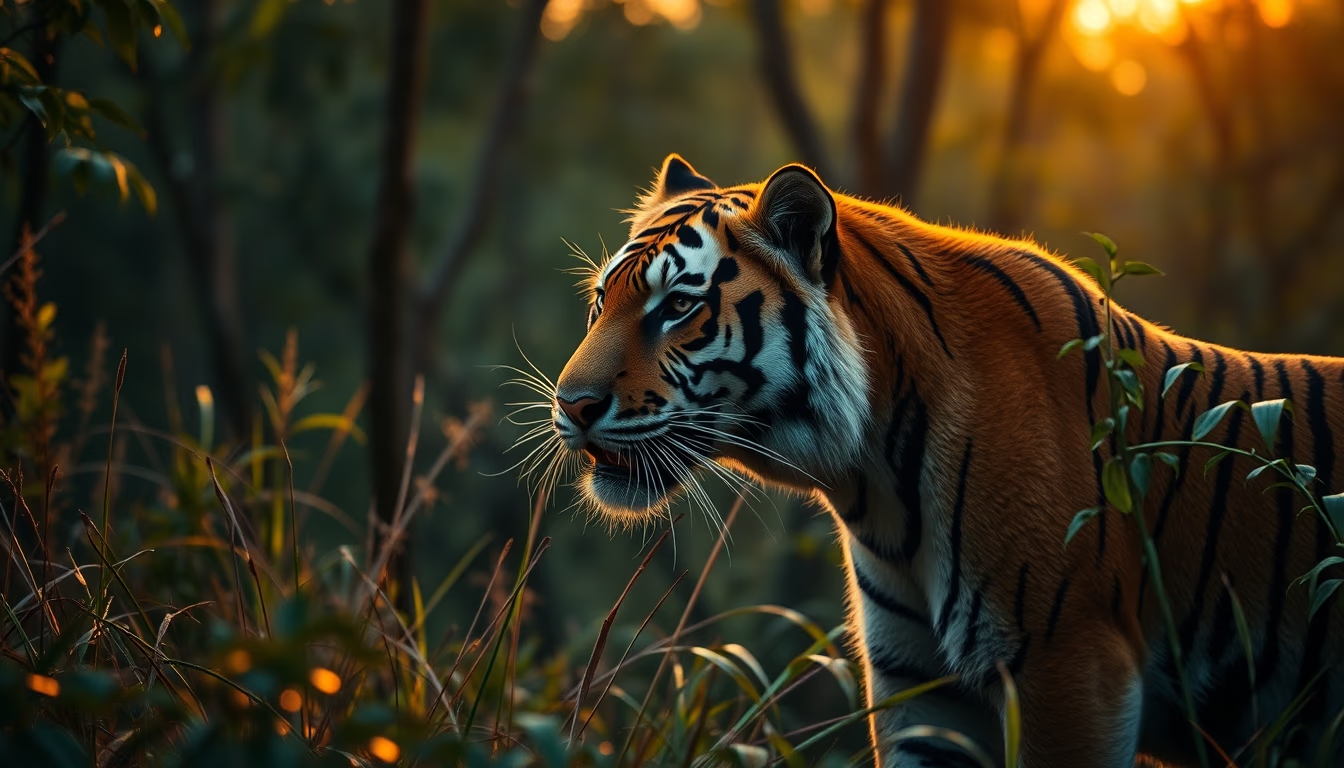
The Bengal tiger, India's national animal, inhabits tropical forests and mangroves, preying on chital deer and water buffalo.
About this subject
The Bengal tiger (Panthera tigris tigris) is the most numerous tiger subspecies, with an estimated 2,600 individuals in the wild as of 2023. Its range is concentrated in India but also extends to Bangladesh, Nepal, Bhutan, and Myanmar. Typical habitats include tropical moist forests, savannas, and the Sundarbans mangroves, the world's largest delta, shared by India and Bangladesh.
These apex predators primarily hunt medium to large ungulates such as chital deer (Axis axis), sambar (Rusa unicolor), and Asian water buffalo (Bubalus arnee). An adult Bengal tiger can consume up to 40 kg of meat in a single meal but may go days without eating. Its orange coat with black stripes provides camouflage in dense vegetation, and each stripe pattern is unique, like a fingerprint.
The species faces significant threats: habitat loss due to agricultural and urban expansion, human-wildlife conflict, and poaching for skins and bones used in traditional Asian medicine. India has established 50 tiger reserves under Project Tiger, launched in 1973, which helped recover the population from about 1,200 in the 1970s to over 3,000 by 2022, though recent declines require ongoing monitoring.
Interestingly, Bengal tigers in the Sundarbans have developed unique adaptations, such as swimming long distances between mangrove islands and tolerating brackish water. They are known for attacks on humans, possibly due to scarcity of natural prey in that ecosystem. Despite this, the tiger is a cultural icon in India, associated with the goddess Durga and designated as the national animal in 1972.
Frequently Asked Questions
What is the difference between a Bengal tiger and a Siberian tiger?
The Bengal tiger is smaller and lives in tropical forests of India, while the Siberian tiger is larger and inhabits the cold forests of the Russian Far East. The Bengal has a more orange coat and darker stripes.
How many Bengal tigers are left in the wild?
An estimated 2,600 to 3,000 individuals, with the largest population in India (about 2,967 in 2022). The subspecies is listed as Endangered by the IUCN.
Do Bengal tigers attack humans?
Yes, especially in the Sundarbans, where attacks are more frequent due to scarcity of natural prey. In other regions, conflicts occur when tigers approach settlements.
Direct URL
https://pub-c7d6a6ea828543ac903a74a341ccb2e1.r2.dev/imagens/bengal-tiger-in-jungle-cinematic-wide-shot-v2.avifHow to credit
Include a visible link back to UtilizAí. Copy one of the snippets below:
<a href="https://xn--utiliza-eza.com/en/midia/imagens/bengal-tiger-in-jungle-cinematic-wide-shot-v2">Bengal tiger in jungle</a> by <a href="https://xn--utiliza-eza.com">UtilizAí</a>, licensed under <a href="https://creativecommons.org/licenses/by/4.0/">CC BY 4.0</a>.
[Bengal tiger in jungle](https://xn--utiliza-eza.com/en/midia/imagens/bengal-tiger-in-jungle-cinematic-wide-shot-v2) by [UtilizAí](https://xn--utiliza-eza.com), CC BY 4.0
License: CC-BY-4.0