Beaker with colored chemicals
1344×768 · AVIF · CC BY 4.0
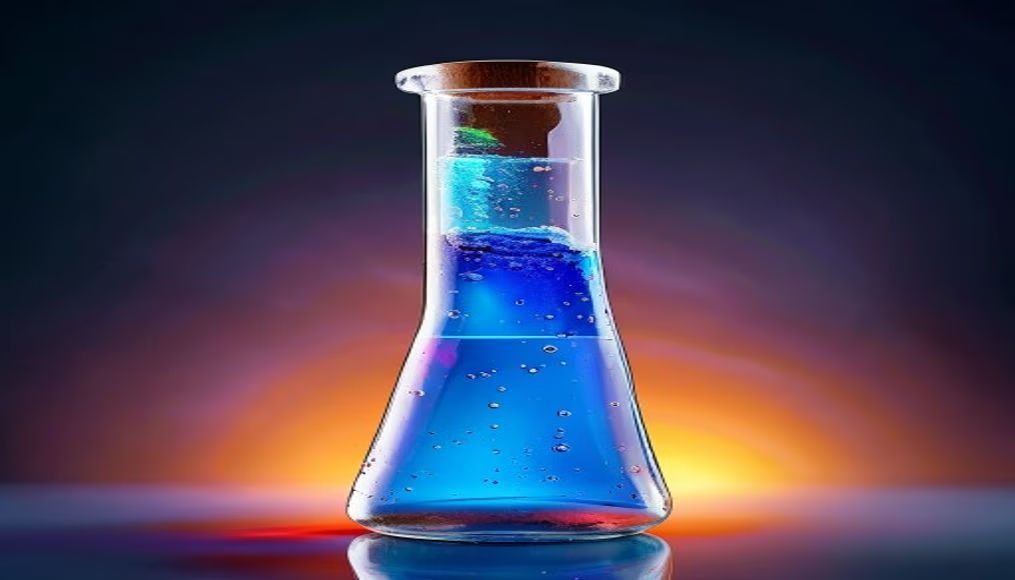
Beaker with colored chemicals illustrates laboratory experiments and chemical reactions with solutions of different colors and properties.
About this subject
The beaker is one of the most versatile and essential tools in a chemical laboratory. Usually made of heat-resistant borosilicate glass, it allows heating, mixing, and approximate volume measurement of liquids. When combined with colored chemicals, it becomes a powerful teaching tool to visualize reactions such as pH changes, precipitation, or oxidation-reduction. In chemistry classes, colored solutions help identify properties like acidity, basicity, and concentration of metal ions (e.g., blue copper, green nickel, or purple permanganate).
The choice of colors is not random: each chemical substance absorbs and reflects specific wavelengths of light, producing characteristic colors. For instance, copper(II) sulfate yields an intense blue tone, while potassium dichromate is orange. These compounds are used both in qualitative analysis and in industrial processes, such as water treatment and pigment manufacturing. The presence of multiple colors in a single beaker may indicate an ongoing reaction or the formation of layers due to density differences.
Beyond educational settings, beakers with colored chemicals frequently appear in commercial photography to illustrate concepts of innovation, science, and technology. Pharmaceutical, cosmetic, and food companies use such images in promotional materials to convey professionalism and precision. It is important to note that safe handling of these substances requires personal protective equipment like gloves and goggles, as well as proper disposal of chemical waste.
Frequently Asked Questions
Why do colored chemicals change color in a beaker?
Color change can occur due to chemical reactions such as acid-base neutralization, oxidation-reduction, or complexation of metal ions. It can also result from variations in pH or concentration.
What is the difference between a beaker and an Erlenmeyer flask?
A beaker has a cylindrical shape with a wide mouth, ideal for mixing and heating liquids. An Erlenmeyer flask has a conical shape with a narrow neck, more suitable for titrations and avoiding splashes.
Is it safe to heat a beaker with colored chemicals?
Yes, provided the beaker is made of heat-resistant borosilicate glass and the substance is not flammable. Always use protective equipment and heat on a hot plate or Bunsen burner with caution.
Direct URL
https://pub-c7d6a6ea828543ac903a74a341ccb2e1.r2.dev/imagens/beaker-with-colored-chemicals-commercial-product-photography-v9.avifHow to credit
Include a visible link back to UtilizAí. Copy one of the snippets below:
<a href="https://xn--utiliza-eza.com/en/midia/imagens/beaker-with-colored-chemicals-commercial-product-photography-v9">Beaker with colored chemicals</a> by <a href="https://xn--utiliza-eza.com">UtilizAí</a>, licensed under <a href="https://creativecommons.org/licenses/by/4.0/">CC BY 4.0</a>.
[Beaker with colored chemicals](https://xn--utiliza-eza.com/en/midia/imagens/beaker-with-colored-chemicals-commercial-product-photography-v9) by [UtilizAí](https://xn--utiliza-eza.com), CC BY 4.0
License: CC-BY-4.0