Bayon temple faces
1344×768 · AVIF · CC BY 4.0
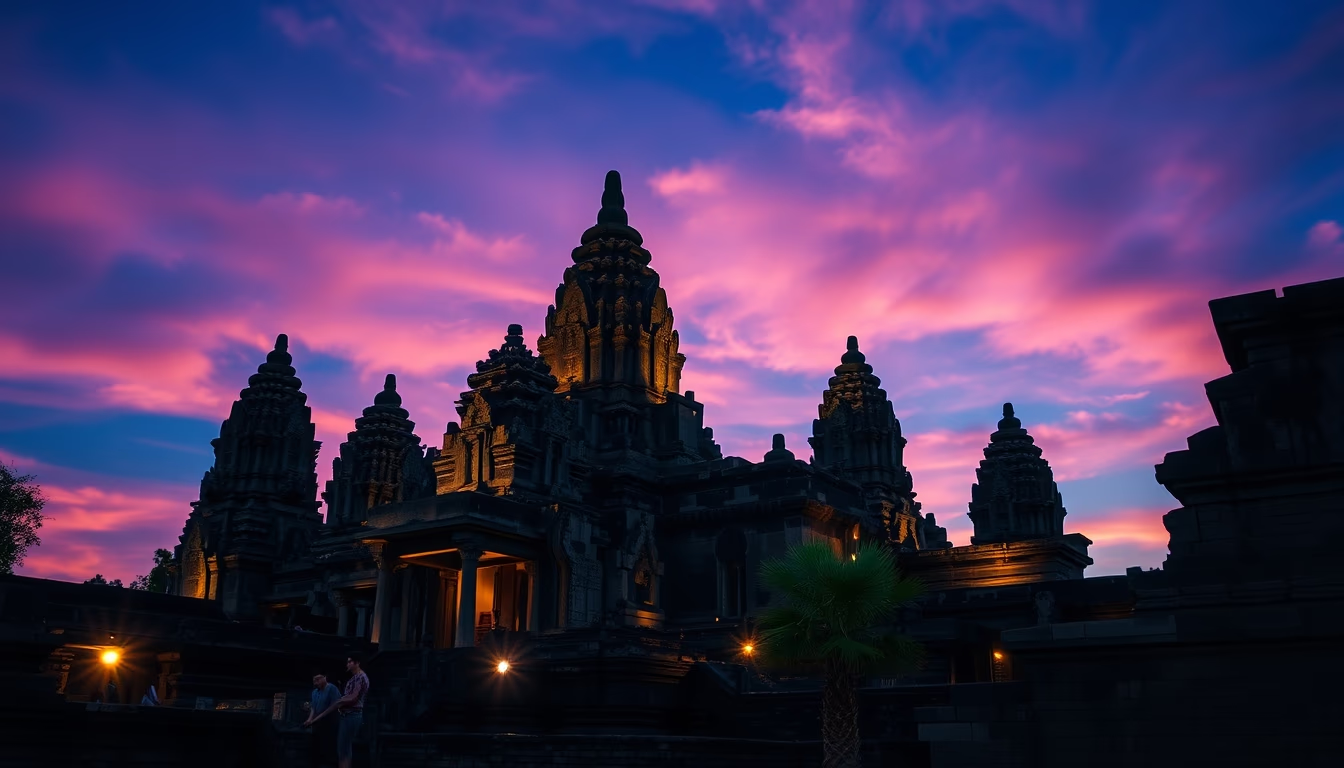
Bayon Temple in Cambodia is renowned for its dozens of stone faces of the bodhisattva Avalokiteshvara, rising from monumental towers.
About this subject
Bayon Temple, located at the heart of Angkor Thom in Cambodia, was built in the late 12th and early 13th centuries by King Jayavarman VII, one of the most significant monarchs of the Khmer Empire. Dedicated to Mahayana Buddhism, the temple is famous for its towers adorned with massive carved faces, totaling over 200 representations. Each face has a serene and enigmatic expression, with half-closed eyes and a subtle smile, sparking debates among historians about whether they depict the bodhisattva Avalokiteshvara, also known as Lokeshvara, or King Jayavarman VII himself, who considered himself a divine incarnation.
The architectural design of Bayon is unique among Angkor temples, with its towers arranged in three levels. The faces face the four cardinal directions, symbolizing the omnipresence of the king's power and the protection of the empire. In addition to the faces, the temple features extensive bas-reliefs depicting scenes of daily life, commerce, battles, and religious ceremonies, providing a rare visual record of life in the Khmer Empire. These carvings are considered one of the greatest artistic achievements of the period.
Bayon was declared a UNESCO World Heritage site in 1992 as part of the Angkor complex. Conservation of the temple faces challenges due to erosion, vegetation growth, and the impact of tourism. Recent restoration projects led by international teams aim to stabilize the structures and preserve the faces for future generations. While long exposure is necessary to photograph the dim interior of the temple, highlighting the texture of the stones and the grandeur of the faces, the temple itself is a masterpiece that transcends any photographic technique.
Frequently Asked Questions
How many faces are there at Bayon Temple?
There are over 200 stone faces distributed across 54 towers at Bayon Temple. The exact number varies with excavations, but estimates range from 200 to 216 faces.
Who built Bayon Temple?
The temple was commissioned by King Jayavarman VII (reigned 1181, 1218), one of the greatest builders of the Khmer Empire. He dedicated the temple to Mahayana Buddhism, specifically to the bodhisattva Avalokiteshvara.
What do the faces of Bayon represent?
The faces likely represent the bodhisattva Avalokiteshvara (Lokeshvara), but some scholars believe they are idealized portraits of King Jayavarman VII himself, who saw himself as a divine ruler. They symbolize the omnipresence of royal power and protection of the kingdom.
Direct URL
https://pub-c7d6a6ea828543ac903a74a341ccb2e1.r2.dev/imagens/bayon-temple-faces-long-exposure-p7.avifHow to credit
Include a visible link back to UtilizAí. Copy one of the snippets below:
<a href="https://xn--utiliza-eza.com/en/midia/imagens/bayon-temple-faces-long-exposure-p7">Bayon temple faces</a> by <a href="https://xn--utiliza-eza.com">UtilizAí</a>, licensed under <a href="https://creativecommons.org/licenses/by/4.0/">CC BY 4.0</a>.
[Bayon temple faces](https://xn--utiliza-eza.com/en/midia/imagens/bayon-temple-faces-long-exposure-p7) by [UtilizAí](https://xn--utiliza-eza.com), CC BY 4.0
License: CC-BY-4.0