Bayon temple faces
1344×768 · AVIF · CC BY 4.0
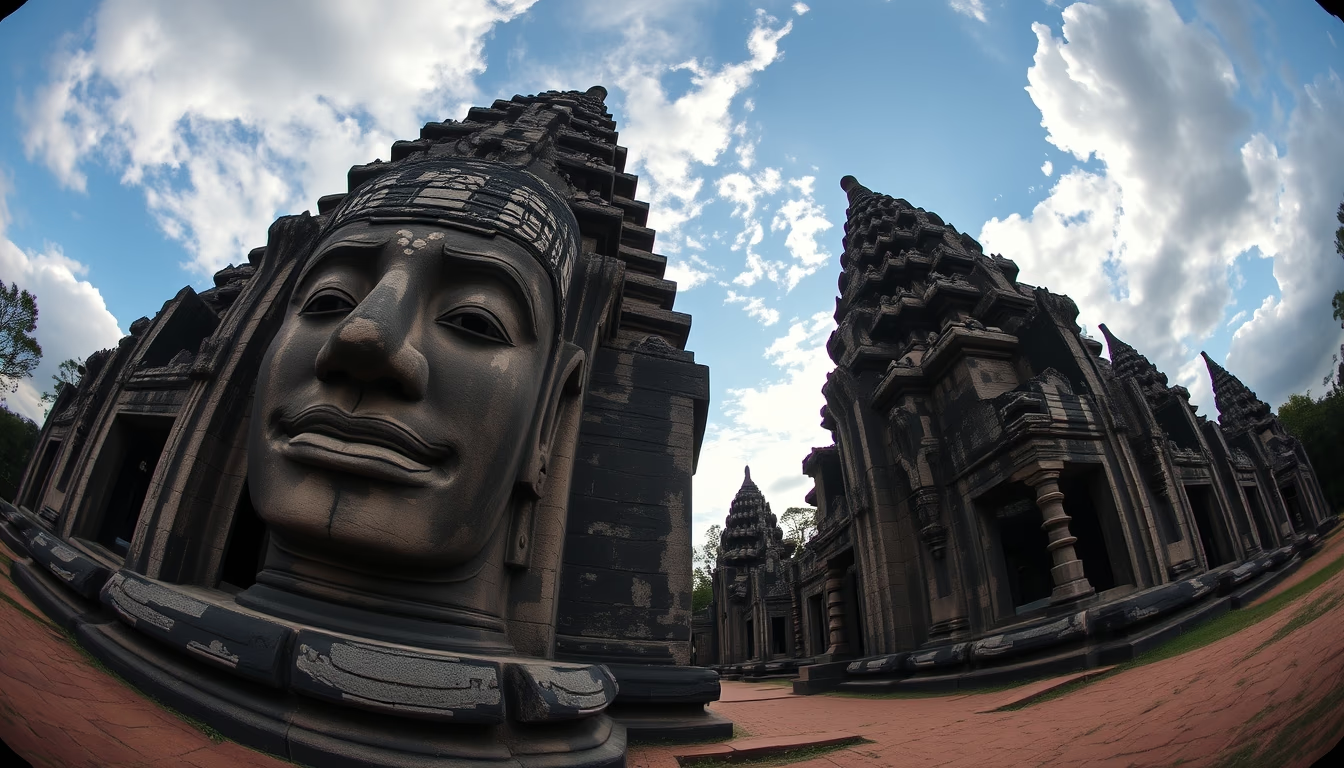
Bayon temple, at the heart of Angkor Thom, is renowned for its dozens of serene stone faces gazing at visitors from every direction.
About this subject
The Bayon temple was built in the late 12th century by the Khmer king Jayavarman VII as his state temple, dedicated to Mahayana Buddhism. Located at the exact center of the fortified city of Angkor Thom in Cambodia, Bayon is one of the most iconic monuments of the Khmer Empire. Its most striking feature is the over 200 stone faces with calm and enigmatic expressions that adorn the temple towers. These faces are believed to represent the bodhisattva Avalokiteshvara (Lokeshvara), but also incorporate features of King Jayavarman VII himself, a common practice in Khmer art to merge the divine and the royal.
The temple has three levels: the first two feature historical and everyday reliefs, while the upper level is dominated by the face towers. The faces face the four cardinal directions, symbolizing the omnipresence of the divine king. Unlike earlier temples such as Angkor Wat, Bayon has a more complex and compact structure, with corridors and chambers creating a stone labyrinth. After Jayavarman VII's death, the temple underwent Hindu reforms, and some Buddhist images were damaged, but the faces remained intact.
Bayon is a notable example of post-Angkorian architecture, combining religious symbolism and royal power. Its central location in Angkor Thom made it the city's focal point, where ceremonies and rituals reinforced the king's authority. Today, the temple is a UNESCO World Heritage Site and attracts millions of visitors who marvel at the smiling faces. Interestingly, the exact number of faces is uncertain due to ruins and reconstructions, but estimates range from 150 to 200. Each face, carved from sandstone, has half-closed eyes and slightly curved lips, conveying a sense of peace and vigilance.
Frequently Asked Questions
How many faces are there at Bayon temple?
The exact number is uncertain due to ruins and reconstructions, but estimates range from 150 to 200 stone faces on the temple towers.
Who built Bayon temple and why?
King Jayavarman VII built Bayon in the late 12th century as his state temple, dedicated to Mahayana Buddhism and to symbolize his divine power.
What do the Bayon faces represent?
The faces represent the bodhisattva Avalokiteshvara (Lokeshvara) and possibly King Jayavarman VII himself, blending divine and royal elements.
Direct URL
https://pub-c7d6a6ea828543ac903a74a341ccb2e1.r2.dev/imagens/bayon-temple-faces-fish-eye-wide-angle-p9.avifHow to credit
Include a visible link back to UtilizAí. Copy one of the snippets below:
<a href="https://xn--utiliza-eza.com/en/midia/imagens/bayon-temple-faces-fish-eye-wide-angle-p9">Bayon temple faces</a> by <a href="https://xn--utiliza-eza.com">UtilizAí</a>, licensed under <a href="https://creativecommons.org/licenses/by/4.0/">CC BY 4.0</a>.
[Bayon temple faces](https://xn--utiliza-eza.com/en/midia/imagens/bayon-temple-faces-fish-eye-wide-angle-p9) by [UtilizAí](https://xn--utiliza-eza.com), CC BY 4.0
License: CC-BY-4.0