Bayon temple faces
1344×768 · AVIF · CC BY 4.0

Bayon Temple in Angkor Thom is renowned for its dozens of massive stone faces depicting the bodhisattva Avalokiteshvara, blending religion with royal authority.
About this subject
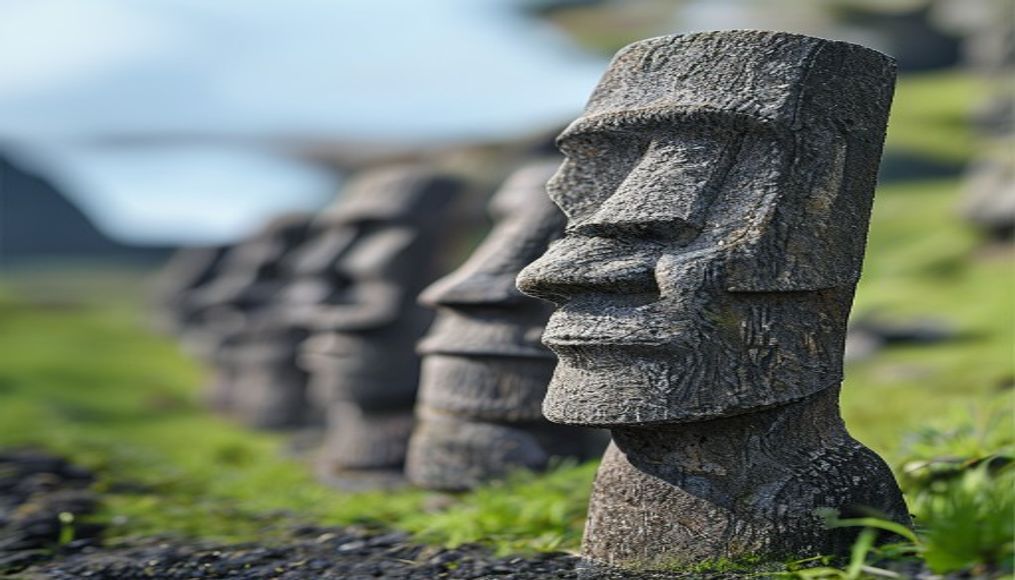
Built in the late 12th century by King Jayavarman VII, the Bayon Temple is the central monument of the royal city of Angkor Thom in Cambodia. Dedicated to Mahayana Buddhism, the temple served as the religious and political center of the Khmer Empire. Its most striking feature is the over 200 stone faces carved on 54 towers, each with four faces oriented toward the cardinal points. These faces represent the bodhisattva Avalokiteshvara, but also bear the king's own features, merging divinity and sovereignty.
The Bayon's iconography reflects the complex fusion of Hindu and Buddhist beliefs that characterized the late Khmer Empire. The serene faces, with half-closed eyes and enigmatic smiles, convey a sense of omnipresence and watchfulness. Besides the faces, the temple is renowned for its extensive bas-reliefs on the outer galleries, depicting daily life, battles, and religious ceremonies, offering a rare glimpse into Angkorian life.
The Bayon underwent several construction phases, originally a temple-mountain with a high central structure, later expanded. After the kingdom's conversion to Theravada Buddhism in the 14th century, the temple was adapted, and many Buddha images were added. Today, it is a UNESCO World Heritage site and attracts millions of visitors annually. Unlike Angkor Wat, which is more symmetrical and west-facing, the Bayon has a more organic layout and faces east.
Interestingly, the Bayon's faces were shrouded by jungle for centuries and only rediscovered in the 20th century. Restoration work continues today with international teams using techniques like anastylosis to rebuild collapsed sections. The temple's mystical atmosphere, with light filtering through the towers and the smiling faces, makes it one of the most photographed sites in Southeast Asia.
Frequently Asked Questions
How many faces are there at Bayon Temple?
There are over 200 stone faces at Bayon, distributed across 54 towers, each with four faces.
What is the meaning of the Bayon faces?
The faces represent the bodhisattva Avalokiteshvara but also bear the features of King Jayavarman VII, symbolizing the union of divinity and royal power.
When and by whom was Bayon Temple built?
Bayon was built in the late 12th century by King Jayavarman VII as the central temple of the city of Angkor Thom.
Direct URL
https://pub-c7d6a6ea828543ac903a74a341ccb2e1.r2.dev/imagens/bayon-temple-faces-film-grain-authentic-p4.avifHow to credit
Include a visible link back to UtilizAí. Copy one of the snippets below:
<a href="https://xn--utiliza-eza.com/en/midia/imagens/bayon-temple-faces-film-grain-authentic-p4">Bayon temple faces</a> by <a href="https://xn--utiliza-eza.com">UtilizAí</a>, licensed under <a href="https://creativecommons.org/licenses/by/4.0/">CC BY 4.0</a>.
[Bayon temple faces](https://xn--utiliza-eza.com/en/midia/imagens/bayon-temple-faces-film-grain-authentic-p4) by [UtilizAí](https://xn--utiliza-eza.com), CC BY 4.0
License: CC-BY-4.0