Bayon temple faces
1344×768 · AVIF · CC BY 4.0
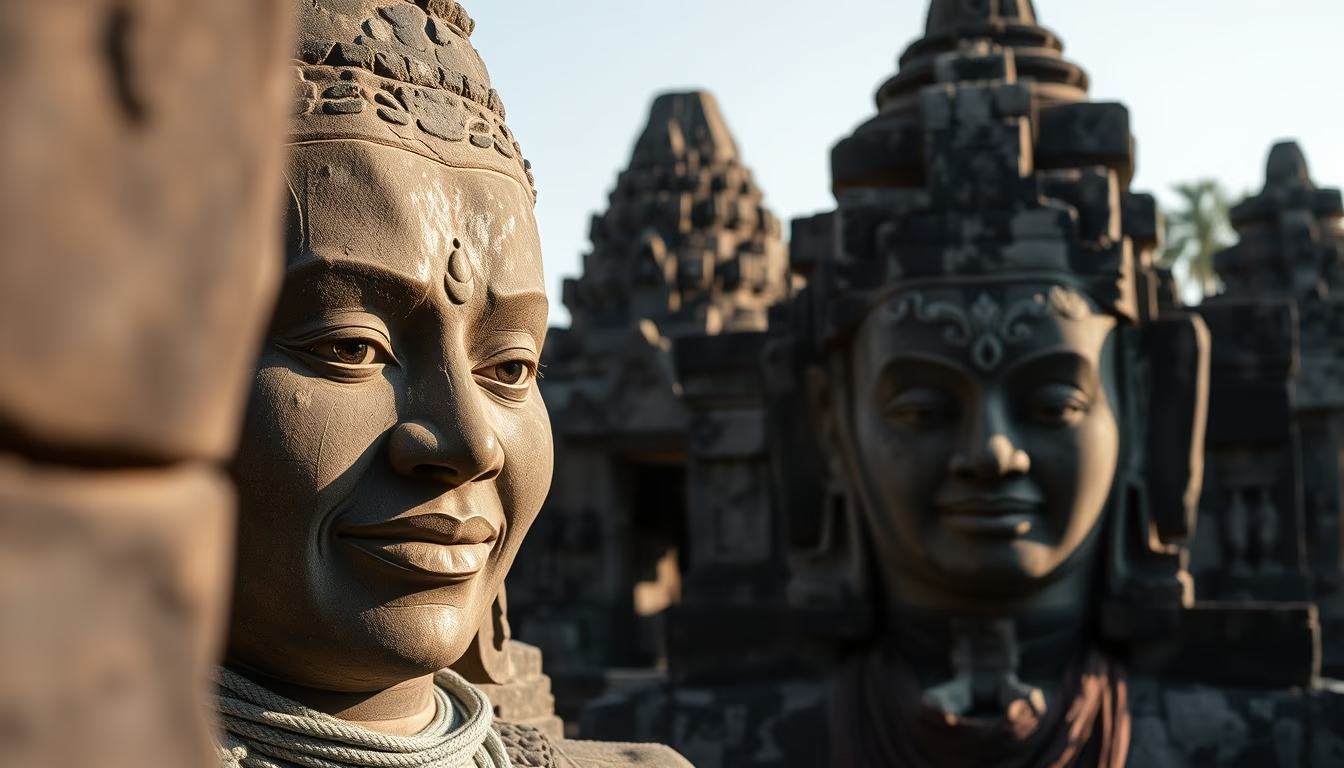
Bayon Temple in Angkor Thom, Cambodia, is renowned for its dozens of serene stone faces depicting the bodhisattva Avalokiteśvara.
About this subject
Bayon Temple is one of the most iconic monuments in the Angkor complex of Cambodia. Built in the late 12th century by King Jayavarman VII, it served as the religious and administrative center of Angkor Thom, the last capital of the Khmer Empire. The temple's most striking feature is its 54 towers, each decorated with four gigantic faces facing the cardinal directions, totaling over 200 faces. These faces are believed to represent Avalokiteśvara, the bodhisattva of compassion in Mahayana Buddhism, but may also bear the likeness of King Jayavarman VII himself, who adopted Buddhism as the state religion.
The temple is known for its complex three-level structure, with a series of concentric galleries filled with bas-reliefs depicting scenes from daily life, historical battles, and Hindu and Buddhist mythology. Unlike Angkor Wat, which is dedicated to Vishnu, Bayon reflects the transition from Hinduism to Buddhism in the region. The faces, with their enigmatic smiles reminiscent of the Mona Lisa, are among the most photographed symbols of Cambodia.
After the decline of the Khmer Empire, the temple was swallowed by the jungle and remained abandoned for centuries. It was rediscovered by French explorers in the 19th century and underwent extensive restorations, including work by the Archaeological Group of the École Française d'Extrême-Orient. Today, Bayon is a UNESCO World Heritage Site and attracts millions of visitors annually. The combination of its unique architecture, religious symbolism, and the mystery surrounding its faces makes it one of the most fascinating temples in the world.
Frequently Asked Questions
How many faces are there at Bayon Temple?
There are over 200 stone faces on the towers of Bayon. Originally, there were 54 towers with four faces each, totaling 216, but some towers have collapsed or are incomplete.
Who built Bayon Temple?
The temple was built by King Jayavarman VII in the late 12th century. He was one of the most powerful monarchs of the Khmer Empire and converted to Mahayana Buddhism.
What do the Bayon faces represent?
The faces are believed to represent the bodhisattva Avalokiteśvara, symbolizing compassion, but they may also depict King Jayavarman VII himself. They represent the omnipresence of the king and the deity.
Direct URL
https://pub-c7d6a6ea828543ac903a74a341ccb2e1.r2.dev/imagens/bayon-temple-faces-documentary-photography-p11.avifHow to credit
Include a visible link back to UtilizAí. Copy one of the snippets below:
<a href="https://xn--utiliza-eza.com/en/midia/imagens/bayon-temple-faces-documentary-photography-p11">Bayon temple faces</a> by <a href="https://xn--utiliza-eza.com">UtilizAí</a>, licensed under <a href="https://creativecommons.org/licenses/by/4.0/">CC BY 4.0</a>.
[Bayon temple faces](https://xn--utiliza-eza.com/en/midia/imagens/bayon-temple-faces-documentary-photography-p11) by [UtilizAí](https://xn--utiliza-eza.com), CC BY 4.0
License: CC-BY-4.0