Bassoon double reed
1344×768 · AVIF · CC BY 4.0
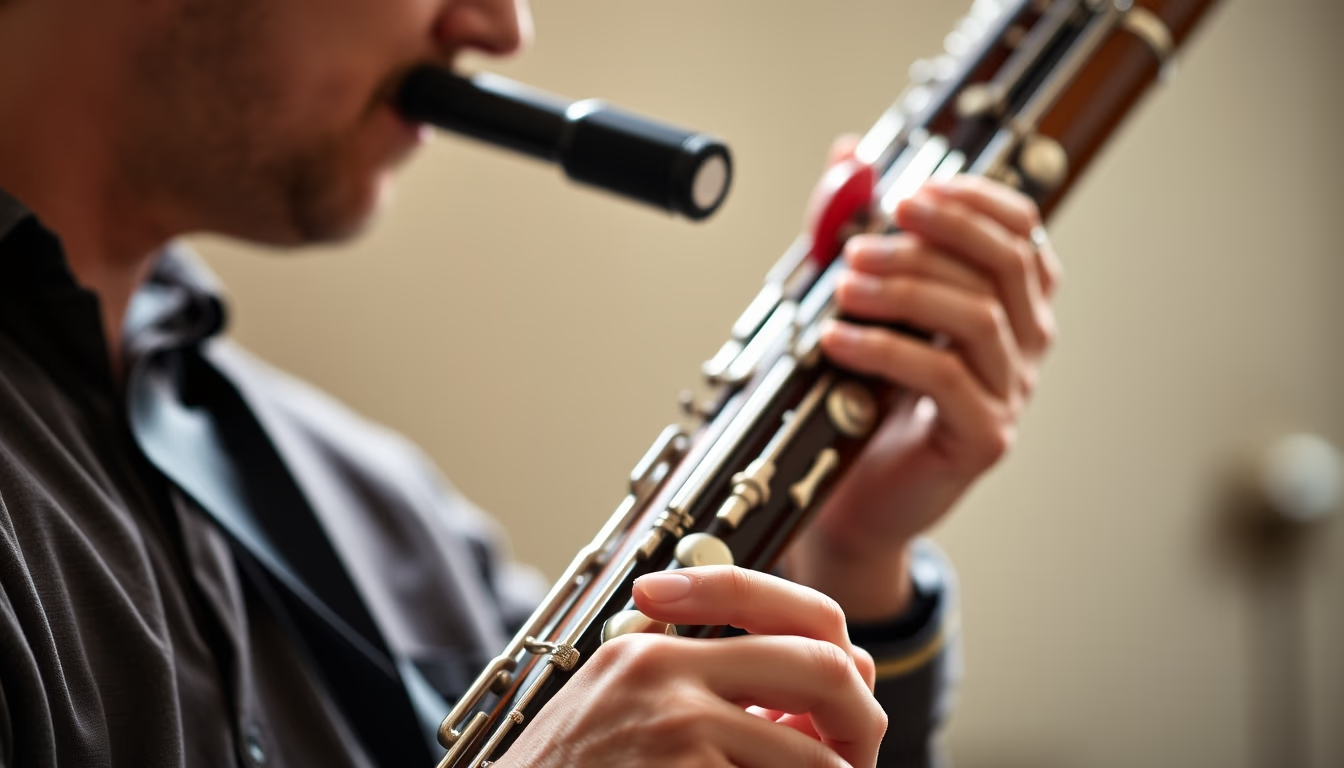
Bassoon double reed: a handcrafted component made from cane (Arundo donax) that defines the instrument's timbre and response, requiring precise shaping and adjustment.
About this subject
The bassoon double reed is one of the most critical and customizable parts of the instrument. Unlike single reeds (as used on clarinets or saxophones), it consists of two blades of cane (Arundo donax) that vibrate against each other when air is blown between them. This vibration produces the bassoon's characteristic sound: a rich, reedy, and highly versatile timbre capable of deep bass notes to piercing high notes.
Handcrafting a bassoon reed is a meticulous process requiring great skill. The reed maker (or the bassoonist, since many prefer to make their own) starts with a tube of cane, which is split, flattened, shaped, and then folded in half. The two halves are tied together with nylon or copper wire, and the opening between them is adjusted with a special knife. The thickness, length, and profile of the reed directly affect resistance, intonation, and sound quality. Even small variations can make a reed excellent or useless.
Historically, the double reed evolved alongside the Renaissance bassoon (dulcian) and Baroque instruments. By the 19th century, the modern key system was established, but the reed retained its basic design. Today, professional musicians spend hours selecting cane from specific regions (such as southern France or Italy) and adjusting each reed to suit their instrument and repertoire. The double reed is so individual that two bassoonists rarely play the exact same type; each develops a personal model.
Interesting fact: unlike the oboe's reed, which is shorter and stiffer, the bassoon reed is longer and more flexible, allowing for a wider vibrato and subtle dynamics. In an orchestra, the bassoon often provides harmonic foundation or contrasting melodic lines, and reed quality is essential for the woodwind section's projection and tuning.
Frequently Asked Questions
How long does a bassoon reed last?
Durability ranges from a few hours to a few weeks, depending on daily use, cane quality, and maintenance. Professional musicians change reeds every few days or even per performance.
How is a bassoon double reed made?
The process starts with a tube of Arundo donax cane, which is split, planed, folded in half, and tied with wire. The tip is shaped with a knife to achieve optimal thickness and opening. Each step requires hand precision.
Why does the bassoon use a double reed instead of a single reed?
The double reed produces a more complex, harmonic-rich sound essential for the bassoon's characteristic timbre. It also allows greater dynamic and vibrato control, fitting its orchestral role.
Direct URL
https://pub-c7d6a6ea828543ac903a74a341ccb2e1.r2.dev/imagens/bassoon-double-reed-documentary-photography-p5.avifHow to credit
Include a visible link back to UtilizAí. Copy one of the snippets below:
<a href="https://xn--utiliza-eza.com/en/midia/imagens/bassoon-double-reed-documentary-photography-p5">Bassoon double reed</a> by <a href="https://xn--utiliza-eza.com">UtilizAí</a>, licensed under <a href="https://creativecommons.org/licenses/by/4.0/">CC BY 4.0</a>.
[Bassoon double reed](https://xn--utiliza-eza.com/en/midia/imagens/bassoon-double-reed-documentary-photography-p5) by [UtilizAí](https://xn--utiliza-eza.com), CC BY 4.0
License: CC-BY-4.0