Barista pouring milk
1344×768 · AVIF · CC BY 4.0
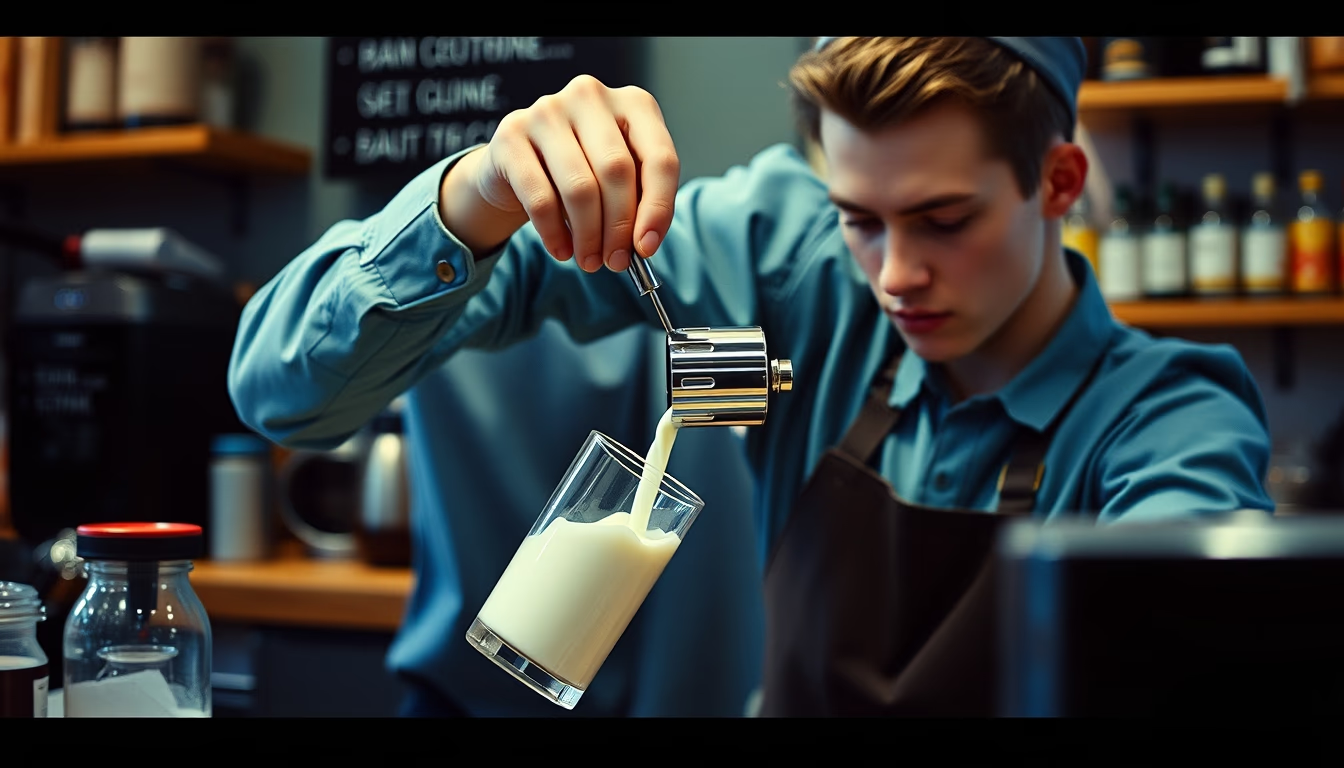
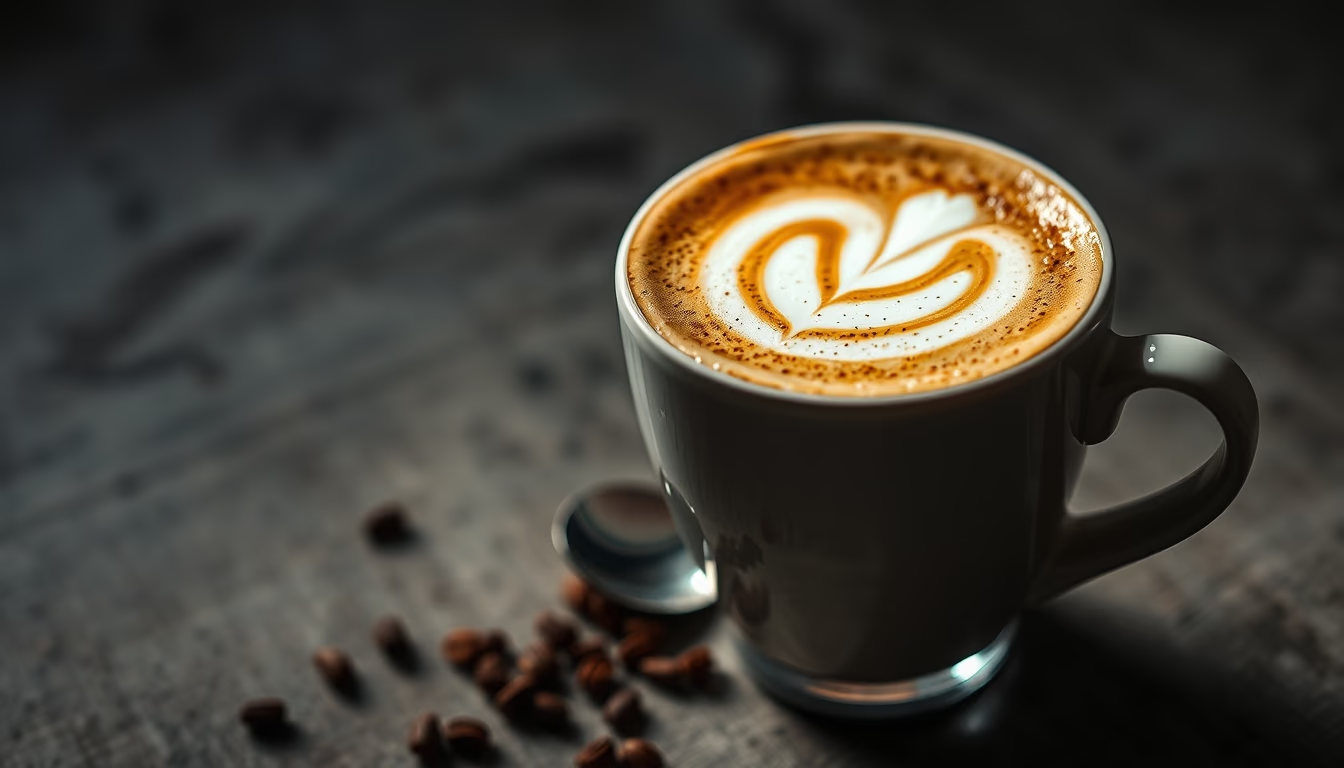
A barista pours steamed milk over an espresso shot, creating patterns that showcase skill and precision.
About this subject
The art of pouring milk over espresso, known as latte art, is a hallmark of specialty coffee. The process requires a homogeneous microfoam, achieved by steaming milk precisely between 60°C and 70°C, and a controlled pitcher movement. The technique consolidated in the 1980s and 1990s, especially in Seattle, USA, with baristas like David Schomer, who documented and standardized the methods. Today, competitions like the World Latte Art Championship evaluate symmetry, contrast, and design difficulty, ranging from hearts and rosettas to complex figures like swans and dragons.
The science behind the process involves denaturing milk proteins and incorporating air bubbles to create stable foam that does not separate quickly. Fat content influences texture: whole milk yields creamier microfoam, while plant-based milks require more skill due to lower stability. The final temperature should be around 65°C to avoid altering the coffee's flavor.
Culturally, latte art represents the pinnacle of a barista's skill and the pursuit of a complete sensory experience. In Brazil, where coffee is part of daily life, the practice gained momentum with the third wave of coffee in the 2010s, in specialized cafés. The lo-fi disposable camera aesthetic, suggested by the tags, evokes a nostalgia for the 1990s, when latte art began spreading globally, creating a visual connection between technique and affective memory.
Frequently Asked Questions
What is latte art?
Latte art is the technique of pouring steamed milk over espresso to create patterns, requiring uniform microfoam and manual control to form designs like hearts, rosettas, and tulips.
Where did latte art originate?
It originated in the United States in the 1980s, with baristas in Seattle, such as David Schomer, who developed and systematized pouring and milk texturing methods.
At what temperature should milk be steamed?
Ideally between 60°C and 70°C to avoid burning proteins and ensure stable microfoam, while preserving the milk's natural sweetness.
Direct URL
https://pub-c7d6a6ea828543ac903a74a341ccb2e1.r2.dev/imagens/barista-pouring-milk-lo-fi-disposable-camera-p0.avifHow to credit
Include a visible link back to UtilizAí. Copy one of the snippets below:
<a href="https://xn--utiliza-eza.com/en/midia/imagens/barista-pouring-milk-lo-fi-disposable-camera-p0">Barista pouring milk</a> by <a href="https://xn--utiliza-eza.com">UtilizAí</a>, licensed under <a href="https://creativecommons.org/licenses/by/4.0/">CC BY 4.0</a>.
[Barista pouring milk](https://xn--utiliza-eza.com/en/midia/imagens/barista-pouring-milk-lo-fi-disposable-camera-p0) by [UtilizAí](https://xn--utiliza-eza.com), CC BY 4.0
License: CC-BY-4.0