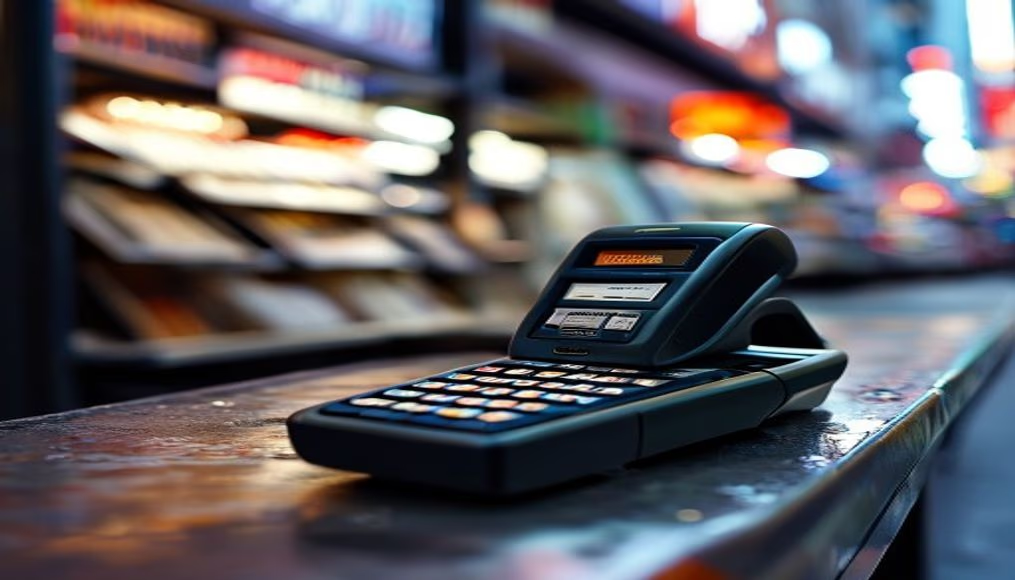
Barcode scanner at checkout
1344×768 · AVIF · CC BY 4.0
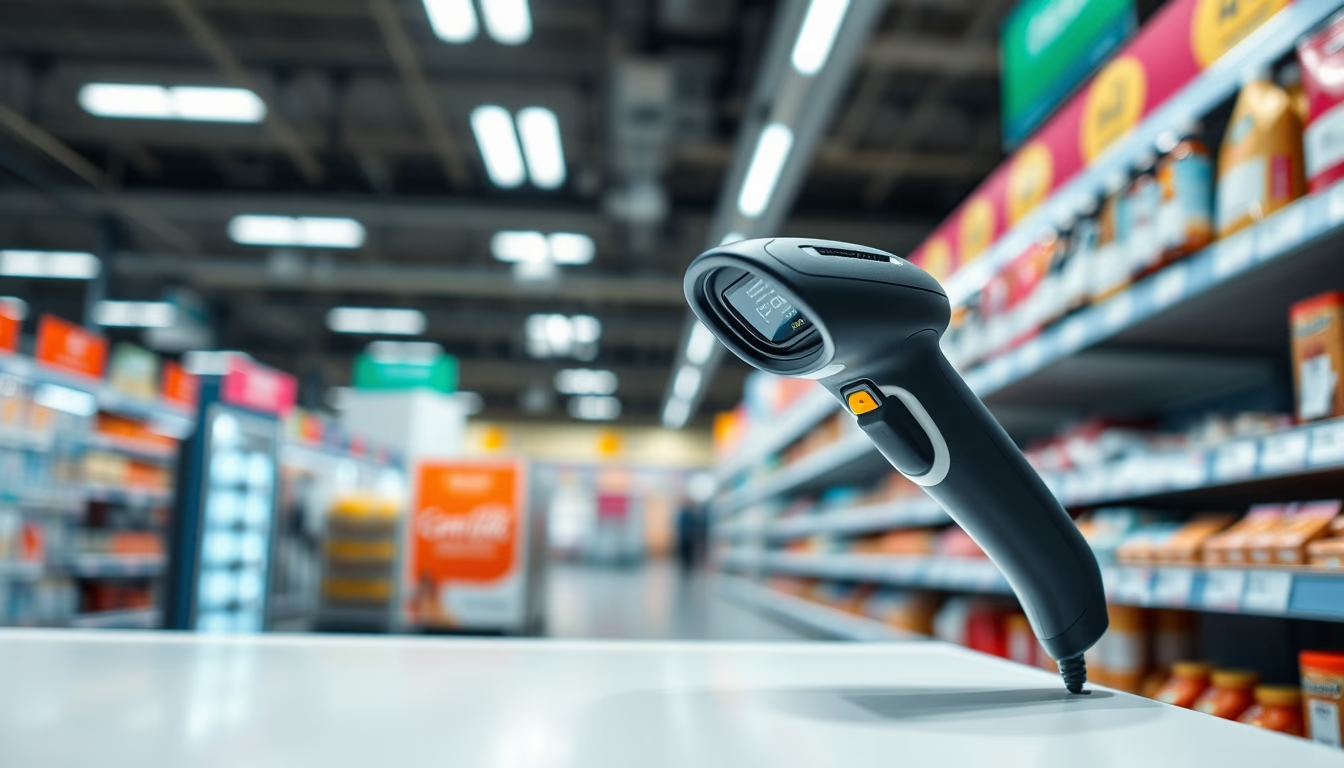
Barcode scanners at checkout speed up purchases and reduce errors. Learn about their technology, history, and retail impact.
About this subject
A barcode scanner is an optical device that decodes information printed in parallel lines of varying thickness. It captures the light reflected from the barcode and converts it into digital data. This technology, developed since the 1950s, had its first commercial application in 1974 when a pack of gum was scanned at a supermarket in Ohio, USA. Since then, scanners have become ubiquitous in retail establishments, contributing to checkout efficiency and reduction of human errors.
Today, there are different types of scanners, such as laser scanners common at supermarket checkouts, and camera-based scanners that decode 2D codes like QR codes. Modern models can read codes on various surfaces at high speeds, processing up to a thousand scans per second. Beyond retail, they are used in logistics, healthcare, and industry, facilitating product tracking and inventory management.
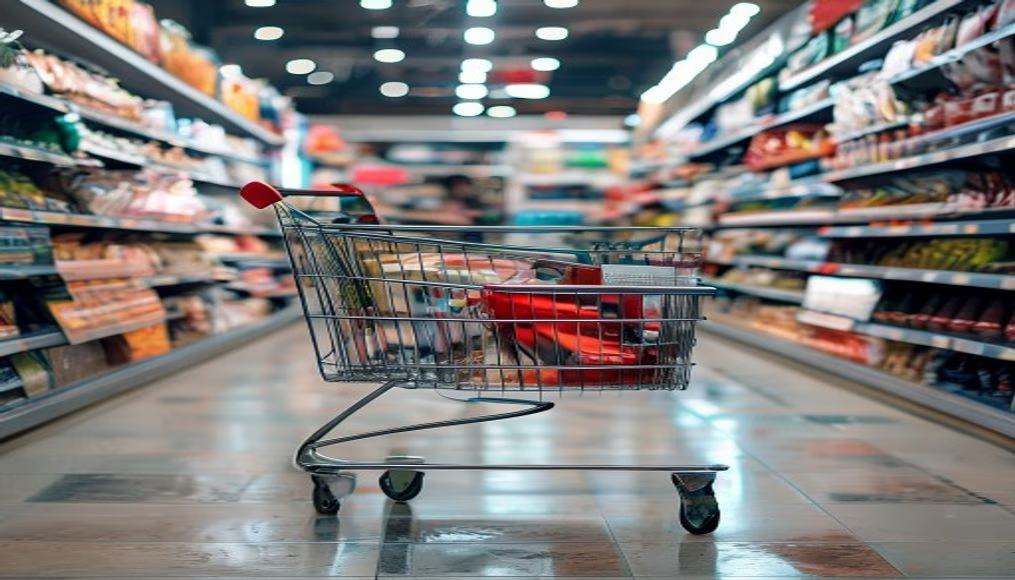
The impact of barcode scanners on commerce is significant. They enable checkout automation, integration with point-of-sale (POS) systems, and data collection for sales analysis. In Brazil, large-scale adoption occurred from the 1990s with the rise of supermarkets. Currently, scanners are being replaced by radio-frequency identification (RFID) technologies, but barcodes remain the global standard due to low cost and standardization.
A curiosity: the first barcode was circular and patented in 1952. The current rectangular format was created by IBM and became worldwide standard after the creation of the Universal Product Code (UPC) in the 1970s. It is estimated that over 5 billion barcodes are scanned daily worldwide.
Frequently Asked Questions
How does a barcode scanner work?
The scanner emits a light beam that sweeps across the barcode lines. The reflected light is captured by a sensor, which interprets the sequence of light and dark lines as numeric or alphanumeric data, transmitting it to a computer system.
When was the first barcode scanner used in retail?
The first commercial scan took place on June 26, 1974, at a Marsh supermarket in Troy, Ohio, USA. The scanned item was a pack of Wrigley gum.
What are common types of barcode scanners?
The main types are: laser scanners (common at checkouts), CCD scanners (linear image sensors), and camera-based scanners (which read 2D codes like QR codes). There are also handheld and fixed models.
Direct URL
https://pub-c7d6a6ea828543ac903a74a341ccb2e1.r2.dev/imagens/barcode-scanner-at-checkout-commercial-product-photography-v9.avifHow to credit
Include a visible link back to UtilizAí. Copy one of the snippets below:
<a href="https://xn--utiliza-eza.com/en/midia/imagens/barcode-scanner-at-checkout-commercial-product-photography-v9">Barcode scanner at checkout</a> by <a href="https://xn--utiliza-eza.com">UtilizAí</a>, licensed under <a href="https://creativecommons.org/licenses/by/4.0/">CC BY 4.0</a>.
[Barcode scanner at checkout](https://xn--utiliza-eza.com/en/midia/imagens/barcode-scanner-at-checkout-commercial-product-photography-v9) by [UtilizAí](https://xn--utiliza-eza.com), CC BY 4.0
License: CC-BY-4.0